


The funding arrived in February 2020, just before campus gates closed in March due to the pandemic. Without a single machine switched on, a team of neuroscientists and engineers at the Indian Institute of Technology Madras found themselves pursuing an ambition so vast that no existing equipment could support it: imaging the human brain cell by cell, from early development through old age. Despite the challenges, the group pressed forward, establishing their laboratory within a converted car park. Although every member of the team contracted Covid-19 during the development phase, the facility was successfully inaugurated by 2022. Prime Minister Narendra Modi later launched the centre's expansive mission to construct three-dimensional maps of more than 100 human brains at cellular resolution.
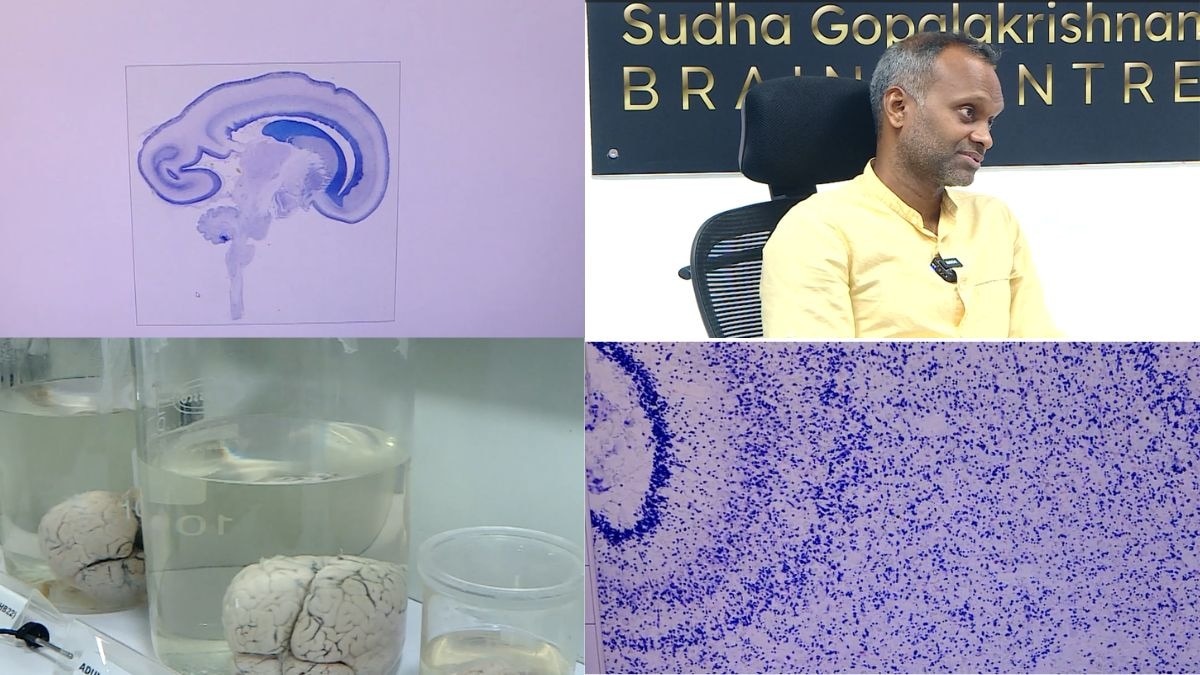
Regarded as the most intricate yet least understood organ in the body, the brain has historically lagged behind cardiology in medical comprehension. While conditions affecting the heart are relatively well understood, neurology and neurosurgery face limitations due to gaps in brain science. Traditional diagnostic tools like magnetic resonance imaging use magnetic fields and electrical recordings, but standard scans only reveal details down to about a millimeter. In contrast, individual neurons measure roughly 10 microns—about a tenth of the width of a human hair. The Sudha Gopalakrishnan Brain Centre operates at this microscopic scale, capturing whole brains with micron-level detail that is roughly a thousand times finer than conventional MRI scans, addressing a dense network containing up to 100 billion neurons.
The large-scale endeavor originated from a conversation involving Kris Gopalakrishnan, an Infosys co-founder and distinguished alumnus of the institute, who encouraged the campus to pursue an ambitious scientific project. With support from the institute's former director, Professor Bhaskar Ramamurthi, and Professor K VijayRaghavan, then Principal Scientific Adviser to the Government of India, the initiative was formalized in 2018. Named after Kris Gopalakrishnan's wife, Sudha, the center grew out of earlier research focused on imaging human brains outside the body at terapixel resolution.
While contemporary research groups typically study smaller models like mice—which possess brains under one cubic centimeter—the IIT Madras team chose to bypass animal models entirely. Given that a human brain is roughly a thousand to two thousand times larger, the researchers recognized that suitable mapping machinery did not exist globally and had to be engineered independently. The process requires slicing a single brain into approximately 10,000 sections, photographing each piece, and digitally reassembling the vast dataset, which totals petabytes of information.
Although administrative approvals were completed in February 2020, the onset of national lockdowns in March disrupted initial plans. The entire technology platform, including custom-built instruments and laboratory infrastructure, was constructed from scratch over the next two years. Colleagues such as Professor Jayaraj Joseph contributed significantly to the technology development while team members worked through the pandemic. Following its initial inauguration in March 2022 by institute leadership, the facility continues to gather vital data intended to drive global advancements in neurological research.