


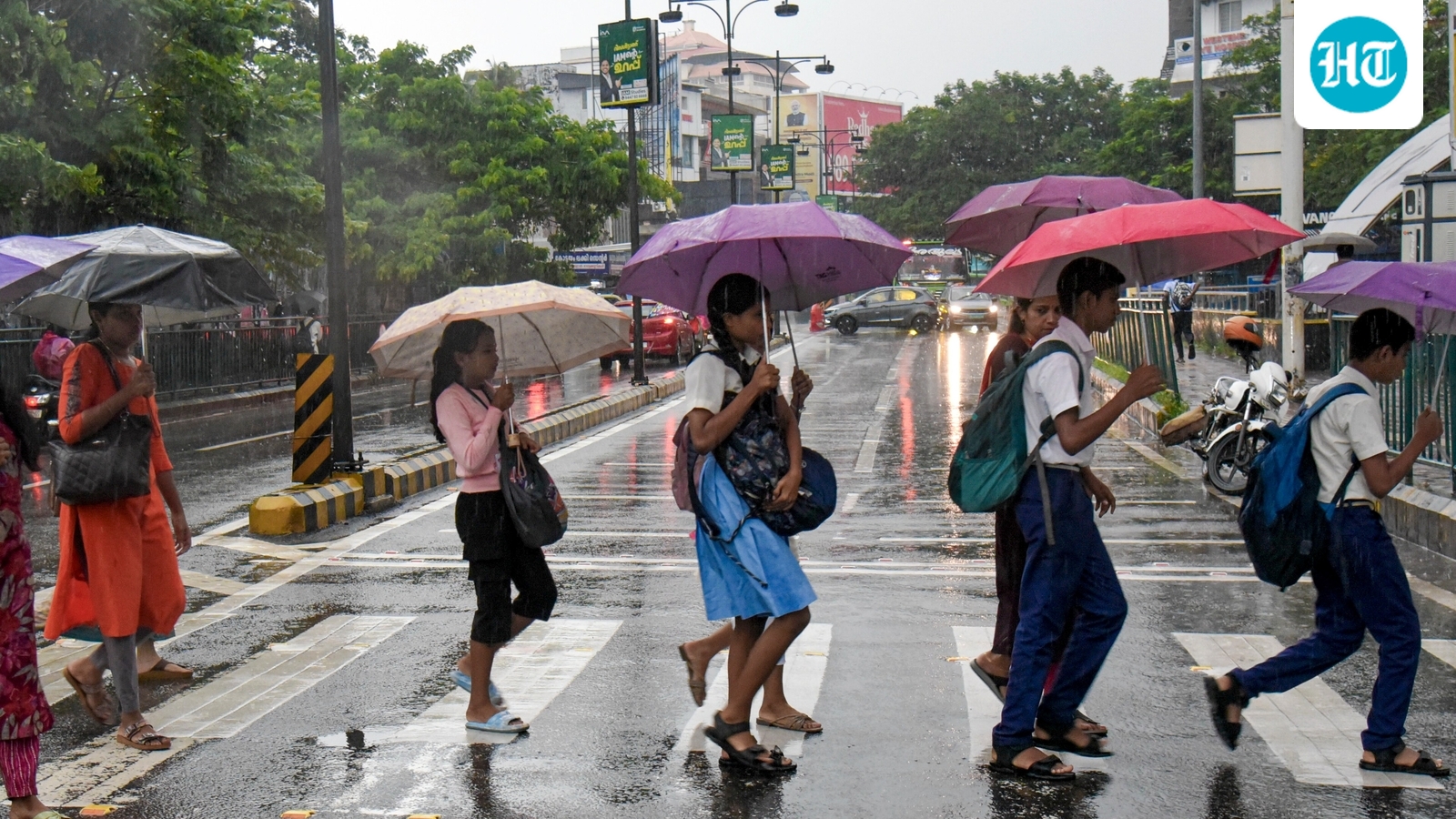
The southwest monsoon withdrew completely from the country, according to an announcement by the India Meteorological Department on Thursday. Simultaneously, the agency noted that the northeast monsoon rains had commenced over southern regions of the country on the same day, bringing widespread precipitation to Tamil Nadu, Puducherry, Andhra Pradesh, Kerala, and Karnataka.
While the meteorological department officially records the southwest seasonal period from June 1 through September 30, rainfall typically continues until October 15 in parts of the nation, marking the normal withdrawal date based on the long period average. In comparison, last year's monsoon retreated on October 16, and also finished on October 15 in the preceding year. Historical records show withdrawal dates on October 19 in 2023, October 23 in 2022, and October 25 in 2021, with the most delayed retreat since 2000 occurring on October 29.
A meteorological official explained that the southwest season typically leaves the country on or after October 15, aligning with the establishment of the northeast monsoon over the southern peninsula. The northeast monsoon affects only southern India, with precipitation extending into December. The department reported that several weather systems were already active in the south, contributing to the ongoing downpours.
Officials highlighted an upper air cyclonic circulation hovering over south coastal Tamil Nadu in the lower tropospheric levels, accompanied by easterly and northeasterly winds setting in across southern peninsular India and surrounding parts of the Bay of Bengal. These conditions produced fairly widespread rainfall across Tamil Nadu, Puducherry, Karaikal, and neighboring areas of south coastal Andhra Pradesh and south Rayalaseema over a twenty-four-hour period.
Simultaneously, intense showers struck northwest India, affecting regions in Punjab, Haryana, Rajasthan, and Delhi. Private weather forecaster Skymet attributed these conditions to a prevailing western disturbance and two cyclonic circulations, which brought widespread precipitation that was expected to clear up shortly.
For the entire season, the country recorded 759.4 millimeters of rainfall, sitting thirteen percent below the long period average of 868.6 millimeters. This marked the fourth-lowest overall rainfall total since 2001, driven largely by a strengthening El Nino phenomenon. The World Meteorological Organization previously indicated that El Nino would continue intensifying, potentially peaking in December and bringing above-average global temperatures and altered rainfall patterns.