


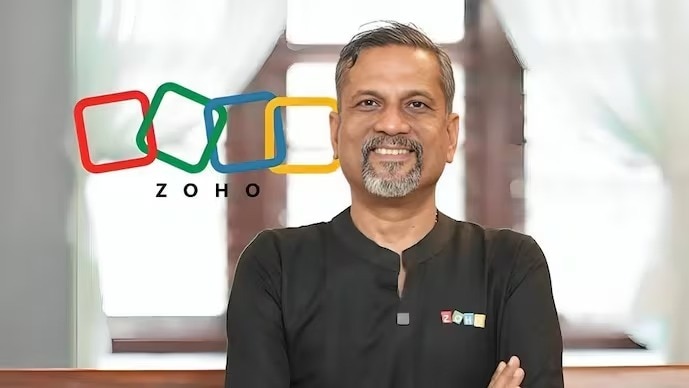
Before Zoho became a global software company, its co-founder Sridhar Vembu followed a path that combined engineering education in India with advanced research in the United States before he entered the technology industry. Now, Vembu is urging Indians working in the United States to return home and help build India's technological future. Meanwhile, his own journey started abroad, as he went to the United States for higher education and a technology job before returning to India to build a software business.
Born in 1968 in Umayalpuram, a village in Tamil Nadu's Thanjavur district, Vembu grew up in Chennai. He studied at Anjugam Higher Secondary School in West Mambalam until Class 9 before moving to Jaigopal Garodia National Higher Secondary School in East Tambaram for Classes 10 to 12, completing his schooling in 1985. He then joined IIT Madras to study Electrical Engineering, graduating with a Bachelor of Technology degree in 1989.
After completing his undergraduate studies, Vembu moved to Princeton University in New Jersey for postgraduate studies in Electrical Engineering. He earned a master's degree and completed his PhD in 1994, focusing his academic work on information theory and communications. His research at Princeton included work with electrical engineering professor Sergio Verdu.
Following his doctorate, Vembu joined Qualcomm in San Diego, California, in 1994 as a wireless communications and systems design engineer. His work involved Code Division Multiple Access technology used in wireless communication systems. He remained at Qualcomm until 1996, an experience that immediately preceded his transition into entrepreneurship.
In 1996, Vembu and his collaborators co-founded AdventNet, which later evolved into Zoho Corporation. His journey from engineering classrooms to advanced research and industry provided the technical foundation he needed before establishing his software enterprise.
Vembu's recent appeal to Indian professionals working in the United States highlights his ongoing emphasis on developing domestic technological capabilities. Amid uncertainties surrounding foreign employment prospects abroad, he has encouraged skilled individuals to return and help build businesses and technology locally. He expressed that professionals should look toward creating local opportunities and fostering the next generation of innovation within India.