


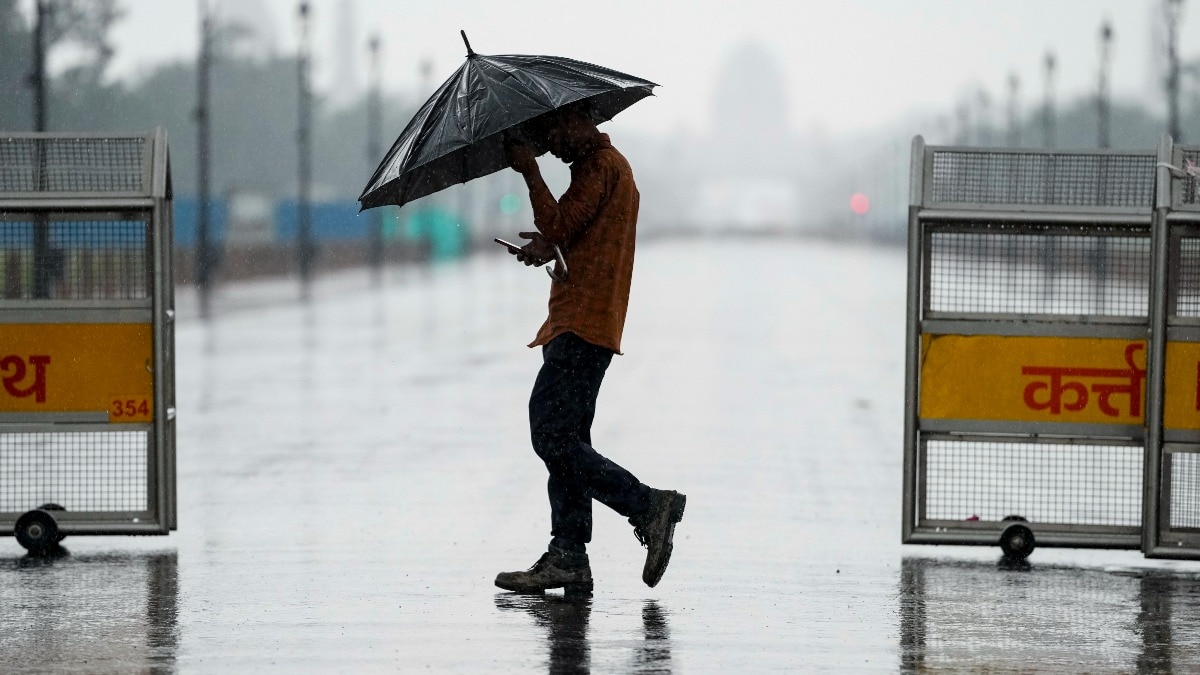
Rain and thunderstorms swept across parts of the Delhi-National Capital Region as heavy cloud cover descended upon the city, prompting the India Meteorological Department to issue an orange alert warning of further showers, lightning, and strong winds. The meteorological office flagged the likelihood of moderate to intense downpours particularly affecting north and north-west Delhi, accompanied by winds ranging from 40 to 50 kilometers per hour with gusts reaching up to 60 kilometers per hour. Other neighborhoods across the capital were similarly anticipated to experience lighter precipitation and accompanying thunderstorms.
The sudden meteorological shift arrived to disrupt a recent stretch of warmer days, with cloudy skies and moderate precipitation projected to linger throughout the day. Delhi recorded a minimum temperature of 23.3 degrees Celsius, marking a figure 3.7 degrees above the seasonal average, while the maximum temperature was anticipated to hover near 29 degrees Celsius, reflecting a notable drop compared to readings from earlier in the week.
This atmospheric disturbance is tied to a western disturbance, an incoming weather system originating west of the country capable of provoking rainfall and storms across northern regions even after the formal withdrawal of the southwest monsoon. The weather agency has extended its forecast to include additional thunderstorms and rain for the following day, indicating that the unsettled conditions will stretch into another 24 hours across Delhi and adjacent urban centers including Noida, Gurugram, Ghaziabad, and Faridabad, though the exact concentration and strength of the precipitation will vary by location.
drier conditions are anticipated to take hold starting Saturday, at which point the capital should experience partly cloudy skies alongside a rising maximum temperature reaching 32 degrees Celsius. By Sunday, the weather is projected to clear up significantly as daytime temperatures continue to climb.
In the interim, the combination of rainfall, lightning, and brisk winds poses potential disruptions for traffic and outdoor routines, with localized water pooling on roadways likely to hamper commuter transit. While the active weather system may temporarily scrub particulate matter from the air, any long-term enhancement to Delhi's air quality remains contingent on precipitation volume and subsequent wind behavior as the region navigates this brief stormy interlude before weekend clearing.