


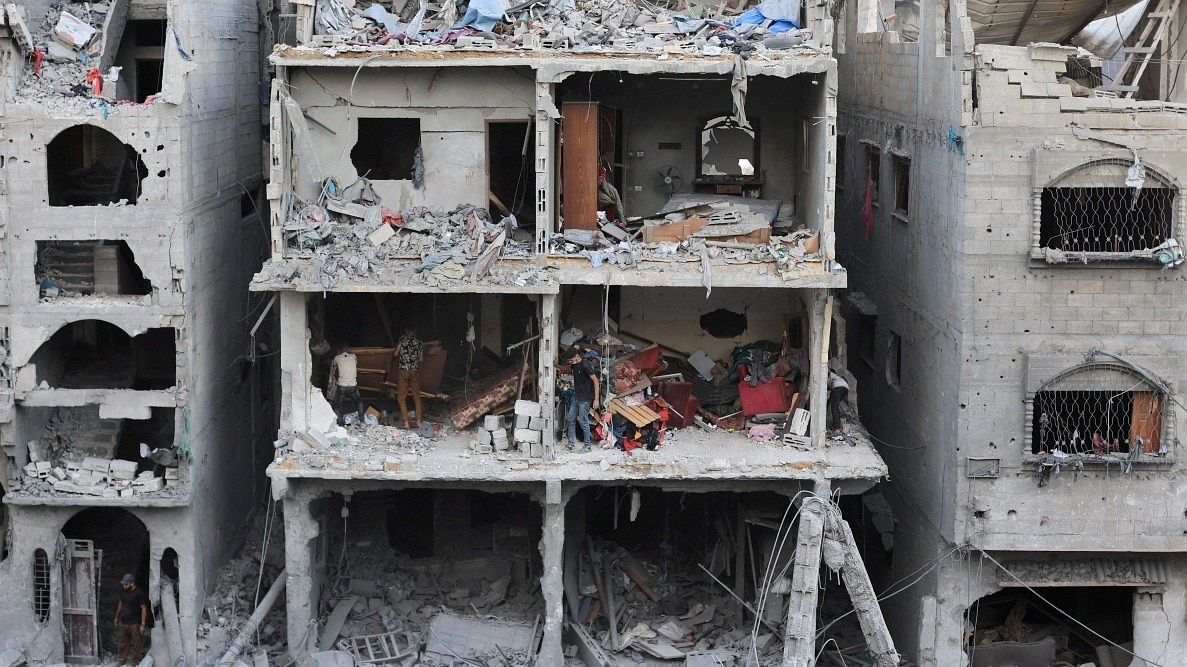
New Delhi: Almost all of Gaza's population requires tents or help with shelter ahead of winter, with the El Nino weather phenomenon expected to bring heavier rainfall, while supplies remain scarce due to Israeli restrictions, the UN migration agency said on Friday.
The El Nino system, which the UN weather agency notes could be the strongest on record, threatens to further destabilize fragile buildings and trigger severe flooding within the enclave's heavily damaged drainage networks, according to the International Organization for Migration.
Nearly two million people inside the territory, which has been largely devastated by the conflict sparked by Hamas' October 2023 assault and Israel's subsequent military response, require assistance. However, humanitarian organizations have only managed to fulfill about 17 percent of the necessary winter shelter requirements, stated IOM Director General Amy Pope.
Pope emphasized that families who have already suffered continuous displacement and massive loss deserve to face the winter months safely and with dignity. She added that operational limitations imposed by Israeli authorities are severely hampering humanitarian efforts to expand relief operations.
Approximately 8,600 emergency shelter kits containing basic components like wood and tarpaulins have been blocked from entering Gaza by Israeli authorities under the classification of dual-use items. COGAT, the Israeli military agency responsible for overseeing aid entry into Gaza, did not immediately reply to requests for comment from media, while Israel maintains its restrictions are necessary for security reasons.
The IOM reported that while it has managed to transport some tents and tarpaulins across the border, the current volume falls drastically short of what is required to meet demand throughout Gaza.
Furthermore, the agency indicated that more than half of all existing tents and makeshift shelters are heavily degraded and require immediate replacement. Residents face limited alternatives, as war-damaged structures continue to present significant safety hazards.
In August, assessments identified more than 3,600 structures as hazardous and susceptible to collapse, while an estimated 1.8 million individuals currently reside in displacement camps, the majority of which are situated in areas vulnerable to flooding.