


For decades, East Fishkill helped build New York’s tech industry. The hamlet, located 70 miles north of New York City, was home to a 460-acre campus where IBM researched and manufactured semiconductor chips for nearly fifty years. So when news broke that a real estate developer was exploring plans for what could become one of the largest artificial intelligence datacenters in the country, a roughly 1-gigawatt campus spanning more than a million square feet across about 143 acres, it initially seemed the town might welcome a new phase in its technological evolution.
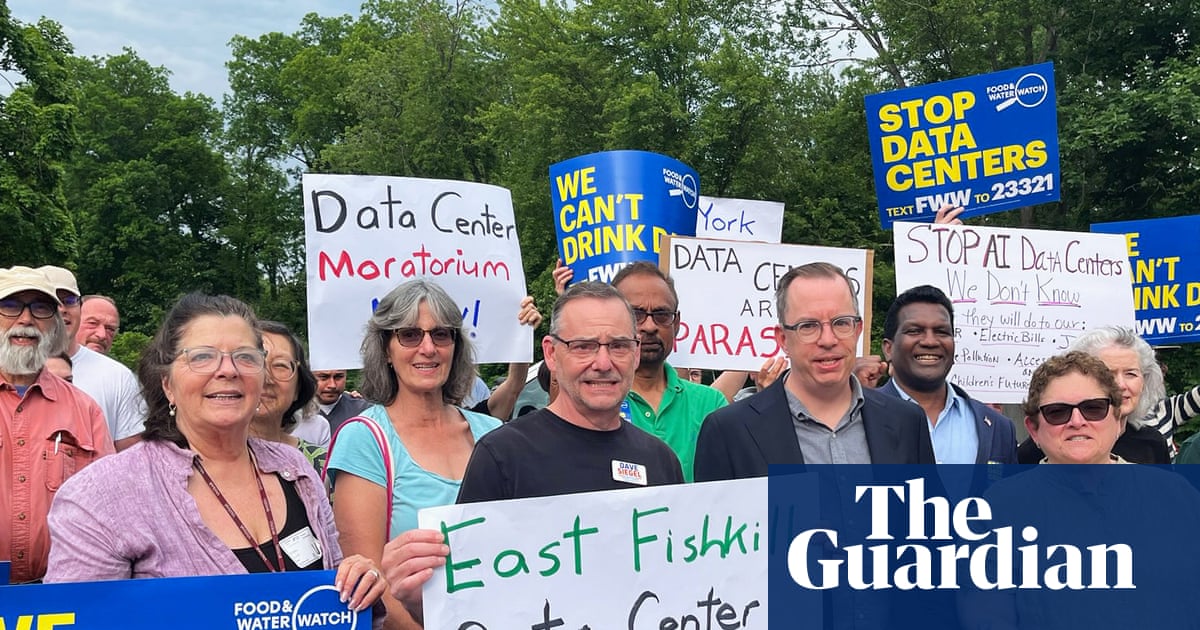
Instead, a furious backlash erupted before even a single permit application was filed with the municipal government. Residents began attending town board meetings, organizing rallies, and advocating for a temporary ban. Even before any plans for the facility were officially drawn up, East Fishkill’s existing zoning laws did not allow for the construction of large datacenters. The town issued a three-year moratorium on them anyway, a sign of the extreme community resistance.
The temporary ban, adopted unanimously, forbids the town from considering new datacenters larger than 20 megawatts while officials study their potential impacts on water resources and local ecosystems. The development company at the center of the controversy has appealed the measure. Residents stress that their opposition stems from the unprecedented scale of the facility and its potential strain on resources rather than an aversion to technology itself.
The saga began after Treetop Development purchased property in East Fishkill, initially pursuing approvals for a warehouse development. Residents later discovered that the company had entered the queue to have a project approved that would use approximately 1,000 megawatts of electrical service, an amount more consistent with a large-scale AI datacenter than a warehouse. This request for approval was submitted to the New York Independent System Operator interconnection queue rather than the town government, raising immediate concerns among locals.
The proposed datacenter would consume more electricity than the entire city of Buffalo, which has about 275,000 residents, while East Fishkill is home to just 30,000 people. Although town officials repeatedly stressed that there was no formal application before the planning board to review or reject, months of intense public pressure ultimately convinced the town board to adopt the three-year moratorium to give the community certainty and allow time for further study.
East Fishkill has long been described as an innovation hub, making the opposition remarkable precisely because the town has not been hostile toward new technology. IBM transformed the town during the latter half of the 20th century into a leading semiconductor manufacturing center, and former IBM facilities remain a defining part of the local economy. Residents have insisted that their pushback is directed specifically at the immense size of emerging artificial intelligence infrastructure and fears of higher electricity rates, rather than a rejection of progress.