


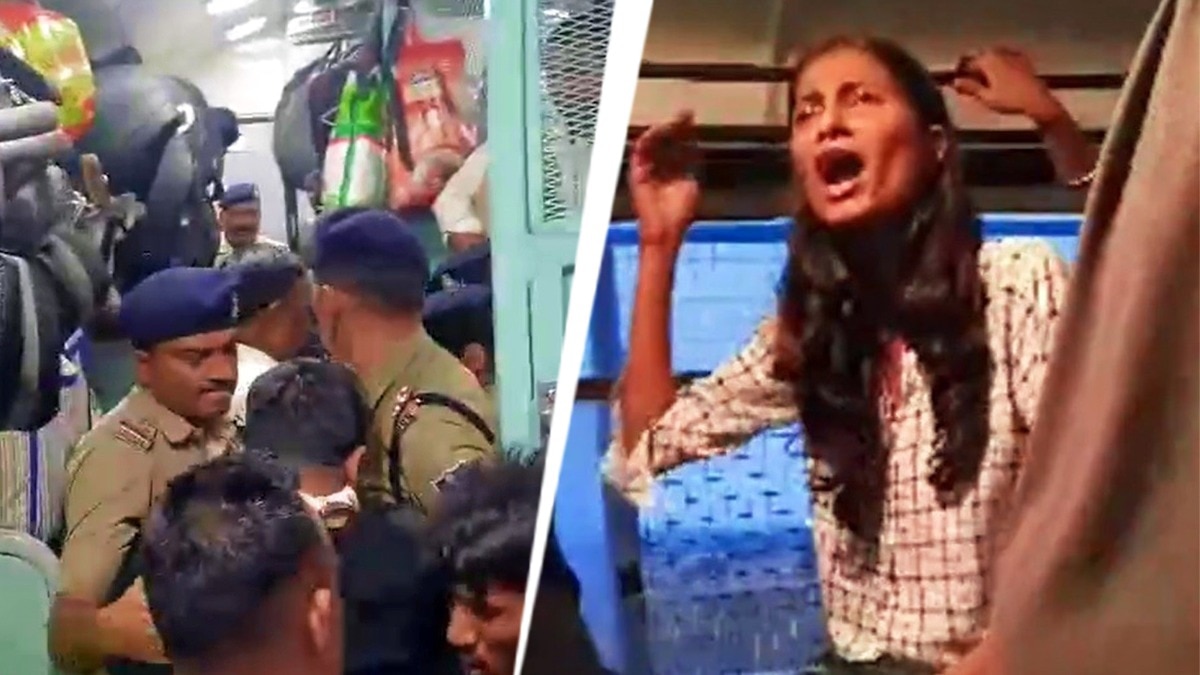
New Delhi: Ahead of the mega protest against Chief Election Commissioner Gyanesh Kumar at Delhi's Jantar Mantar, heavy security measures and widespread detentions have been reported across India's railway networks. The Cockroach Janta Party, which organized the Jantar Mantar 2.0 call, alongside various Left front outfits, alleged that thousands of demonstrators traveling toward Delhi were intercepted mid-journey and removed from trains.
CJP co-convenor Ashutosh Ranka claimed on social media that at least 10,000 individuals had been detained nationwide. Over the preceding 24 hours, multiple videos emerged online showing security personnel detaining citizens at railway stations and on board trains, though independent verification confirming a direct link to the Saturday protest could not be established immediately.
In Madhya Pradesh, roughly 15 students heading to Delhi via the Goa Express were forced off the train by police, sparking platform commotions and subsequent protests before the youths were removed. Itarsi GRP inspector Sanjay Choukse stated the students were deboarded and later released, denying any formal detention and claiming they stayed at a hotel voluntarily. CJP founder Abhijeet Dipke criticized the actions, questioning why an emergency had not been officially declared, and further alleged that CJP volunteers from Telangana were detained in Bhopal.
Reports of detentions, house arrests, and crackdowns also surfaced from West Bengal, Rajasthan, Maharashtra, and Uttar Pradesh. Ranka asserted that a CJP team was apprehended by individuals in plainclothes in Kolkata and transported to undisclosed locations. The CJP additionally stated that Rajasthan Police forcibly removed its organizational co-in-charge Deepak Baliyan from his Alwar home despite a leg fracture, taking him on a lengthy journey before his release hours later, while also claiming police visited paying guest accommodations and hostels in Delhi.
Concurrently, Left-affiliated student groups reported intense pressure to thwart travel to the capital. The Students' Federation of India alleged that officers visited members' homes, while the All India Students' Association reported sweeping house arrests. AISA leader Neha Bora encouraged supporters to persist with the agitation despite organizer arrests, highlighting widespread travel disruptions, metro station closures, and heavy paramilitary and security deployments as an open emergency.
The clampdown transformed Delhi into a heavily secured zone after Delhi Police refused permission for the demonstration, prompting extensive curbs and large deployments of central forces. Rail services terminating at New Delhi and Hazrat Nizamuddin railway stations faced cancellations, and 57 metro stations experienced restricted entry and exit, though interchange facilities remained operational at most locations. These sweeping limitations drew sharp scrutiny from the Supreme Court, which cautioned against utilizing excessive force by stating that authorities cannot use a sledgehammer to kill a fly.