


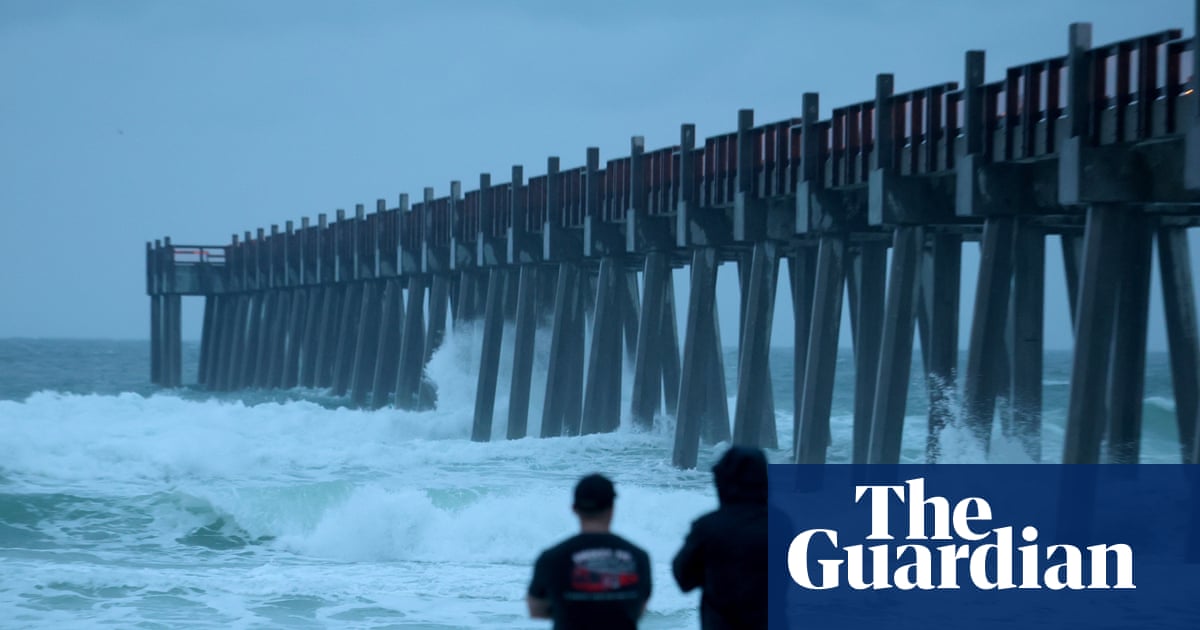
States of emergency were declared across Alabama, Florida, and Mississippi on Friday morning as Hurricane Isaias rapidly strengthened into a category 3 storm while barreling toward the United States Gulf coast. Officials warned that the system, marking the first Atlantic hurricane of an unusually quiet season, is poised to bring a life-threatening storm surge upon landfall.
The National Oceanic and Atmospheric Administration stated that landfall is projected for Friday night near the Alabama-Florida boundary, accompanied by surging seas reaching up to 7 feet and waves towering as high as 30 feet. Damaging hurricane-force winds are anticipated across parts of the Florida panhandle, southern Alabama, and southern Mississippi, where official hurricane warnings remain in place. Forecasters cautioned residents in these vulnerable regions to brace for prolonged power outages.
Storm surges are expected to impact coastlines ranging from southeastern Louisiana to Suwannee in northeastern Florida. Furthermore, the hurricane could unleash up to 15 inches of rain in coastal zones and potentially spawn tornadoes overnight Friday into Saturday across a path stretching from Alabama through the Florida panhandle and into southwestern Georgia. The storm is anticipated to weaken rapidly after moving inland.
By Friday morning, heavy rainfall had reached coastal areas alongside sharply escalating winds, with tropical storm conditions expected by early afternoon. The National Hurricane Center reported that Isaias carried maximum sustained winds of 105 mph while tracking north-northeast at 15 mph. The center of the storm was located approximately 230 miles south of the Mississippi River mouth in Louisiana.
Emergency preparations were urged to reach completion quickly as regional weather conditions deteriorate. Officials noted that although the storm is not expected to peak in intensity right at landfall, it will remain a significant hurricane when hitting the coastline. Alabama Governor Kay Ivey ordered immediate evacuations for non-residents on Dauphin Island, Gulf Shores, and Orange Beach, while encouraging voluntary evacuations for local residents.
Governor Ivey declared a state of emergency covering 40 counties in Alabama, and Florida Governor Ron DeSantis issued a similar declaration for 27 counties. Local governments in southern Mississippi enacted matching emergency measures. In Florida, approximately 5,000 National Guard troops are expected to mobilize, and multiple school districts have canceled late-week classes.
The current Atlantic hurricane season has experienced delayed development due to a strong El Nino pattern hindering storm formation. This late appearance of the season's first hurricane marks the latest occurrence since October 1905. In response to the approaching severe weather, energy companies halted a substantial portion of offshore production in the Gulf of Mexico, temporarily shutting down roughly 63 percent of regional oil production and evacuating workers from 121 crewed platforms.
Emergency management experts point out that the incoming storm serves as a major test for the Federal Emergency Management Agency following recent staff reductions and organizational restructuring under the current administration. A recent government accountability report indicated that thousands of employees departed the agency leading up to fiscal year 2025, raising questions regarding its current workforce capacity.