


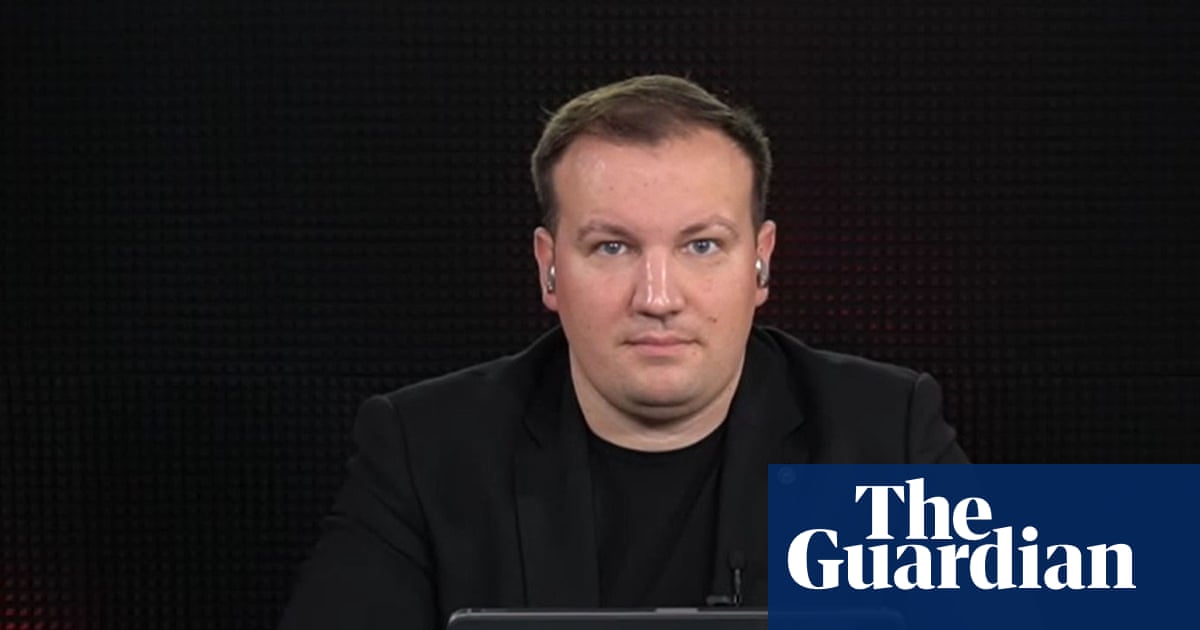
A prominent pro-Kremlin Russian military blogger linked to Russian intelligence services has been taken into custody in Montenegro amid concerns regarding efforts to destabilize the Balkan nation. Mikhail Zvinchuk, who established the widely followed Rybar war blog, was apprehended by law enforcement and security personnel in the Adriatic coastal resort town of Risan, along with his spouse and three other Russian citizens, according to local media reports.
Montenegrin Prime Minister Milojko Spajić verified the detention via social media, noting that the action came in response to warnings that the country could encounter hybrid warfare and destabilization attempts. According to the Russian Telegram news channel Baza, law enforcement officers intercepted Zvinchuk at a luxury hotel in Risan before transferring him to the capital city of Podgorica for interrogation, while also seizing his passport and mobile devices.
Established in 2018 by Zvinchuk, a former defense ministry press officer, Rybar has grown into one of Russia's most prominent military blogging operations centered on the conflict in Ukraine, boasting a following of over 1.5 million subscribers on Telegram. Beyond Ukraine, the outlet has disseminated pro-Kremlin viewpoints across the Middle East and Africa and has faced accusations of intensifying far-right rhetoric regarding migration issues in Ceuta, a Spanish enclave located in North Africa.
Representatives for Rybar stated via Telegram that the project team is communicating with the Russian foreign ministry to address the situation. Asserting that no local laws were broken, the channel expressed anticipation that the detained individuals would be freed.
The United Kingdom imposed sanctions on both Zvinchuk and Rybar in late 2025 over their propagation of Kremlin messaging and efforts to diminish backing for Ukraine, with British authorities noting that Zvinchuk received financial support from the state-owned defense entity Rostec and collaborated with intelligence operatives. Additionally, the United States has previously alleged that Zvinchuk sought to interfere in the 2024 presidential election, offering a substantial financial reward for details regarding the participants.
Prior to his detention, Zvinchuk posted on social media claiming he had successfully entered Montenegro despite facing western sanctions and travel bans, ridiculing a border guard who allegedly inspected his belongings without verifying his identity against a restricted list. Kremlin spokesperson Dmitry Peskov acknowledged that Moscow is monitoring the detention and will pursue efforts to obtain his release.
Meanwhile, former Russian president Dmitry Medvedev suggested that Moscow might consider detaining European and American nationals to leverage in future prisoner swaps aimed at securing Zvinchuk's freedom. This development threatens to further strain diplomatic ties between Moscow and Podgorica, which have remained precarious for years, particularly following a 2016 coup plot allegation involving Russian operatives that Moscow has consistently denied.
Montenegro became a NATO member in 2017, pursues European Union accession, and adopted sanctions against Russia following the 2022 invasion of Ukraine. In a move to align its policies with the European Union, the government recently cleared measures to terminate visa-free entry for Russian citizens, effectively altering access to a favored vacation spot for Russian travelers.