


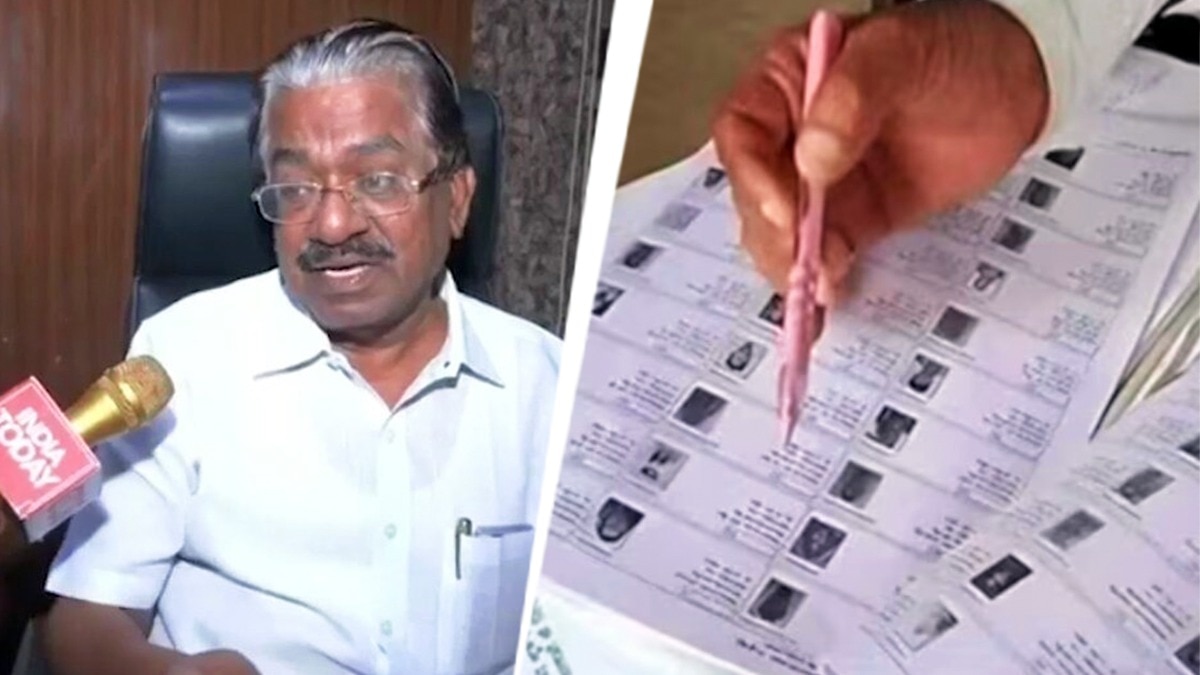
The DMK has attributed its electoral setback in the recent Tamil Nadu Assembly bypolls to the Special Intensive Revision of electoral rolls, with party spokesperson TKS Elangovan claiming that large-scale deletion of voters affected the party's prospects.
Elangovan specifically blamed the Election Commission and Chief Election Commissioner Gyanesh Kumar, alleging that significant numbers of voters were removed from electoral rolls in polling booths where the DMK had performed strongly in previous elections.
According to Elangovan, the deletion of voters may have influenced the outcome of the bypolls in Madurantakam and Dharapuram, where the DMK faced defeats against candidates of Tamilaga Vettri Kazhagam. Remarking on the broader expectations, Elangovan noted that winning even two seats across all vacant constituencies would be considered a success for the party.
In Madurantakam, Tamilaga Vettri Kazhagam candidate K Maragatham Kumaravel defeated DMK candidate I Paranthamen. Kumaravel had earlier won the constituency as an AIADMK candidate in the April 2026 Assembly election before resigning as an MLA and joining Tamilaga Vettri Kazhagam, subsequently being fielded by the party in the bypoll.
In Dharapuram, Tamilaga Vettri Kazhagam candidate P Sathyabama defeated DMK candidate S Suganya. Sathyabama, similar to Kumaravel, had previously won the constituency as an AIADMK candidate before transitioning to Tamilaga Vettri Kazhagam. The two bypolls were held on October 6, serving as the first major electoral test for Tamilaga Vettri Kazhagam after it came to power in Tamil Nadu earlier this year, while also seeing the DMK and AIADMK attempt to challenge its position.
Elangovan's comments place the Special Intensive Revision at the centre of the DMK's explanation for its performance in the bypolls. The party has previously raised concerns over the electoral-roll revision and questioned whether eligible voters could be omitted during the exercise.
The Election Commission's revision process has been the subject of a wider political debate, with opposition parties raising concerns about voter deletions and the verification of electoral records. The DMK's core argument is that changes in the rolls may have disproportionately affected areas where it had previously secured support, pointing to substantial deletions observed in former strongholds.
While the Special Intensive Revision process continues to draw political scrutiny across several states, the Election Commission has maintained that such exercises are intended to ensure accurate rolls containing eligible voters, supported by mechanisms for claims, objections, and corrections. For the DMK, however, the recent bypoll results have renewed questions regarding the impact of voter-roll changes on electoral outcomes.