

Writer-director Aaron Sorkin demonstrates an enduring knack for turning rooms filled with people arguing over corporate documents into sequences more gripping than standard action fare. In The Social Reckoning, the filmmaker revisits the universe of Facebook, shifting focus from the foundational ambition and betrayal seen in 2010's The Social Network to a much more urgent dilemma: what happens when a platform built to connect the world becomes an engine for division? It is a compelling premise approached with the confidence of someone who retains faith in investigative journalism. A whistleblower steps forward, a reporter tracks the paper trail, internal files reveal corporate foresight, and the truth reaches the public eye. There is a comforting familiarity to this old-school narrative framework, though the real world outside the cinema has grown considerably less reassuring.
The feature centers on Frances Haugen, portrayed by Mikey Madison, who leaked internal company research, alongside Wall Street Journal reporter Jeff Horwitz, played by Jeremy Allen White, whose coverage brought the Facebook Files to light in 2021. Those disclosures illuminated corporate awareness regarding product-related harms, ranging from Instagram's impact on younger demographics to the widespread amplification of polarizing content. Sorkin translates this complex material without overwhelming viewers in technical jargon, using his signature rapid-fire dialogue to give corporate memos the urgency of a ticking clock while keeping the investigative process as the dramatic core.
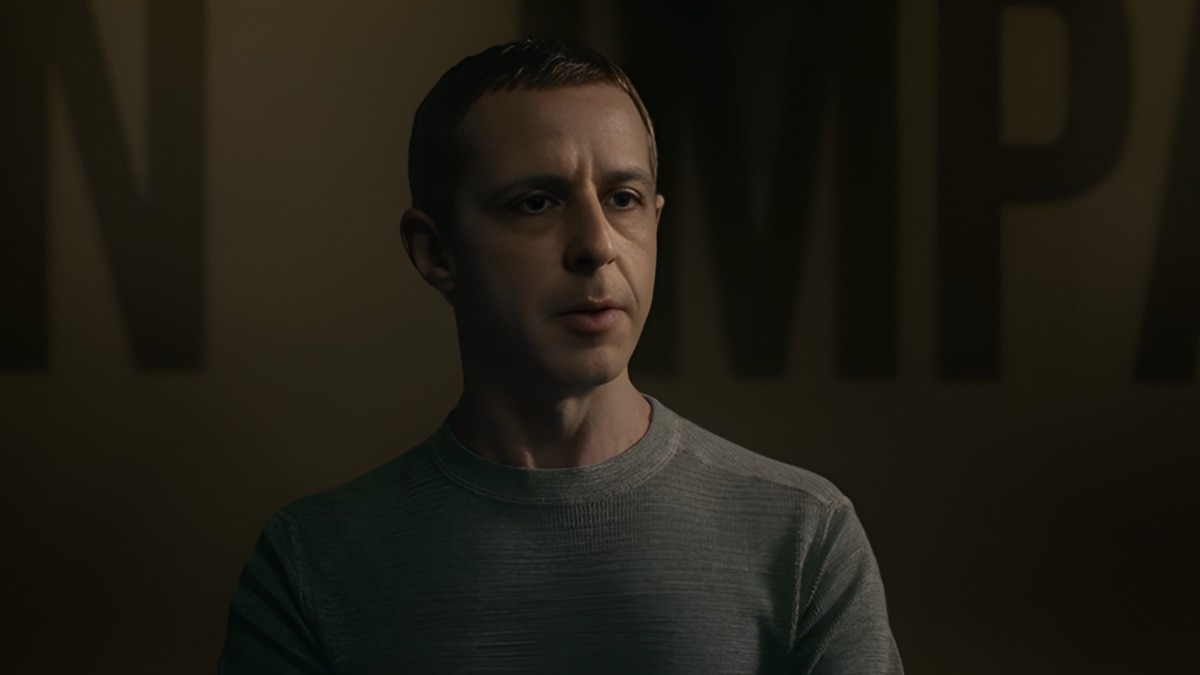
Madison portrays Haugen with realistic hesitation, conflict, and a gradual realization that silence carries consequences rather than positioning her as an unalloyed crusader. White supplies a dogged, understated quality to Horwitz, treating the journalist's persistence as a matter of daily labor rather than theatrical performance. Meanwhile, Jeremy Strong tackles Mark Zuckerberg as a more insulated figure than the restless portrayal delivered by Jesse Eisenberg in the earlier film, keeping distance from the downstream effects of executive choices. Yet Zuckerberg is not cast as the primary villain; instead, the real antagonist is an engagement-driven business model where digital outrage holds equal value to genuine interest and user retention supersedes the nature of the content encountered.
This dynamic forms the strongest argument of the film, illustrating how social media fundamentally altered the incentives governing visibility and belief. Content provoking anger travels rapidly, and systems designed to maximize engagement struggle to differentiate between constructive connection and divisive hostility. The challenge is that these insights no longer feel revolutionary. Whereas the previous film captured the nascent stages of an enterprise whose fallout was still unfolding, its successor arrives in the wake of extensive public scrutiny, congressional hearings, misinformation crises, and deepening anxiety regarding big tech dominance. Sorkin brings fresh dramatic shape to familiar subjects, but the narrative is stronger at diagnosing past failures than projecting future resolutions.
That creates a distinct gap at the core of the picture. Haugen's disclosures and Horwitz's reporting were undoubtedly impactful, but public exposure and institutional accountability are distinct phenomena, and transparency does not automatically yield reform. The production's unwavering faith in journalism creates a neat narrative architecture that makes an ongoing, messy reality feel resolved simply because the evidence has surfaced. Contemporary global events continue to demonstrate the high cost of digital connectivity, where networks can mobilize communities while simultaneously accelerating hatred and reducing human suffering into endless scrolling fodder.
The limitation of the project lies in placing such immense trust in the act of truth-telling that it leaves little room to confront the public tendency to absorb scandals and carry on regardless. Characters can successfully build their case, win arguments, and publish articles, but the overarching system continues unabated. As a journalism thriller, the film remains sharp, watchable, and occasionally stirring, even if it lacks the formal precision and unsettling ambiguity of its predecessor. It asks the right questions, though its conclusions ultimately feel too tidy for a crisis this deeply entrenched, leaving audiences to ponder why society persists in participating in systems that continually profit from attention and anger.