


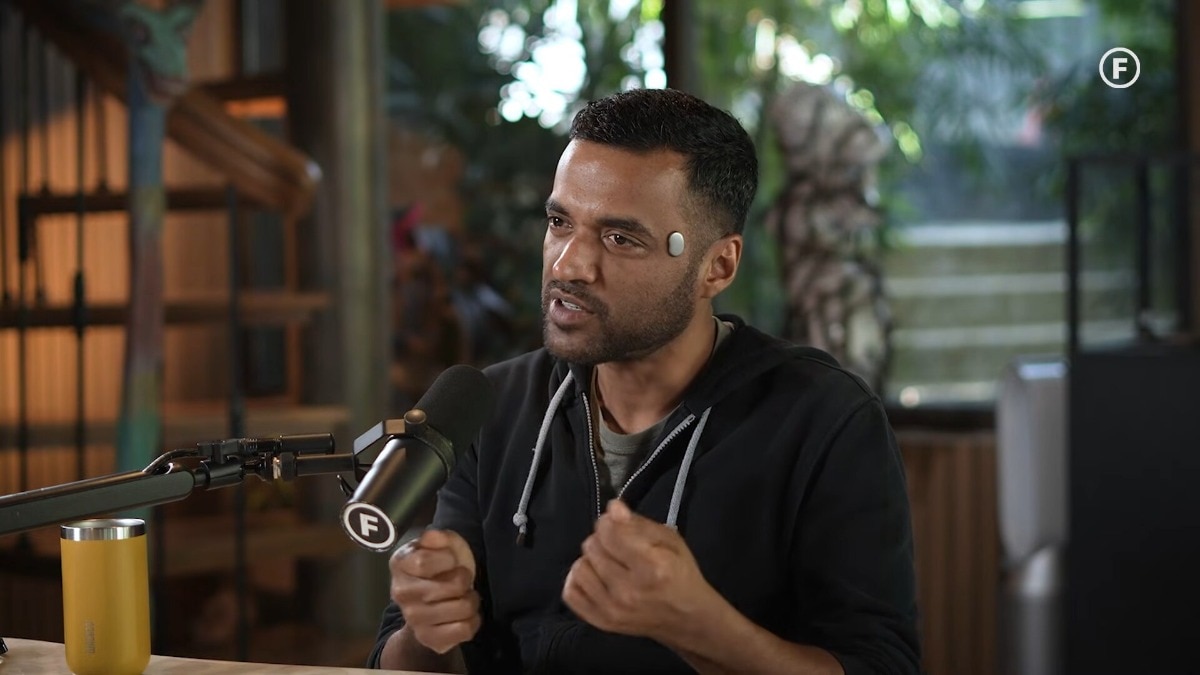
Traditional wearable devices have long focused on routine health metrics like step counts and sleep quality, but Zomato founder Deepinder Goyal is shifting attention toward a different area with a new health-tech gadget called Temple, designed to monitor blood flow to the brain. The device first drew public notice when Goyal wore it during an appearance on a podcast, and badminton player PV Sindhu has since been spotted wearing it during competitive matches. With the hardware now significantly reduced in size and pre-orders drawing near, Goyal has shared ongoing updates and details about the project.
Temple is a compact, pill-shaped device that is worn between the forehead and the ear. While standard smartwatches monitor metrics such as heart rate and activity levels, Temple utilizes a proprietary system called BrainFlow to track real-time cerebral blood flow, along with data regarding oxygenation, cognitive load, and entropy. Goyal describes the innovation as the first continuous, wearable measurement of blood flow to the brain.
The reasoning behind the device centers on the brain consuming roughly twenty percent of the body's overall blood supply, which helps regulate hormones, sleep, immunity, and cellular repair. This supply naturally decreases with age, and routine medical checkups typically provide only isolated snapshots rather than continuous tracking. The development team behind BrainFlow includes four scientists: Dr. Divya Gulati and Dr. Sanchit Gupta from IISc Bengaluru, Dr. Yukti Chopra from SISSA Trieste, and Nitish Kumar from IIT Bombay.
The wearable is secured using single-use medical-grade tapes known as Grips, which are included alongside an unlimited supply in the purchase cost. Designed to remain firmly in place during physical activities such as running and jumping, the hardware is also water-resistant enough for swimming, showers, and saunas, though scuba diving is not supported. The smooth profile of the device allows garments to pass over it easily and fits beneath regular eyeglasses. Skincare products, sunscreen, and makeup can be applied over the unit, though the application area for the Grip must be completely clean.
A single Grip typically lasts for about seven days, which aligns with the battery life of the device, though users are advised to replace them every two to three days during heavy activity or sweating, and never to reuse them. Goyal notes that the sensation of wearing the gadget takes roughly five minutes to adjust to. Regarding younger users, he states that while the sensor technology is safe for developing brains, individuals under the age of eighteen have little practical need for it unless undergoing specialized high-performance training.
Athletes represent the initial target audience, as the wearable provides insights into physical fatigue, recovery quality, focus, and sleep patterns. Future ambitions for the technology include monitoring pilot fitness for aviation duties, evaluating military personnel readiness for specific missions, and eventual long-term research into translating human thoughts into text, a capability projected to arrive several generations later.
Pre-orders for a limited launch edition are anticipated to open soon once final preparations are complete, with shipping projected before the close of 2026. Individuals registered on the early-access waitlist will receive priority fulfillment. The launch edition will be available in six distinct color finishes: True Gold, Rose Gold, Black Mirror, Real Jade, Deep Blue, and Purple Funk. While official pricing has not been definitively locked, estimates suggest a cost of approximately Rs 72,000, with Goyal having previously teased a price point near $1,000, or roughly Rs 1 lakh.