


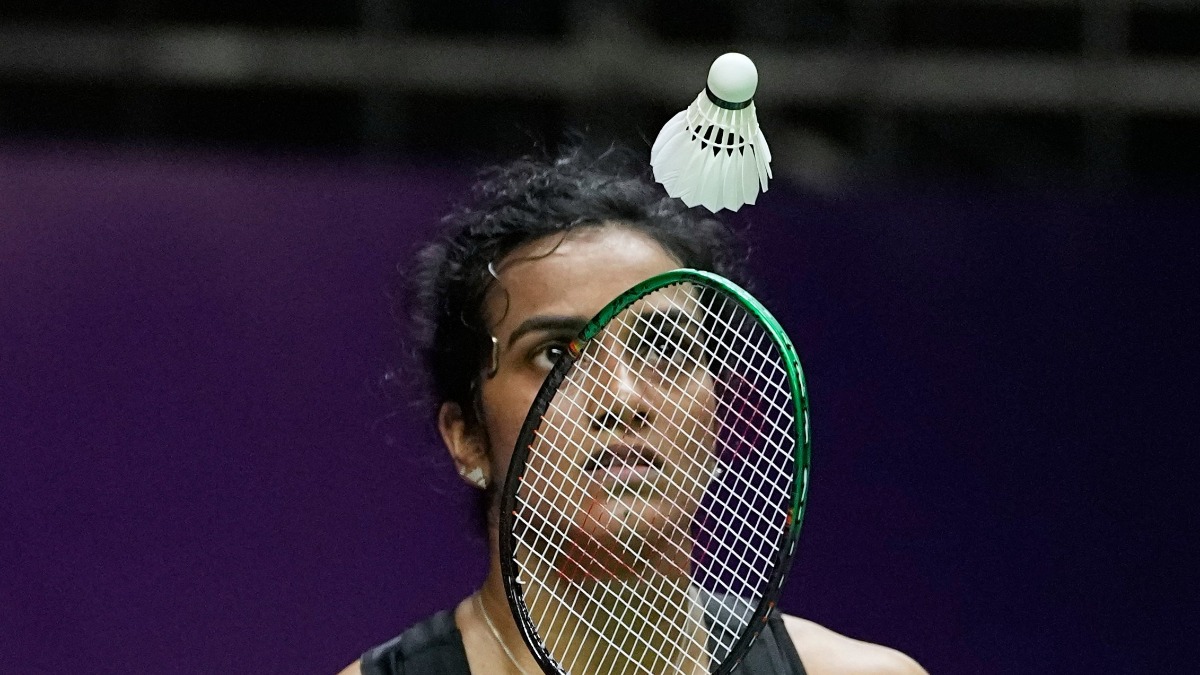
New Delhi: Badminton commentator Gill Clark has criticised the scheduling of badminton matches at the 2026 Asian Games in Aichi-Nagoya, Japan, after competitors were forced to play late into the night before returning to the court the following morning. Clark questioned the planning of the organisers, highlighting how insufficient recovery time could impact athletes participating in one of the continent's largest sporting events.
India’s PV Sindhu and Indonesia’s Jonatan Christie were among the competitors affected by the demanding timetable. Both Sindhu and Christie suffered defeats in their respective quarter-final matches after finishing late-night fixtures the previous day. Clark argued that the short turnaround between matches provided athletes with minimal opportunity to rest, recover, and adequately prepare for the knockout rounds.
PV Sindhu played three singles matches in a span of less than 24 hours, leaving her with extremely limited time to recover prior to her quarter-final exit. Commenting on the situation, Clark explained that the tournament schedule forced players to compete in two matches in a single day, with action concluding at two in the morning in front of virtually no spectators.
Clark noted that media duties, warm-down routines, a one-hour journey back to the hotel, and eating meant that the two latest competitors to finish, Sindhu and Christie, likely did not fall asleep until four in the morning. The quarter-finals then commenced at half-past nine on the same morning, resulting in both players losing their matches. Christie suffered his first defeat in eleven meetings against Loh Kean Yew, whose previous match had concluded nearly eight hours earlier.
Sindhu also voiced frustration regarding the timetable, stating on social media that playing three matches in eighteen hours and returning to the hotel at three in the morning only to leave again at half-past eight took a significant physical toll. This criticism arose alongside broader worries concerning the administration of the Games, as athletes and teams across multiple sports reported logistical challenges and disruptions. India’s HS Prannoy similarly described the badminton scheduling as harsh, expressing worries about recovery, travel, and lodging.
The scheduling dispute formed part of a wider trend of organisational difficulties during the Asian Games. Clark drew attention to problems involving football, cricket, and volleyball, asserting that the difficulties reached beyond badminton and impacted competitors across various disciplines.
Clark pointed out that at the event in Nagoya, there were instances of football and volleyball squads arriving late for fixtures after being transported to incorrect venues. Additionally, several outdoor sports lacked contingency plans to reschedule fixtures impacted by adverse weather conditions, leading to two cricket quarter-finals being decided by team world rankings rather than on-field matches.
For instance, Pakistan’s volleyball squad was driven to the wrong gymnasium ahead of its fixture against Uzbekistan, compelling players to change into their uniforms on the bus and leaving them with inadequate time to warm up. Football squads likewise faced transportation hurdles, including an episode where a team bus was directed to an incorrect location.
Meanwhile, cricket encounters were disrupted by continuous rain, resulting in the abandonment of the men’s quarter-finals between India and Afghanistan, as well as Pakistan and Hong Kong. India and Pakistan advanced to the semi-finals based on their higher world rankings instead of competitive results.
These occurrences drew scrutiny toward athlete welfare and the preparation behind a major multi-sport competition. Although the Asian Games showcased notable athletic achievements across various sports, the grievances regarding timetables, transport, and weather contingencies drew negative attention to the event.