


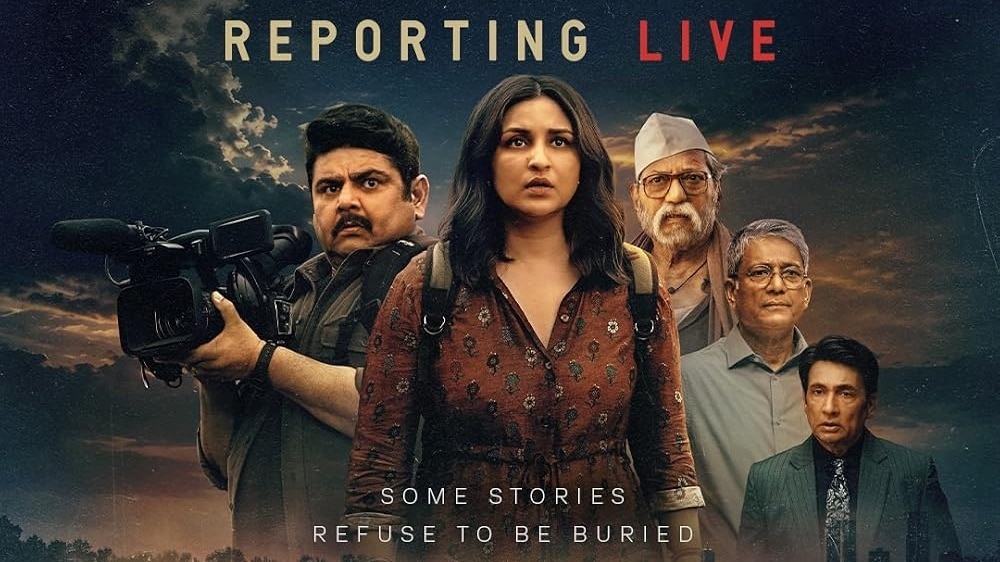
There is a distinct irony in the thematic focus of Reporting Live, arriving at a time when public discourse frequently questions media credibility and the press's capacity to hold authority figures accountable. The film places two young journalists in direct opposition to a powerful sand mafia, corporate executives, and an institutional framework that seems to have abandoned traditional newsroom values. While this core premise and the underlying belief that perseverance and honesty can triumph over corruption are commendable, a conventional screenplay and uneven acting prevent the feature from realizing its potential as a compelling newsroom thriller.
The story begins with Sandhya, played by Parineeti Chopra, and Vinod, played by Deven Bhojani, working as eager reporters striving to secure prime-time coverage, an effort further motivated by a corporate employee incentive scheme tied to breaking news. When their initial pitches fail to impress management, the narrative highlights the classic friction between reporters hunting for substantive stories and corporate boardrooms focused elsewhere. The introduction of a veteran journalist, played by Saswata Chatterjee, who faces termination due to his relentless investigative work, quickly establishes the overarching conflict between editorial independence and commercial pressures.
At the center of this corporate friction is Adil Hussain portraying an editor-in-chief who previously sold the news channel to corporate interests, capturing the professional dilemmas faced by media workers trying to balance journalistic duty with business demands. The central plot gains urgency when a bridge collapses, sending a bus filled with schoolchildren and a pregnant teacher plummeting into a river. This disaster drives Sandhya and Vinod to investigate illegal sand extraction from lakes and rivers, a practice that destabilizes infrastructure and threatens public safety. The narrative attempts to highlight how seemingly remote corporate malfeasance can trigger devastating real-world consequences.
Over nearly a year, the reporters face hurdles, secure unexpected allies, and endure personal setbacks before advancing their investigation. The narrative affirms that journalism demands persistence and that pursuing ethics matters despite a resistant system. However, the film simplifies the investigative journey, allowing major obstacles to resolve with a convenience that diminishes the perceived threat of the antagonist sand mafia. The screenplay transitions between plot points without generating genuine tension or allowing the emotional weight of the characters' struggles to resonate with viewers.
Consequently, the film struggles to fully engage its audience. While Sandhya and Vinod are framed as passionate professionals, their commitment feels stated rather than effectively demonstrated, weakening the emotional impact of personal tragedies intended to anchor the story. The acting performances vary, with Parineeti Chopra adopting a persistent intensity and characteristic media accent that occasionally feel overly constructed. Deven Bhojani provides warmth as Vinod, while Adil Hussain delivers a grounded performance as the compromise-laden editor-in-chief. Antagonistic roles filled by Shekhar Suman as a corporate boss and cameo appearances by Amol Palekar and Nassar add texture, though the primary villainous presence lacks sufficient menace.
Ultimately, Reporting Live earns recognition for selecting a meaningful subject and maintaining faith in the investigative process and tough questioning. Yet, good intentions alone cannot sustain a narrative that progresses linearly with minimal surprise, limited dramatic tension, and restrained emotional payoff during key breakthroughs. The production ultimately struggles to translate its important message into a deeply moving cinematic experience.