


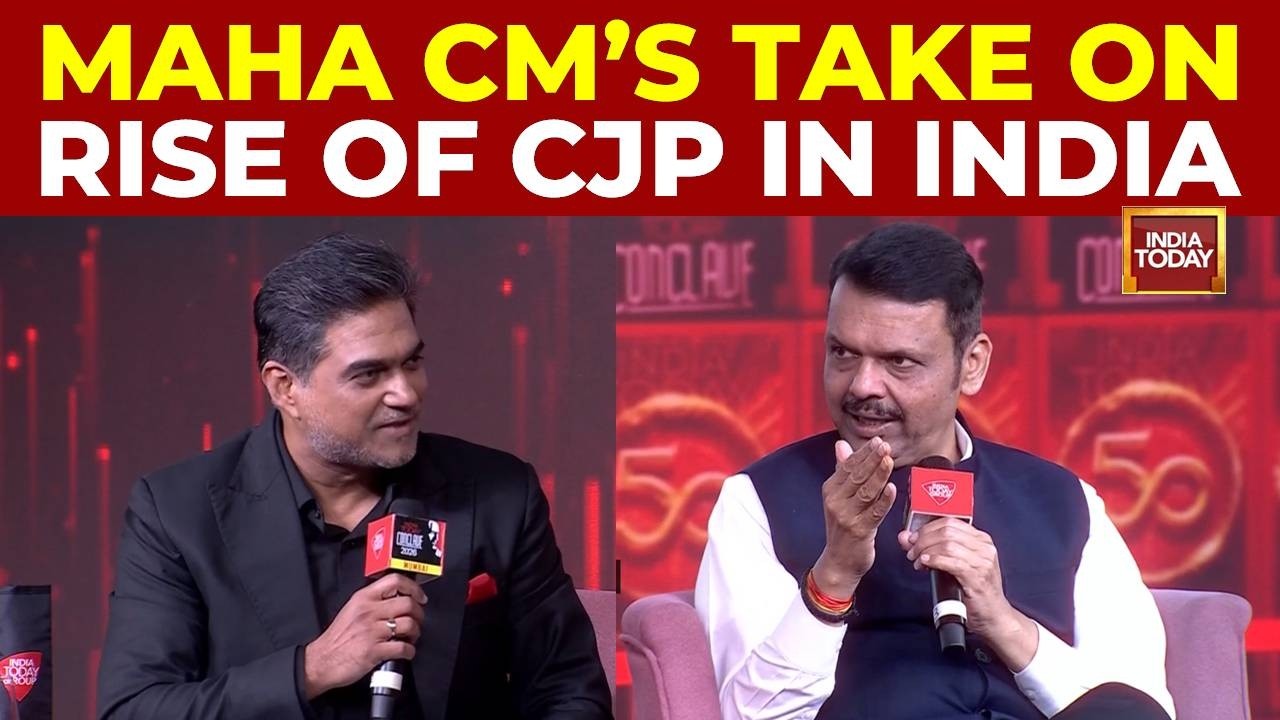
New Delhi: Maharashtra Chief Minister Devendra Fadnavis recently distinguished between genuine public grievances and manufactured agitations, asserting that organisations like the CJP and the Congress party operate under a coordinated design. In an interview, he stated that ultra-leftist elements seek to fill a political void created by a weak opposition by systematically undermining constitutional institutions including the Reserve Bank of India, the Election Commission, the Comptroller and Auditor General, and the Supreme Court.
Fadnavis maintained that while peaceful demonstrations and calls for resignations are standard democratic rights, mobilizing criminal elements and shouting abuses crosses the line into disorder, which he characterized as anarchy.
Meanwhile, the Supreme Court intervened in the national capital regarding sweeping traffic restrictions, metro closures, and train cancellations that had been implemented ahead of a planned CJP protest. Emphasising that public transport cannot be completely halted, the apex court observed that the rights of ordinary commuters, workers, and students must be safeguarded.
The court directed that metro and railway services operate in a regulated fashion rather than facing blanket prohibitions, and instructed authorities to identify and publicise alternate routes. While acknowledging the government responsibility to maintain law and order, the bench stressed the necessity of proportionate action to protect freedom of movement.
Petitioners during the proceedings raised concerns over the closure of 57 metro stations, train cancellations, and alleged police intimidation. Solicitor General Tushar Mehta defended the measures by citing past law and order incidents during previous protest marches toward Parliament. Ultimately, the court recorded an assurance from authorities that they would reconsider complete bans and allow regulated movement.