


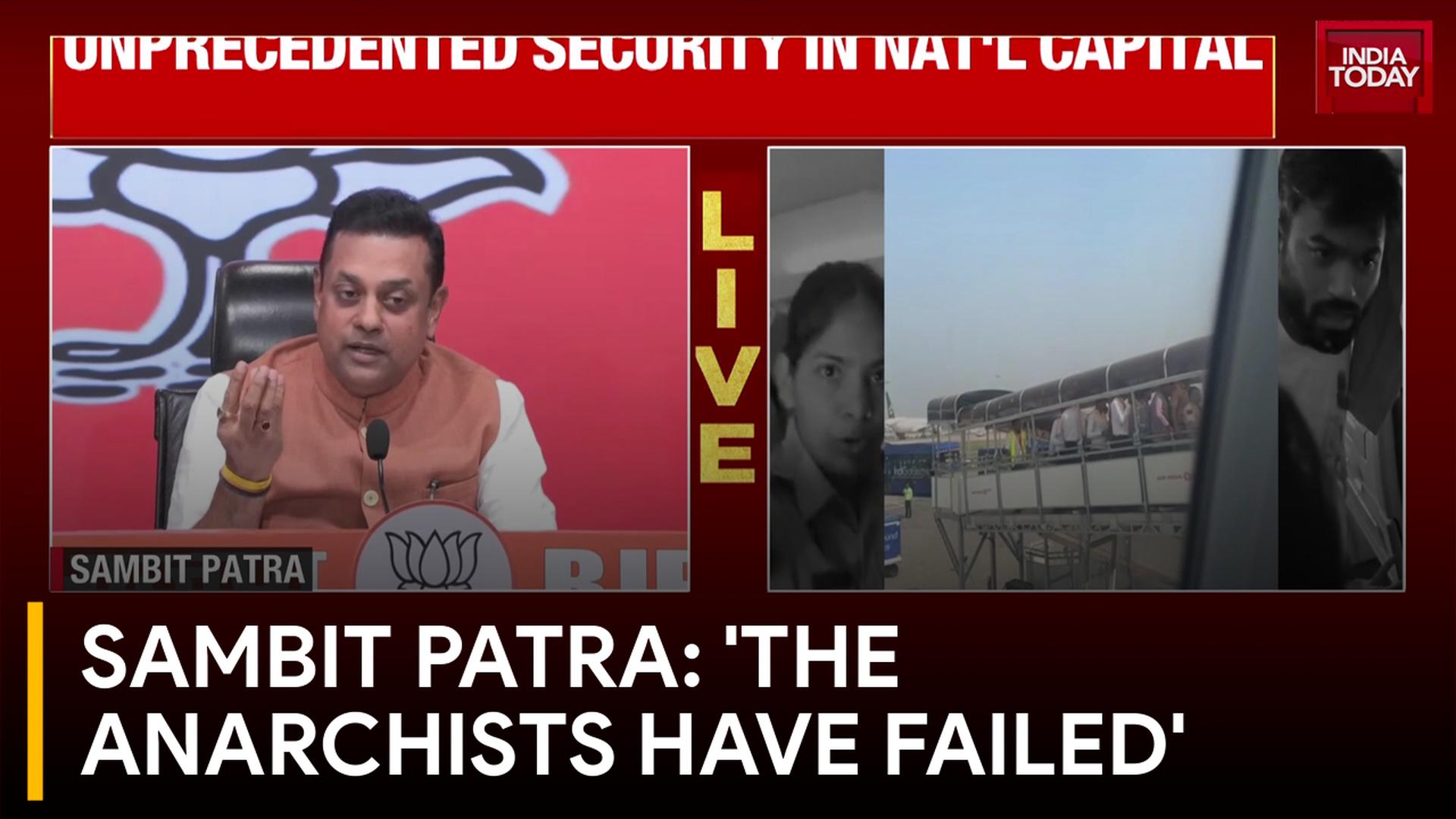
New Delhi: Bharatiya Janata Party leader and Member of Parliament Sambit Patra launched a scathing attack on the opposition during a press conference in the national capital, declaring that the anarchists had failed following a wave of demonstrations. Patra labeled the opposition's protests regarding alleged electronic voting machine manipulation and demands for the resignation of Chief Election Commissioner Gyanesh Kumar as a complete flop show.
During his address, Patra specifically criticized Leader of the Opposition Rahul Gandhi for dragging the President of India into street politics without providing any credible evidence to substantiate claims of voter fraud. To counter the allegations of widespread dissatisfaction, the BJP leader pointed to recent by-election victories secured by the BJP and the National Democratic Alliance across various regions, including Assam, West Bengal, and Puducherry.
The political remarks followed a day of intense security mobilization in central Delhi, which was effectively turned into a fortress following a protest call issued by the Caucus Janata Party. Authorities deployed approximately 20,000 security personnel, drawing from the Delhi Police, Central Armed Police Forces, Rapid Action Force, and Sashastra Seema Bal, with 6,500 personnel concentrated strictly around the Jantar Mantar area.
Ahead of the planned demonstrations, security forces detained several notable figures, including Abhijeet Deepke, Saurav Das, and Ashutosh Ranka, upon their arrival at Delhi Airport, while YouTuber Dhruv Rathee was detained with the cooperation of Gurugram Police. Municipal and security disruptions were widespread as authorities closed dozens of metro stations, restricted mobile internet services within a four-kilometre radius, established twelve temporary detention centers, and blocked major thoroughfares leading to Jantar Mantar, such as the Mandi House roundabout, Feroz Shah Road, and Janpath.
Law enforcement officers outfitted with body cameras and supported by extensive closed-circuit television surveillance performed rigorous inspections of vehicles and daily commuters at key transit points like ITO. These extensive measures were enacted to thwart unauthorized gatherings and maintain public order amidst escalating political tensions in the capital.