


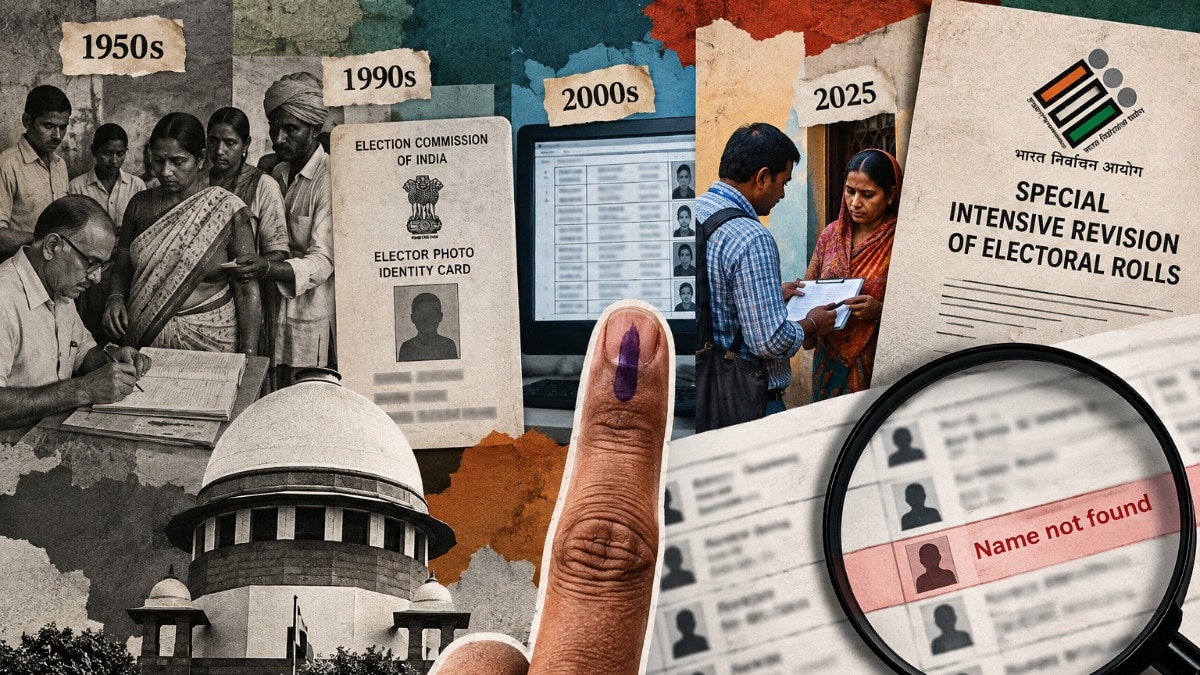
Finding that a name has vanished from an electoral roll often happens unexpectedly, turning administrative procedures into personal hurdles. The Special Intensive Revision of electoral rolls has triggered heightened friction between political opposition groups and the Election Commission, with critics arguing that eligible citizens risk losing their voting rights while election authorities defend the integrity of the process.
During West Bengal's recent revision exercise, personal experience highlighted these administrative complications when a family entry was flagged under logical discrepancy because an older record lacked a father's name following a relocation between constituencies. Resolving the matter required coordinating documentation remotely, utilizing video calls alongside local booth-level officers to re-establish identity and secure inclusion on the constituency roll. Such instances demonstrate how decades-old historical archives have become intertwined with contemporary digital verification methods.
India's management of voter lists has transformed significantly since the nation's inaugural general election in 1951 and 1952, when authorities cataloged roughly 173 million electors without the aid of computerized infrastructure or photographic identification. Operating entirely through manual paper enumeration, early officials faced frequent difficulties with incomplete entries and inaccurate details. To combat these shortcomings, the Election Commission eventually established a cyclical approach where specific portions of a state underwent intensive house-to-house enumeration annually over a multi-year span.
These intensive revisions required compiling electoral rolls entirely from scratch through direct door-to-door surveying, followed by draft publications and periods for public claims and objections. In contrast, summary revisions updated pre-existing lists without conducting fresh physical enumerations, providing distinct mechanisms to either rebuild or merely correct the registry.
By the 1980s and 1990s, voter list updates increasingly focused on tackling duplicate entries, demographic shifts, and questions surrounding residency, prompting widespread revisions across various regions. A major technological turning point arrived in 1994 with the introduction of the Electors Photo Identity Card programme, followed by the computerisation of electoral rolls beginning in August 1997. Transitioning from printed ledgers to searchable digital databases allowed authorities to standardise and share updates more efficiently, though digitisation alone could not automatically resolve deeper questions regarding correct constituency placement or historical record matching.
The early 2000s introduced further intensive revisions across multiple states, establishing historical records that would decades later serve as critical reference benchmarks. When intensive revision exercises were rolled out in regions like Bihar and West Bengal, authorities utilized older baseline rolls from the early 2000s to verify contemporary eligibility, bridging past administrative archives with modern verification frameworks.