


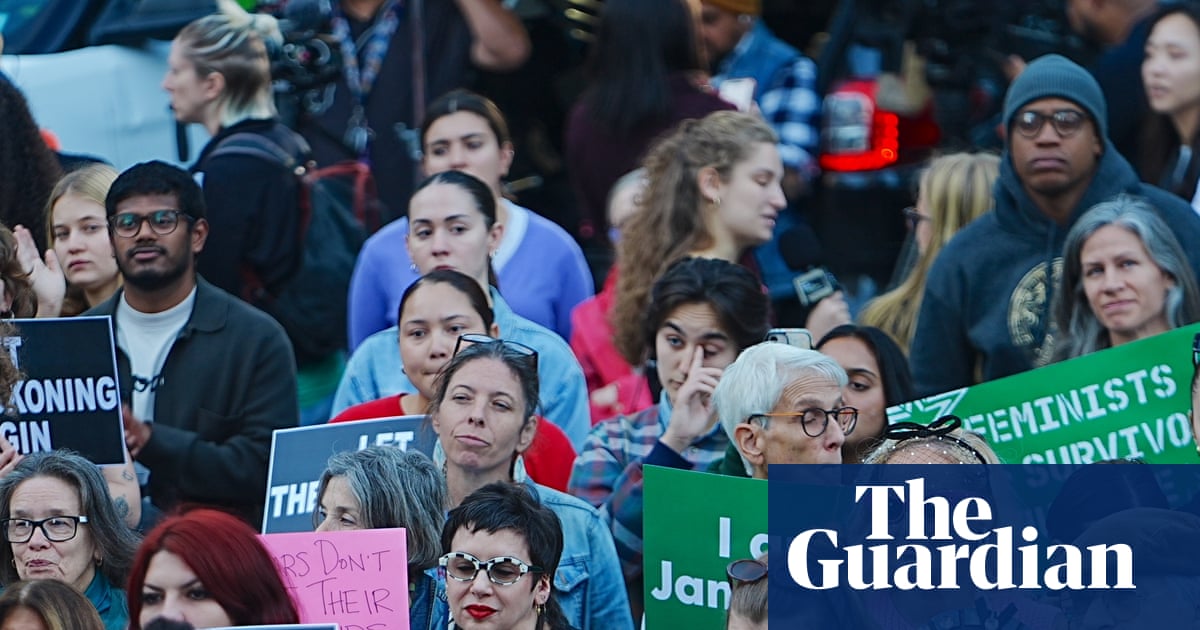
Tens of thousands of protesters gathered at city halls and college campuses across the country to demand an end to sexual violence following weeks of public outcry over the mishandling of campus sexual assault cases at Cornell University and Louisiana State University. The nationwide demonstrations organized by groups including Women’s March, Feminist Generation, and Me Too International demanded justice for survivors and called for reforms to Title IX protections.
While the crowd at the Stop Sexual Violence rally in New York City was predominantly female, men of all ages also attended to show their support. Six of these male participants shared how they are personally taking a stand against rape culture in their daily lives, starting with addressing everyday toxicity.
Kaif Gilani, 29, emphasized the importance of men stepping up rather than leaving the burden entirely to women. He noted that making a difference locally can involve simple actions, such as speaking up against fraternity brothers who make toxic or misogynistic comments in group chats, as well as attending public rallies.
Ben Tee, 42, highlighted the necessity of preventive measures, pointing to pending legislation in the New York state legislature that would make consent education a mandatory part of the school curriculum. Tee, who is involved in political party leadership, noted that while increasing legal penalties and closing loopholes are important, society must focus heavily on prevention because education has been proven to significantly reduce victimization and perpetration rates.
Peter Walsh, 64, noted that his personal experiences as a man taught him that many boys need explicit guidance on appropriate behavior and understanding consent, arguing that men must take a greater role in teaching these values.
Nicola Francia, 21, pointed out that dismantling rape culture requires individuals to examine their own positions and social environments. Drawing from his background in Italy, where high-profile violence against women sparked national mobilization, Francia stressed the importance of being fully aware of social dynamics and ensuring that women are not made to feel uncomfortable by intoxicated or aggressive peers.
Shalin Upadhyay, 27, described rape culture as a systemic issue that begins with small, normalized behaviors like objectifying language and casual disrespect toward women. He noted that these attitudes eventually foster an environment where sexual assault occurs and where survivors frequently face victim-blaming, a cycle he is determined to oppose.
Daniel Olivier, 37, reflected on a lifetime spent in environments like the music and alcohol industries where derogatory remarks about women are frequently overheard. Olivier emphasized that constant vigilance and active intervention are necessary to counter the pervasive misogyny encountered in everyday social settings.