


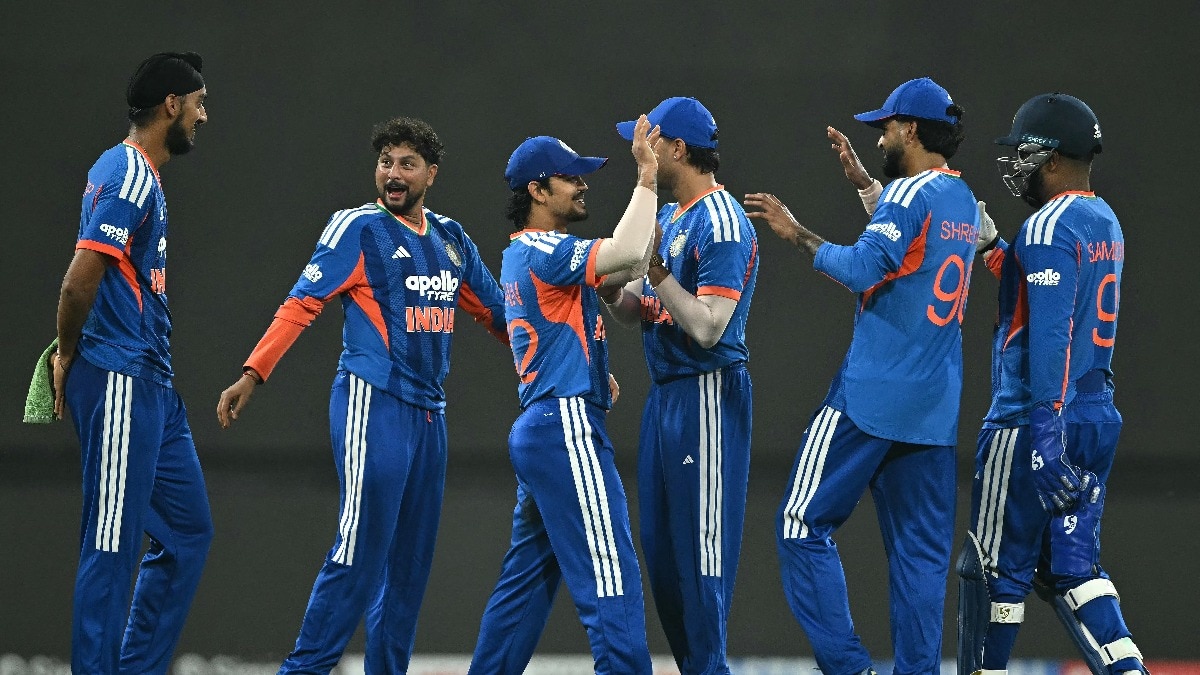
New Delhi: India's failure to defend a total of 249 against the West Indies has renewed concerns over the depth of their bowling attack, prompting former spinner Ravichandran Ashwin to warn that the national setup needs to do more to foster quality bowling talent. Ashwin believes that adapting to challenging, high-scoring conditions should not depend entirely on having a generational match-winner like Jasprit Bumrah in the lineup.
Speaking on his digital channel following India's six-wicket defeat in the second T20I in Ranchi, Ashwin questioned the team's long-term investment in bowling resources and the level of game awareness displayed during the chase. He emphasized that the system has not placed sufficient emphasis on cultivating elite bowlers, resulting in low probabilities of unearthing such prospects naturally.
India's defeat occurred during a high-scoring encounter that yielded 501 runs in just 38.3 overs. After India posted 249 for five, fueled by aggressive knocks from Sanju Samson and Tilak Varma, the West Indies chased down the target in 18.3 overs. Shai Hope scored an unbeaten century, while Sherfane Rutherford added a rapid half-century, anchoring a match-winning partnership that levelled the five-match series at 1-1.
Ashwin also scrutinized India's tactical decisions in the field, questioning the deployment of certain bowlers and suggesting that wrist-spinner Kuldeep Yadav could have been introduced earlier. Although fast bowler Mayank Yadav claimed three wickets inside the powerplay to give India an early advantage, the hosts ultimately struggled to execute defensive bowling plans.
Head coach Gautam Gambhir similarly addressed the match outcome, calling for a fairer balance between bat and ball and noting that modern pitches heavily favour batters. While acknowledging the difficulty of bowling in such environments, Gambhir maintained that conditions alone could not excuse the loss and stressed the need for India to improve at defending large totals.
Ashwin's observations highlight a broader question regarding India's pace bowling depth. Since veteran seamer Bhuvneshwar Kumar last played a T20I in 2022, India have tested 23 different fast bowlers in the format, with only Jasprit Bumrah and Arshdeep Singh managing to establish consistent roles amid frequent injuries and changes.
As the series stands even at one match apiece, India faces immediate pressure to adjust their tactics, while managing the longer-term challenge of building a versatile attack capable of succeeding without sole reliance on Bumrah.