


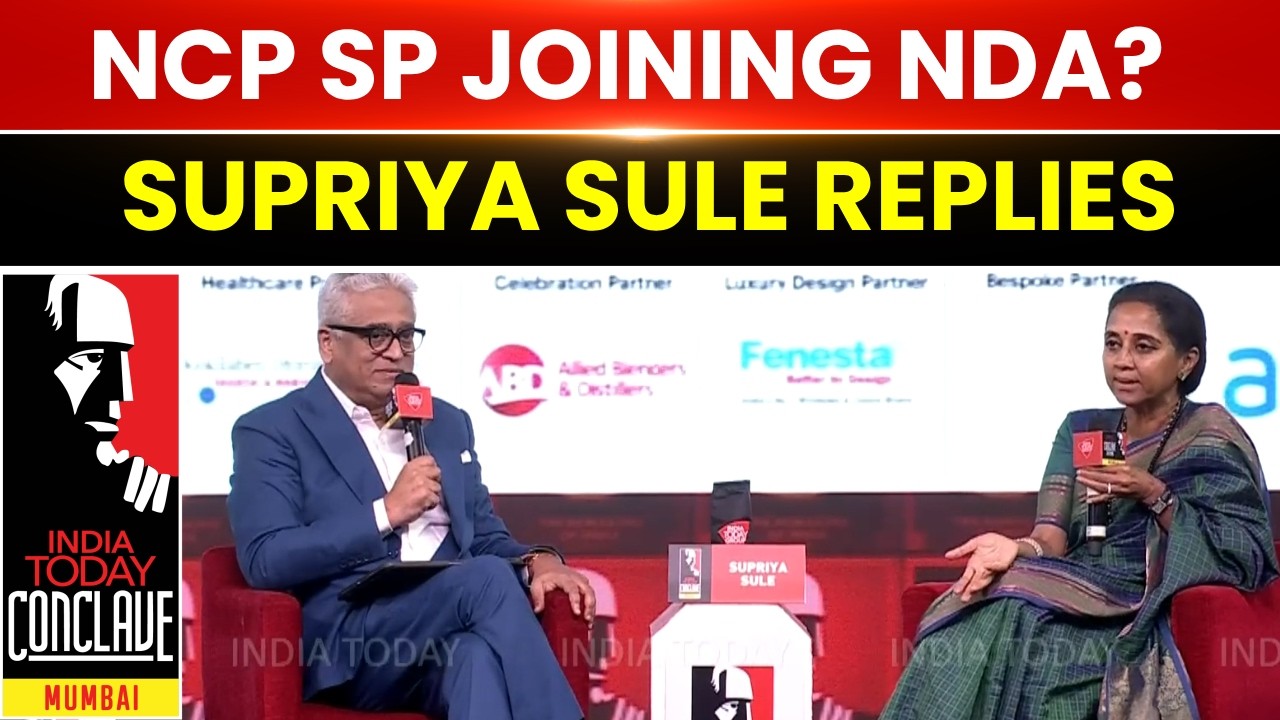
Delhi: A senior leader from the Nationalist Congress Party (Sharadchandra Pawar) has firmly dismissed speculation regarding any potential political alliance with the National Democratic Alliance, clarifying that maintaining personal relationships across party lines does not equate to political compromise. Stressing that robust dialogue between the treasury and opposition benches is essential for a functioning parliamentary democracy, the speaker reflected on past inter-party relations during the UPA era. Addressing inquiries concerning internal party discussions with Ajit Pawar following the July split, the speaker acknowledged that efforts had been underway to work together and navigate a way forward in the larger interest prior to his passing.
Speaking at a prominent conclave, discussions also centered on the recent detention of activists after landing in Delhi following their departure from Mumbai. The speaker condemned the government action as cowardly, maintaining that the planned agitation in Delhi was peaceful and cause-driven, while questioning the lack of dialogue from authorities who cited intelligence apprehensions and Section 144. Addressing allegations that NCP Sharadchandra Pawar leaders backed the youth outfit to attract younger voters, the speaker asserted that party patriarch Sharad Pawar visited Jantar Mantar to uphold democratic values and the Constitution. Furthermore, the discussion addressed demands concerning the Chief Election Commissioner, noting that opposition protests in Parliament went unheeded and arguing that comprehensive electoral reforms are vital to ensure transparency and fairness in Indian elections.
Meanwhile, Prime Minister Narendra Modi addressed a public gathering in Tamil Nadu, inaugurating and laying the foundation stone for development initiatives worth thirteen thousand crore rupees. Emphasising infrastructure, public health, and manufacturing, he noted that projects spanning metro rail networks, road connectivity, and port modernisation will accelerate industrial growth and generate youth employment across the state. Pointing out that India has become the world's second-largest mobile manufacturer and significantly increased its defence and electronics exports, he reaffirmed the Union Government's commitment to cooperative federalism and empowering state economies. Reflecting on his twenty-five continuous years as a head of government since first taking oath as Chief Minister in October 2001, he underscored that strong states form the foundation of a developed nation.
In a separate development, student and youth activists addressed a press conference detailing mass detentions, police brutality, and severe curbs imposed across Delhi during recent demonstrations. The speakers alleged that law enforcement personnel entered an aircraft to forcefully abduct key activists, confiscated mobile devices without providing proper documentation, and denied legal representation. They highlighted heavy security deployments across the national capital, including the closure of numerous metro stations and transit disruptions, creating an emergency-like situation. Activists further raised concerns over police entering a prominent gurdwara to detain protesters, intimidation of volunteers' families, and harassment directed at independent journalists covering the events, while declaring their resolve to sustain nationwide peaceful demonstrations defending democratic rights.