


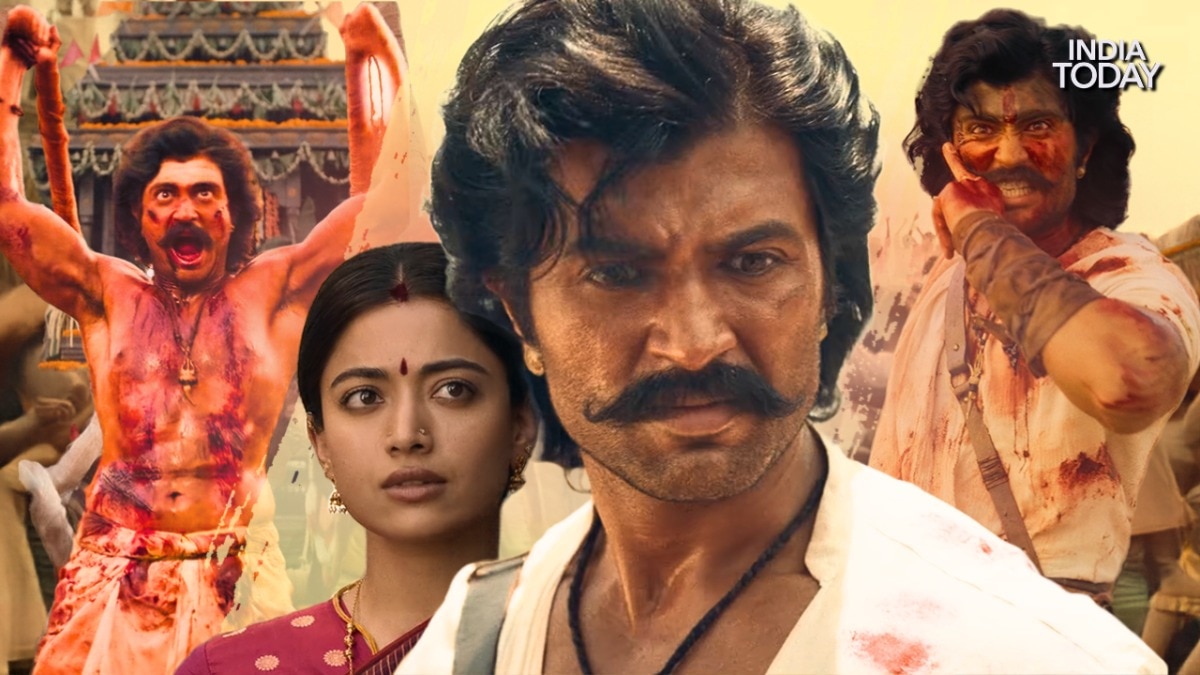
Indian cinema has long harbored a fascination for protagonists who are completely immune to defeat. These characters routinely take on entire armies, endure hails of bullets, and walk away with barely a scratch. While being outnumbered and outgunned, the outcome remains certain because the hero simply must win. This trope of the invincible messiah raises critical questions about modern storytelling, particularly whether a character truly needs absolute invincibility to qualify as a hero. The core issue is not necessarily that these figures are larger than life, but rather when films confuse a predetermined destiny to win with actually earning a victory. The Vijay Deverakonda and Rashmika Mandanna starrer Ranabaali serves as a prime case study of how this narrative choice can diminish a hero's impact.
Set against the backdrop of the Great Madras Famine spanning 1876 to 1878, the narrative begins with the birth of a prodigal son destined to protect the people of Rayalaseema, who worship the deity Bhadramallanna. An early scene establishes that Singanamala Bobbili Ranabaali, played by Deverakonda, is predestined to be a fierce protector and will only perish after fulfilling his ultimate purpose. This introduces a fundamental obstacle for suspense: if survival is guaranteed by the stars, the actual danger is difficult for viewers to take seriously. As he grows into a formidable fighter, injuries in battle leave virtually no permanent mark due to what amounts to prophecy armour rather than realistic resilience.
This lack of peril extends into major action sequences, such as when Ranabaali storms a British military camp filled with armed officers. Bullets fail to pose a threat because they are easily deflected or rendered useless, or because exploited workers conveniently switch sides to assist him. Not a single projectile manages to graze the protagonist. While Deverakonda performs convincingly and looks the part, the reliance on cinematic convenience shifts the focus away from hard work and places it squarely on plot armor. Instead of worrying whether the character will survive an encounter, audiences are reduced to observing the elaborate spectacle of how he will effortlessly walk away from it.
Despite these heavy-handed displays of might, Ranabaali features fleeting glimpses of a much stronger narrative whenever the focus shifts from the invincible warrior to the human being underneath. The evolving dynamic between the lead character and Jayamma, played by Mandanna, introduces emotional texture and presents a relatable individual with genuine attachments. The irony remains that the production achieves its most compelling moments when it abandons the relentless push to showcase absolute invinvibility and instead leans into human connections.
Contrasting examples like S.S. Rajamouli's Baahubali illustrate why effort matters in defining cinematic strength. Rajamouli dedicated substantial screen time to establishing physical prowess through rigorous training and demanding feats, turning raw power into an earned part of the character journey rather than a divine handout. Even characters like Amarendra Baahubali or Superman, who possess immense strength, remain engaging because their invincibility is balanced by emotional vulnerabilities, moral values, and distinct internal conflicts. Without such vulnerabilities, an indestructible hero risks becoming little more than a one-note machine, because true strength requires limitations to give its victories genuine meaning.