


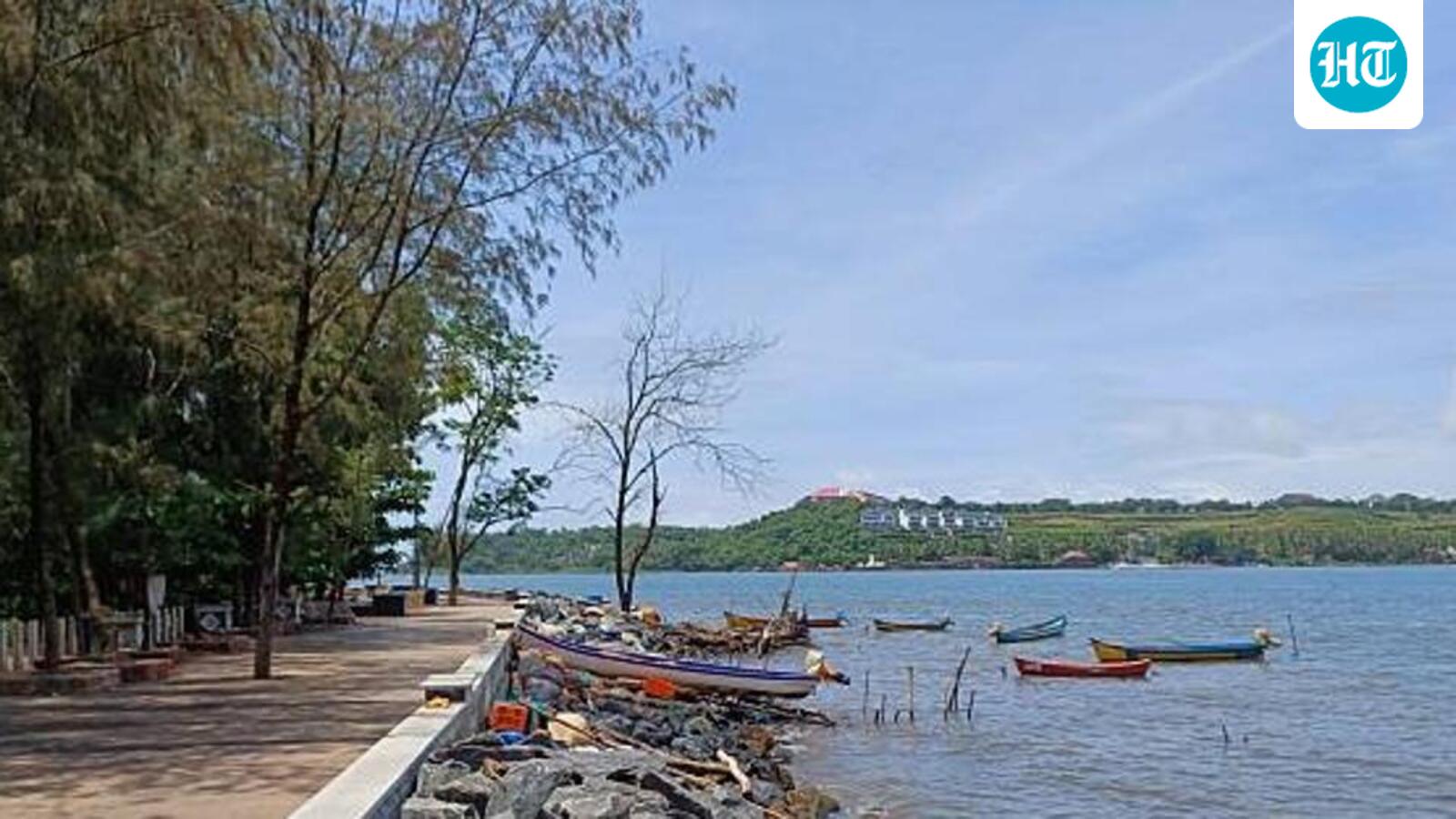
Goa’s Mandovi River, which flows past the state capital Panjim, has been found to be polluted with faecal coliform levels well beyond permissible limits at all 22 sampling locations, according to an interim report submitted by the Goa State Pollution Control Board to the Bombay High Court. The pollution board was tasked with conducting water quality sampling following reports of dead fish floating in one of the lakes feeding into the river, though the exact source of the pollution has not yet been established.
According to Central Pollution Control Board norms, the permissible limit for faecal coliform is 100 MPN/100 ml. The interim report indicated that fecal coliform numbers ranged from 130 to 540 MPN/100 ml during high tide and from 130 to 940 MPN/100 ml during low tide. The Most Probable Number is a microbiological unit used to estimate the total number of living microorganisms in a sample.
Based on high tide analysis reports, all 22 sampling points exceeded the permissible threshold. The highest reading of 540 MPN/100 ml during high tide was recorded at several locations, including upstream from the Mandovi Bridge, near the cruise boats jetty, near Casino Majestic Pride, near the mid-point towards the mouth of the river downstream of anchored casinos, and near Panaji. Similarly, low tide analysis showed every sampling point exceeding the limit, with the mouth of the river towards the estuary and downstream of anchored casinos both registering the peak count of 940 MPN/100 ml.
A comparative analysis of tidal conditions revealed that faecal coliform contamination is significantly higher during low tide compared to high tide, a trend also noted in samples analyzed during the pre-monsoon season. The board stated that it aims to identify and contain pollution from non-point sources, noting a greater input of microbial load through sewage effluent runoff into the river. Potential non-point sources along the Panaji city shore include the Ourem Creek, city market drainage, and Santa Inez creek, while sources along the opposite bank in Betim include the fishing jetty, fish market, and seasonal storm drains.
The high court instituted a suo motu public interest petition after Mala Lake, located along the Ourem Creek on the city's eastern edge, suffered from contamination and neglect, resulting in hundreds of dead fish floating in the water earlier in the year. Meanwhile, other water parameters for the Mandovi River, such as pH levels, turbidity, dissolved oxygen, biological oxygen demand, and the presence of nitrates and nitrites, were found to remain within permissible limits.
State Advocate General Devidas Pangam stated that the state will assist the Goa State Pollution Control Board in carrying out surveys of various sources, including creek discharges and drainages, to determine the exact origin of the pollution.