


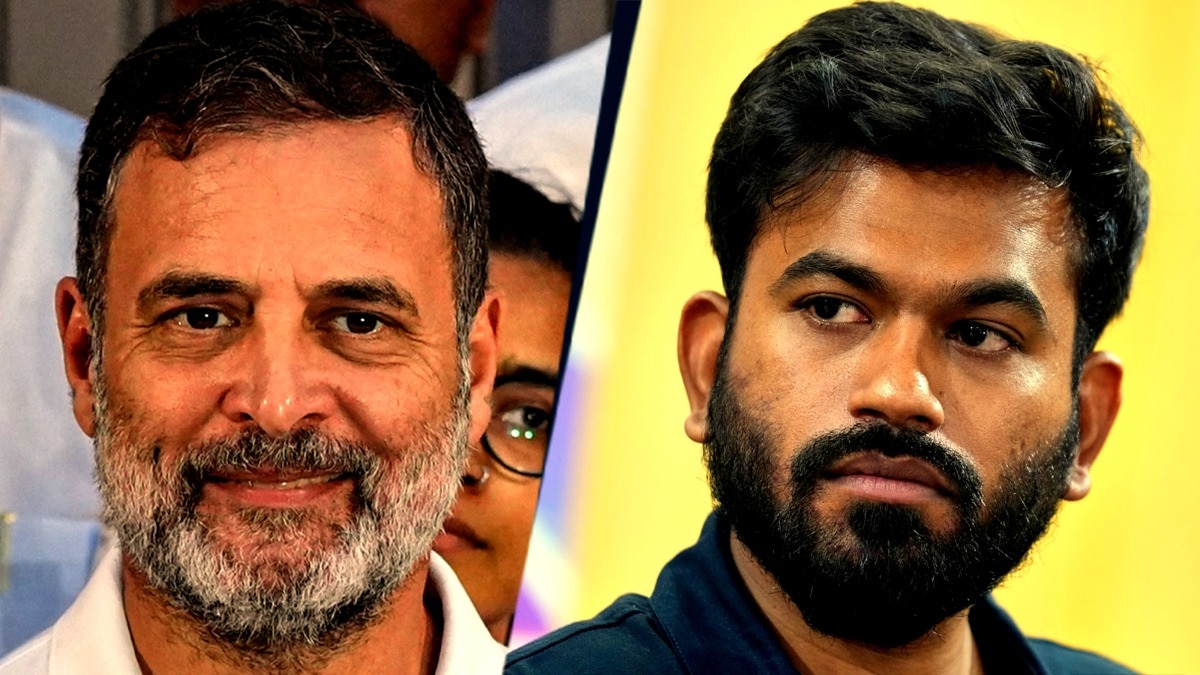
For several months, the Congress party and the Cockroach Janta Party found themselves aligned on multiple issues, including exam paper leaks and the SIR exercise, while carefully avoiding sharing a common platform. Both senior Congress leader Rahul Gandhi and CJP head Abhijeet Dipke maintained a distinct distance from one another, avoiding even digital interactions. That dynamic appeared to shift when Rahul publicly backed the CJP for the first time following the arrest of its key figures after a demonstration at Jantar Mantar.
While offering his support, the Leader of the Opposition stopped short of explicitly naming the CJP in his remarks. Emphasizing that waving the national flag during a peaceful assembly is not a crime, he described the imprisonment of young demonstrators as an act of cowardice. The carefully crafted social media statement prompted a swift expression of gratitude from Dipke, signaling a rare moment of public reconciliation between the two camps.
The development followed the detention of CJP leaders Saurav Das and Ashutosh Ranka, who were subsequently sent to Tihar Jail for breaching peace bonds and entering Jantar Mantar after the location was officially denotified as a protest site. Previously, the Congress maintained a strict distance from the CJP, choosing to hold parallel demonstrations during major agitations such as the July protests against exam paper leaks, and declining to join other CJP-led initiatives.
Underlying this historical hesitation was internal speculation within the Congress that the CJP might function as a secondary outfit for the Aam Aadmi Party, potentially siphoning young voters away from Rahul. Despite these concerns, the CJP's month-long youth mobilization ultimately compelled political engagement, inspiring the Congress to ramp up its own outreach to Gen Z and students through targeted campaigns and campus interactions.
A comparable separation of efforts previously appeared during demonstrations concerning alleged irregularities involving Chief Election Commissioner Gyanesh Kumar. While the Congress and the broader INDIA bloc organized street rallies in central Delhi, the CJP conducted parallel actions in cities like Mumbai and Bengaluru. Although Rahul initially avoided direct references to the CJP during earlier crackdowns, his tone began to evolve during subsequent joint opposition marches.
Addressing reporters and framing the broader movement, Rahul stressed that all civil actions function collectively under a single banner for constitutional rights, regardless of differing organizational names. This evolving rhetoric, culminating in his indirect defense of the detained CJP leaders, points toward a strategic recalibration within the Congress leadership as youth-led opposition movements gain momentum.