


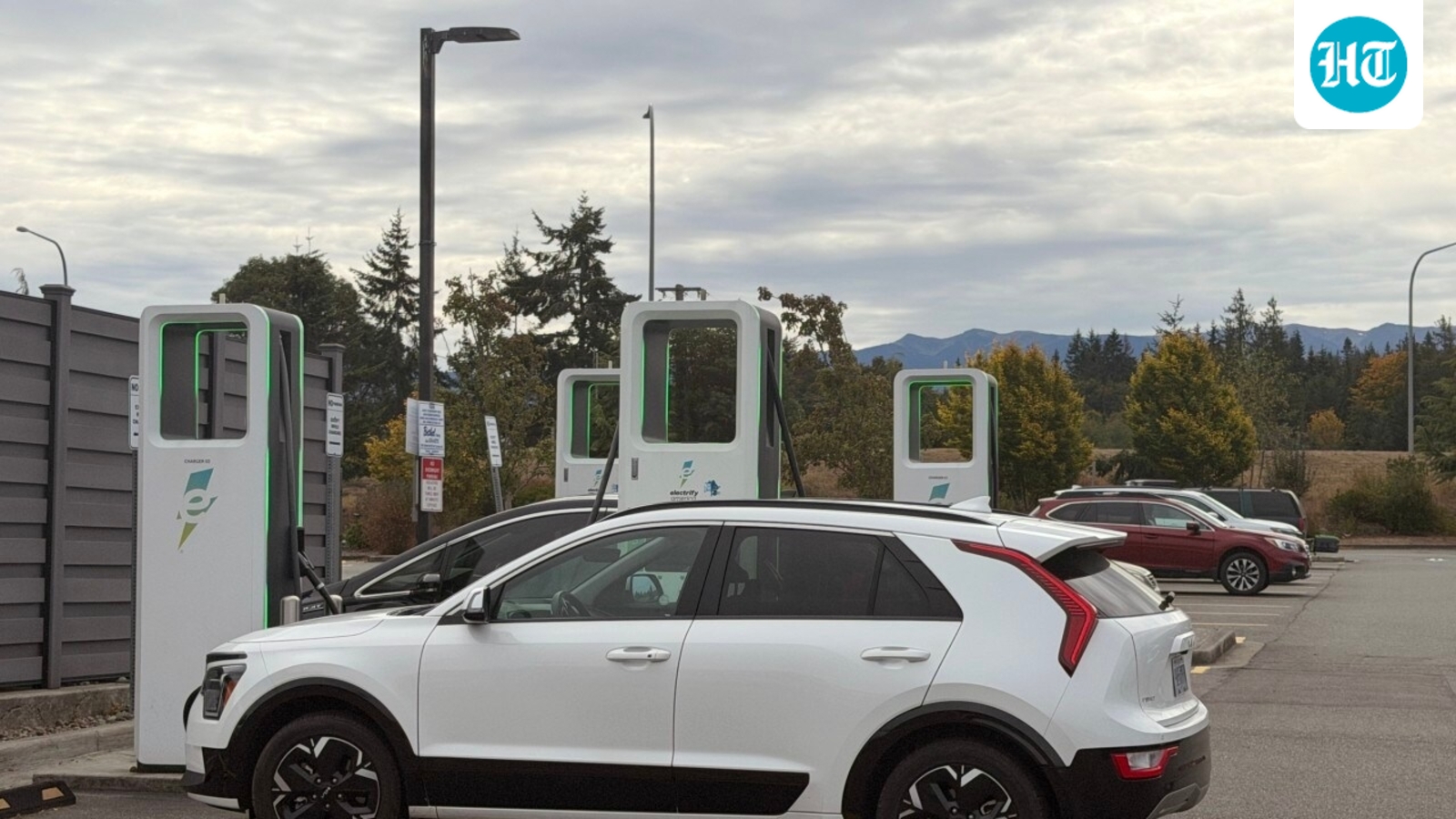
SEQUIM, WASH.—The dashboard on my Kia Niro rental flashed a warning about 40 miles from Lake Crescent, signaling that I needed to charge up soon or risk not reaching my destination, even though the gauge showed a remaining battery range of 110 miles. It was my unsettling introduction to electric-vehicle range anxiety, threatening my plans to watch the sunset from an Adirondack chair at Lake Crescent Lodge.
Everything worked out in the end thanks to a charging station at a Walmart in Port Angeles and the kindness of a stranger. A local coffee shop and bakery owner was charging his electric Cadillac in the next spot and kindly showed me how to operate the charging system, while I also got to pet his St. Bernard, Romulus, while we waited.
Electric vehicles are currently experiencing fluctuating market demand, with sales down sharply and rental companies scaling back their EV fleets. However, stubbornly high gas prices continue to draw interest from cost-conscious travelers seeking alternative options through sites like AutoSlash. Intrigued by the potential savings, I set out to discover whether renting an EV is a smart financial move for novices or a time-wasting headache on a road trip.
I paid $370 in total taxes and fees for a four-year-old electric vehicle rental from Budget to cover 500 miles around the Olympic Peninsula from Seattle. The only cheaper option was a pickup truck at $350, while a gas-powered economy car cost $430 and a regular SUV ran $477. Unprepared and hoping to see how things would unfold naturally, I did little advance research beyond scouting out charging locations.
The Budget representative at Seattle-Tacoma International Airport offered no assistance regarding battery levels or charging instructions, simply handing over the keys and spot number. The car showed a range of 185 miles upon departure, and my journey to Lake Crescent included a ferry ride from downtown Seattle spanning about 115 miles. Relying on my calculations and chatbot guidance, I believed I could reach the lodge without stopping, especially since the hotel offered complimentary chargers.
Those plans changed when the car's warning message flashed, prompting me to charge the vehicle from 44% to 72% in about 30 minutes. Although the station promised hyper speeds, the high-end capability applied to luxury models rather than my Kia Niro, costing me $10.58 while unleaded gas down the road sold for $5.55 a gallon.
Not all charging downtime was wasted, as another stop allowed for a leisurely lakefront breakfast, a hike, and packing while the vehicle reached a full 100% charge over four and a half hours. That proved useful for the long drive ahead toward Cape Flattery and La Push on the Pacific Ocean, though by the time I reached Forks, Washington, my range had dropped to 108 miles.
That night introduced major complications when I discovered I needed the Tesla app to use the chargers outside the Dew Drop Inn motel, and my destination resort lacked chargers despite having a similarly sounding name. After eventually downloading the Tesla app and managing the required model specifications, I successfully used an adapter the next morning to charge the car to 93% for a cost of $21.88, accompanied by a convenient pit stop at a nearby supermarket.
After a few more charging sessions, including another stop at Walmart, I briefly considered returning the car early to escape the driving and charging stress. I ultimately kept the vehicle, completing the journey with a total charging bill of $57.19. While an EV might not be my top choice for a time-sensitive road trip in the future, it provided a smooth ride and proved less stressful than anticipated, making it a viable option at the right price.