


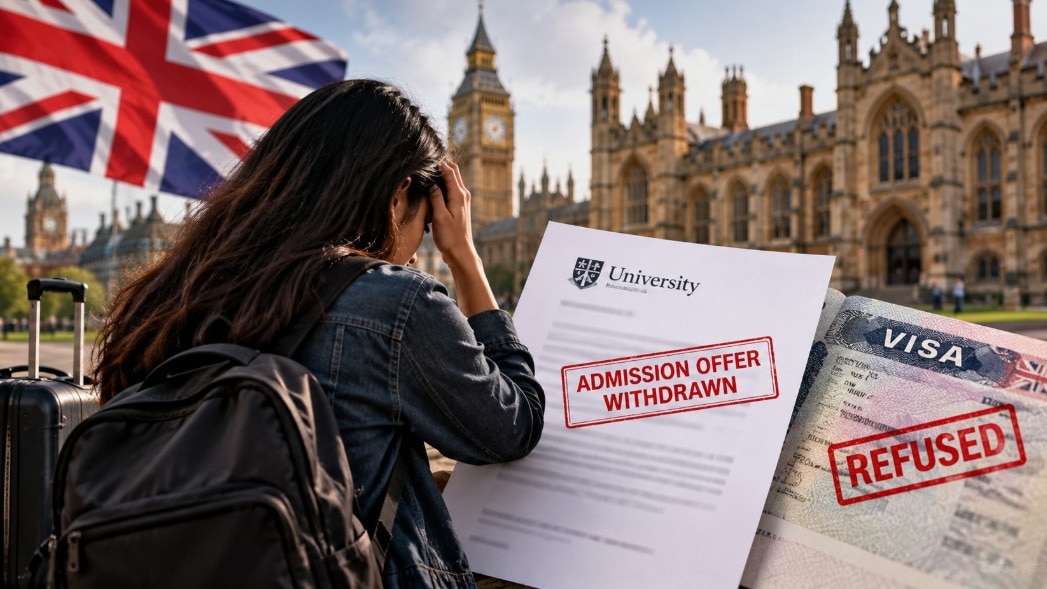
New Delhi: UK universities are rescinding some international admission offers, including those for applicants from India, Pakistan, Nigeria, and Bangladesh, as stricter student visa compliance regulations threaten their sponsorship licences. The shift follows a government decision under the Basic Compliance Assessment framework to lower the permitted student visa refusal threshold from 10 percent to 5 percent. The policy change took effect in June 2026, forcing institutions to reevaluate prospective students before they formally apply for visas.
Under the updated regulations, universities risk losing their ability to sponsor international students if they fail to keep their refusal rates below the 5 percent limit. To protect their status, certain institutions are proactively withdrawing admission offers from candidates they consider high-risk for visa denials. Because a university offer is typically a prerequisite for securing a UK student visa, its revocation often leads to the cancellation of the visa application itself, sparking widespread anxiety across the higher education sector.
Home Office statistics for the first half of 2026 show that 10.5 percent of UK study visa applications were withdrawn, a sharp increase compared to 2.3 percent during the same period in 2025 and 0.4 percent in 2023. Higher education leaders point out that preemptive offer withdrawals by universities have been a major driver behind this statistical surge. The trend has impacted specific source countries unevenly, with visa application withdrawals involving Pakistani applicants climbing to 40.9 percent, Bangladesh rising to 23.5 percent, and Nigeria reaching 22.7 percent.
Indian applicants have also experienced an increase, with withdrawn study visa applications rising from 1.2 percent in early 2025 to 5.2 percent in early 2026. However, the UK has not implemented a blanket restriction on Indian students, though admissions departments are applying heavier scrutiny under the tightened framework. Sector representatives have voiced concerns regarding the predictability and consistency of official visa processing, while government officials maintain that genuine students remain welcome even as immigration routes face tighter oversight to prevent abuse.
Education experts advise prospective international applicants to plan meticulously and ensure all academic, financial, and procedural conditions are met within strict deadlines. Students are encouraged to maintain awareness of alternative study destinations such as Germany and France, and to evaluate institutions based on academic fit, affordability, and career outlook. Before sending money, applicants must verify admission details directly with their chosen universities, inspect refund policies regarding tuition deposits, and seek clear written explanations if an offer is unexpectedly rescinded.