


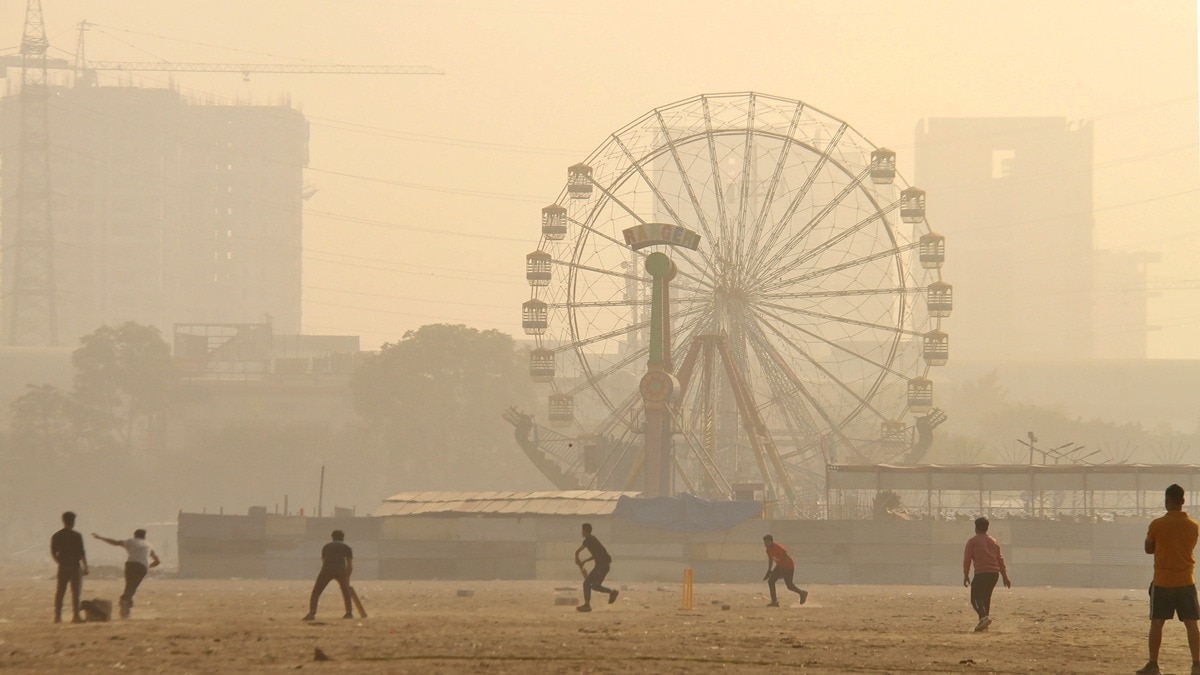
New Delhi: India dominated a global ranking of the world's most polluted cities on a Monday afternoon, accounting for 13 out of the top 20 urban centres with the highest air pollution levels. However, Delhi, a city frequently associated with severe air quality challenges in the country, remained absent from the top 20 list at the time the data was captured.
Data sourced from AQI.in at approximately 3:30 pm IST on October 19 placed Bulandshahr in Uttar Pradesh third globally with a US AQI reading of 198, which falls into the unhealthy category. Agartala in Tripura secured the fourth spot with an AQI reading of 181.
Additional Indian locations appearing in the top 20 included Pali in Rajasthan and Muzaffarnagar in Uttar Pradesh, both registering AQI levels of 174. Burhanpur in Madhya Pradesh also hit 174, while Rohtak in Haryana recorded 172. Kota in Rajasthan registered an AQI of 170, followed by Mumbai at 167, Hapur at 166, Hisar at 165, Bikaner at 165, and Bareilly at 164.
Globally, Indonesia claimed several positions near the pinnacle of the index. Palangkaraya located in Central Kalimantan took the first rank globally with a US AQI of 242, categorised as severe, while Palembang logged 207, also landing in the severe tier. Sampit and Jambi held the fifth and sixth positions with scores of 180 and 176 respectively, alongside Malaysian cities including Putrajaya, Kuala Lumpur, and Petaling Jaya.
Although Delhi managed to avoid inclusion in the global top 20 index during this assessment, the capital city experienced a noticeable drop in air quality overnight. Historical metrics for Delhi indicated that the US AQI touched a peak of 191 during the early morning hours at 7:31 am on October 19, before tapering down throughout the day from a prior low of 126 recorded the previous afternoon.
Experts note that real-time rankings function purely as temporal snapshots that fluctuate alongside shifting weather patterns, emission shifts, and atmospheric conditions. Under the US Air Quality Index framework, scores sitting between 151 and 200 are classified as unhealthy, demonstrating that substantial health hazards can persist even when specific urban centres temporarily drop off global tallies.