


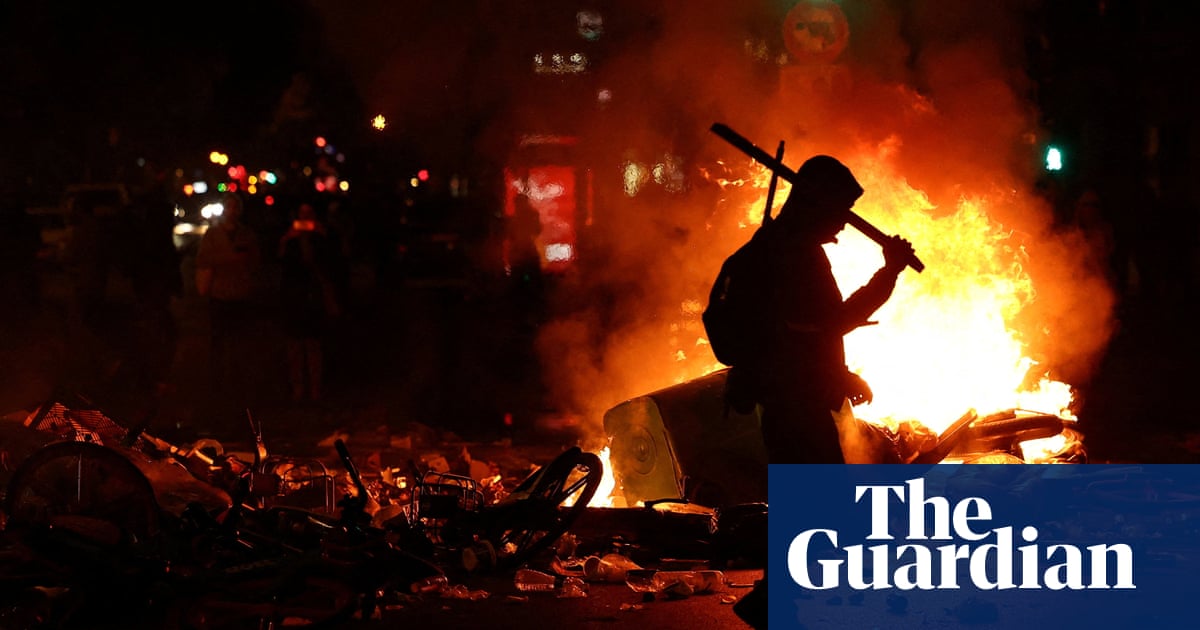
France’s interior minister has conceded that police lost control in several cities during violent protests over the weekend, prompting the country’s president to demand a comprehensive security review and new operational tactics to halt ongoing rioting and looting.
Laurent Nuñez stated that authorities suffered from a lack of anticipation in planning for Saturday's demonstrations, acknowledging that police numbers were frequently insufficient to manage rioters and looters operating on the fringes of the marches. Intelligence estimates had predicted around 200,000 demonstrators nationwide, but actual turnout exceeded 500,000, allowing peaceful protests to be hijacked and transform into one of the country's most violent bouts of unrest in recent years.
Nuñez revealed he offered his resignation to President Emmanuel Macron because he felt responsible for the breakdown in order, but the president declined it. Instead, Macron instructed Nuñez to ensure complete transparency regarding planning and intelligence shortcomings while implementing fresh operational methods for security personnel on the ground.
The widespread unrest follows weeks of high school student demonstrations marked by intermittent clashes with police, creating a tense political climate six months ahead of a presidential election and amid rising economic pressures. Authorities report that public buildings, including a town hall, were attacked and burned, while an estimated 2,000 shops were ransacked. Nearly 2,400 people were arrested—about 70 percent of them adults—and nearly 1,000 police officers and gendarmes sustained injuries.
Despite deploying 60,000 police and security forces across the country, Nuñez admitted the force was inadequate to contain organized groups of violent rioters in major urban centers such as Paris, Marseille, and Lyon. Speaking on French radio, he remarked that it would be impossible to look local shopkeepers in the eye after hundreds of businesses were looted and claim control had not been lost, though he also emphasized the primary culpability of violent rioters, looters, and ultra-left militants.
Justice Minister Gérald Darmanin similarly noted that intelligence failures left the state exposed, pointing out that effective policing relies heavily on reliable intelligence and mentioning that roughly 80 percent of those arrested are currently facing prosecution. Macron’s office announced that Nuñez has been tasked with quickly deploying new ground-level operational strategies for security forces.
Unrest persisted into Sunday, with Paris Mayor Emmanuel Grégoire reporting that about 30 shops were targeted in the capital that day alongside 350 overnight arrests. Grégoire argued that maintaining public order is a state responsibility and that the state bore the blame for the weekend's failures, warning that ongoing social grievances without clear political solutions mean protests are likely to continue.
Marseille Mayor Benoît Payan described the situation as nearly insurrectional, asserting that the events undermined the foundations of the Republic. Meanwhile, demonstrators blocked entrances to the Louvre Museum on Monday to protest police repression and support the student movement, forcing the world-famous institution to delay its scheduled opening.
In a televised address on Sunday, President Macron condemned the unbridled violence and announced that local authorities would be granted the power to ban certain demonstrations in the coming days, stopping short of declaring a state of emergency or implementing a curfew. Saturday's demonstrations originally brought together students, teachers, parents, unions, and workers to protest the high cost of living, mirroring similar economic demonstrations held over the weekend in Italy, Belgium, and Albania.