


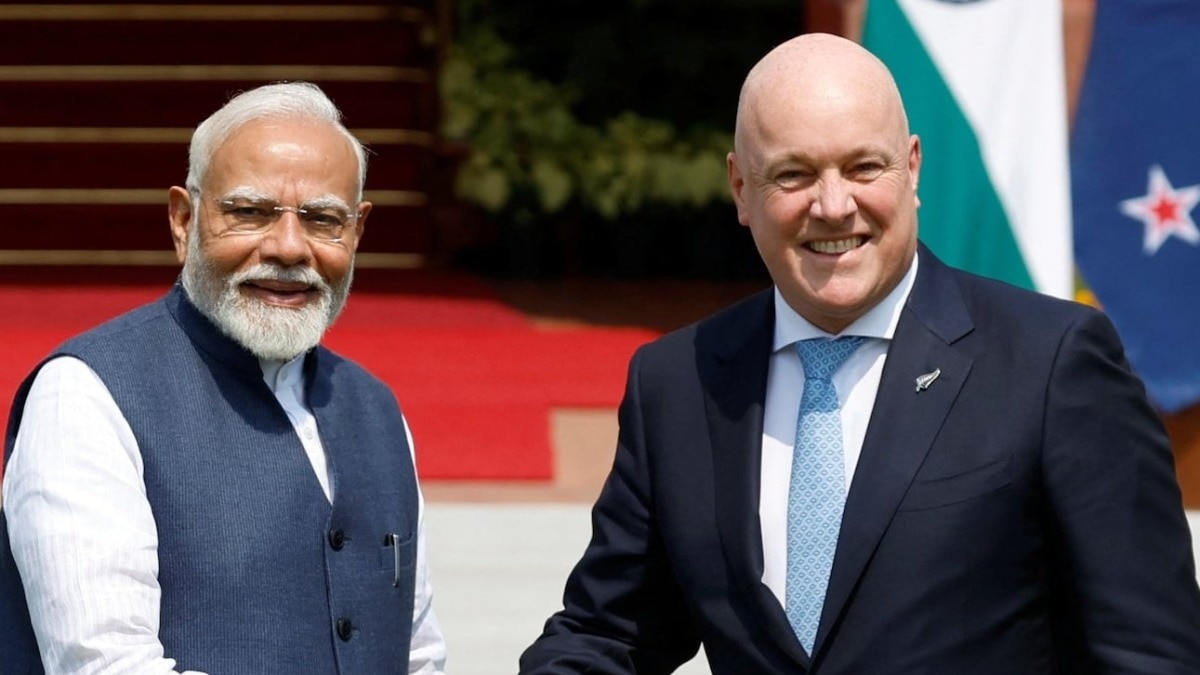
New Delhi: The India-New Zealand Free Trade Agreement (FTA) will come into force on October 20, with Commerce and Industry Minister Piyush Goyal stating that the pact will grant duty-free access to all Indian exports to New Zealand while deepening trade, investment, and technology ties.
The agreement was initially signed by Goyal and New Zealand's Minister for Trade and Investment Todd McClay in New Delhi on April 27, 2026. It is designed to create new opportunities for Indian exporters, farmers, micro, small and medium enterprises, and workers across multiple sectors.
Speaking at a ceremony to mark the entry into force of the pact, Goyal announced that both nations have agreed to work toward doubling bilateral trade in goods and services to NZ$7 billion, or approximately Rs 35,000 crore, by the year 2030.
He emphasized an expected 18 percent compounded annual growth rate in bilateral trade, providing businesses with ambitious benchmarks. According to Goyal, the agreement aligns with Prime Minister Narendra Modi's vision of Viksit Bharat 2047 to build a deeper economic partnership.
Under the terms of the deal, all goods exported from India to New Zealand will secure zero-duty access starting October 20. The minister noted that these benefits will touch labor-intensive industries, enhancing the competitiveness of Indian enterprises in the New Zealand market.
Goyal added that modern free trade agreements extend beyond tariff cuts by securing faster regulatory approvals, encouraging foreign investment into India, and establishing durable supply chains as part of the nation's broader trade expansion strategy.
The pact also incorporates a commitment to substantial direct investment of roughly Rs 2 lakh crore in India. The framework aims to support farmers, entrepreneurs, and workers while opening doors in science, technology, and innovation.
To aid the agricultural sector, a dedicated partnership has been formed to boost farm productivity and incomes through the establishment of specialized Centres of Excellence. The agreement additionally guarantees work visas for Indian students heading to New Zealand, permitting them to train and work locally for a defined period.
Demonstrating the potential for domestic manufacturing, Goyal pointed to equipment manufacturer JCB, noting that the company is exporting India-made machinery to international markets. During the event, the first shipment of JCB equipment bound for New Zealand was officially flagged off.
Goyal highlighted that JCB currently exports Indian-produced equipment to 140 countries with about 25 percent of its production going abroad, while expressing a target for the company to eventually elevate its export share to 50 percent.