


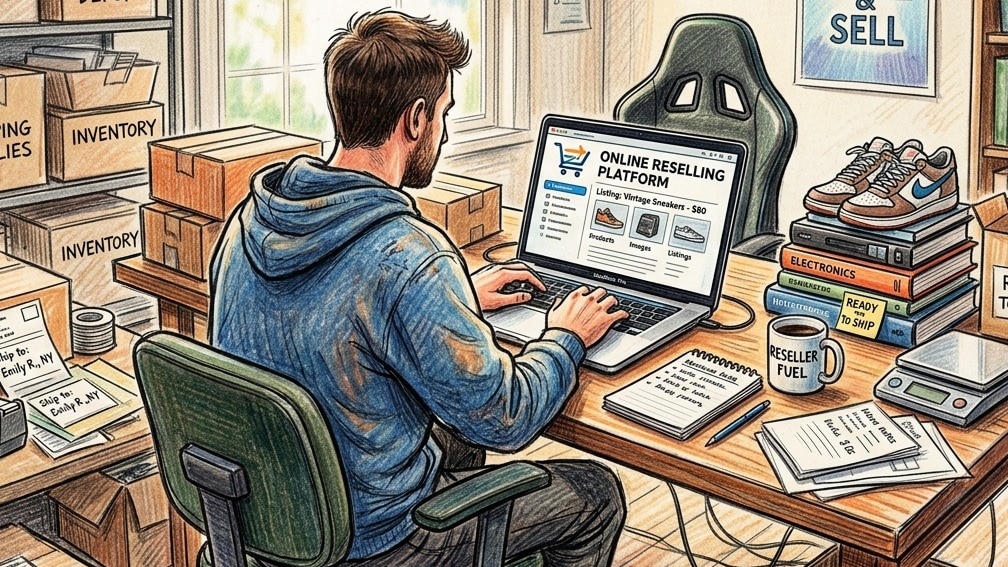
New Delhi: A teenager in the United States converted a $500 investment into a lucrative online reselling business that brought in thousands of dollars in monthly sales. Ethan Alexander started purchasing items from Walmart to flip them on Amazon at the age of 16. According to Business Insider, he generated close to $10,000 in revenue during his opening month, and his monthly sales eventually climbed past $25,000, amounting to nearly Rs 24 lakh.
His journey highlights the expanding digital reselling sector, where individuals purchase goods at discounted rates and list them on major e-commerce websites at a markup. This business model has attracted widespread interest as a viable side hustle or pathway to entrepreneurship.
Online reselling typically relies on acquiring goods cheaply and marketing them to buyers through digital marketplaces. Practitioners source merchandise from physical retail locations, wholesale suppliers, clearance events, and alternative vendors. One common technique is retail arbitrage, where operators spot discounted items in stores or online and resell them at elevated prices on platforms like Amazon. Popular categories span everyday essentials, personal care items, apparel, toys, and electronics.
Sellers have the option to handle inventory storage, packaging, and delivery independently or leverage platform fulfillment services. While fulfillment services simplify logistics, operators must factor associated fees into their overall operational expenses.
This entrepreneurial drive occurs alongside the broader expansion of the e-commerce seller ecosystem in India. Amazon India announced that its seller base surpassed 2 million in September 2026, with over 300,000 new vendors joining over the previous year. Additionally, more than 28,000 merchants utilized the company's Product Opportunity Explorer tool to evaluate market demand, spot shopping trends, and gauge competition before committing capital to stock.
Simultaneously, the secondary market for used goods represents another segment of the wider trade landscape. Research from PayNXT360 indicates that India's recommerce market is anticipated to hit $5.91 billion in 2026, marking an annual growth rate of 11.7 percent. This sector centers on pre-owned merchandise rather than new-product retail arbitrage.
While reselling offers an accessible entry point into digital commerce, achieving sustainable success demands careful calculation beyond simply finding bargains. Operators must pay close attention to marketplace commissions, shipping overhead, warehousing fees, promotional expenses, customer returns, and dead stock.
Large sales volume does not guarantee high earnings. An item might move quickly yet yield minimal profit once all overhead costs are deducted. Furthermore, acquiring excess inventory without analyzing consumer demand can trap capital in unsold merchandise.
For new entrepreneurs, digital reselling provides a way to test e-commerce without manufacturing proprietary goods. Nevertheless, building a resilient enterprise demands thorough market research, disciplined inventory oversight, and continuous financial tracking. The fundamental hurdle lies in ensuring that individual transactions translate into net profitability rather than just high top-line revenue.