

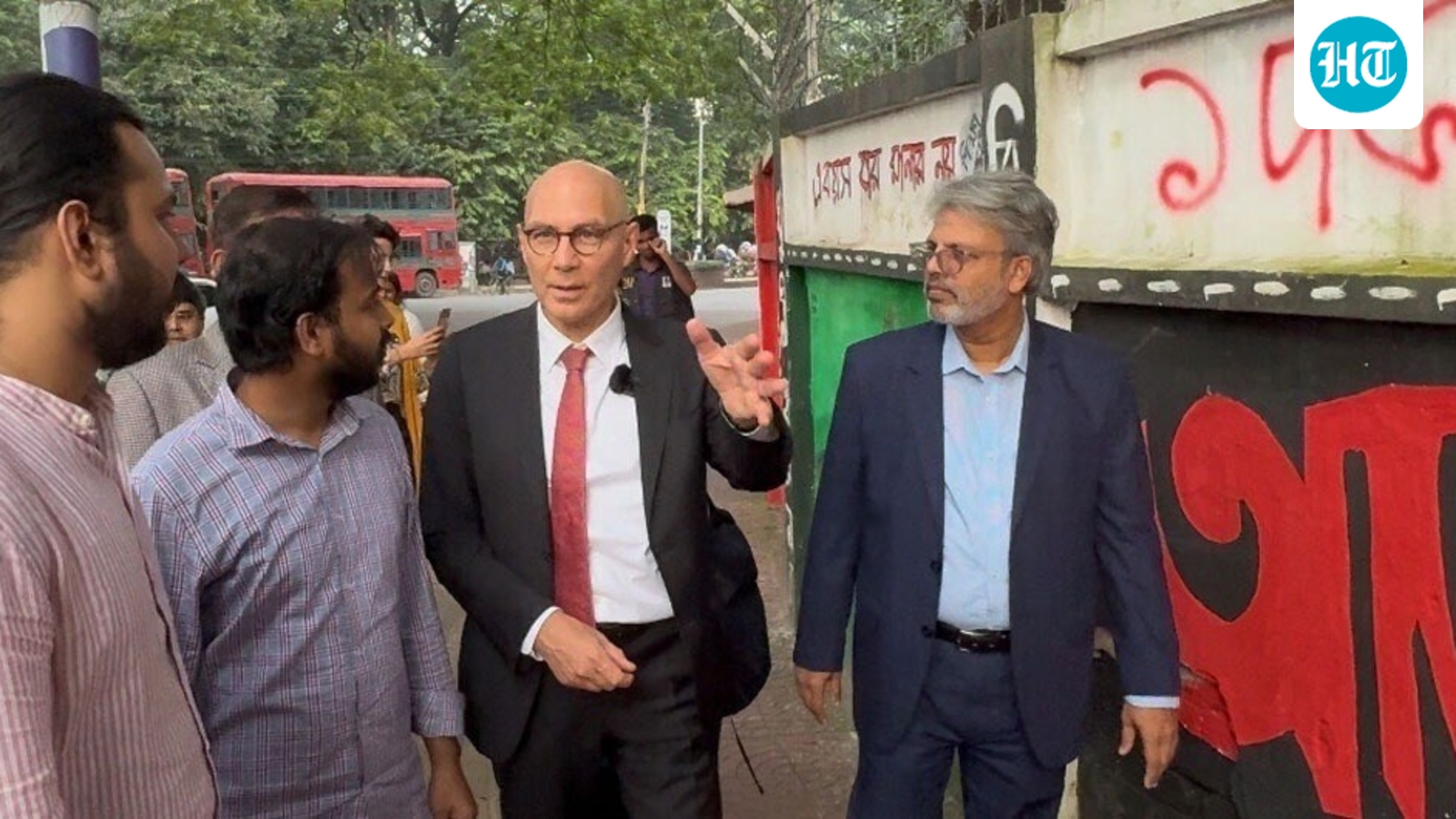
Volker Türk, the director of the Office of the United Nations High Commissioner for Human Rights whose recent remarks on detentions in Delhi sparked sharp criticism from India, had earlier taken a similarly assertive stance in Bangladesh by threatening to bar the army from UN peacekeeping missions if they intervened during the 2024 student-led demonstrations. During a visit to Bangladesh that year, he also insisted that the political transition following the ouster of then-Prime Minister Sheikh Hasina remain peaceful, transparent, and grounded in human rights while pushing for the release of individuals he deemed arbitrarily detained.
Critics argue that Türk is using his position within the supposedly non-political United Nations to advance a specific agenda, pointing to a pattern of overstepping his brief with both India and Bangladesh. Observers have noted that his commentary remains selective, observing that he failed to address widespread violence against minorities in Bangladesh and Pakistan. In a March 2025 interview, Türk recounted warning the Bangladeshi army during the July and August 2024 protests that involvement could cost them their troop-contributing status, a move he credited with helping force political changes.
Following the ouster of Hasina and the establishment of an interim administration under Chief Adviser Muhammad Yunus, Türk visited Bangladesh in October 2024 to meet with top officials, the judiciary, and civil society representatives. He noted that students expressed deep gratitude for the UN's public stance, while he continuously urged the creation of independent national oversight mechanisms for the country's security forces. This pattern of high-profile engagement preceded his recent comments regarding demonstrations in the Indian capital.
The UN human rights office recently urged the immediate release of individuals allegedly detained during mass protests against Chief Election Commissioner Gyanesh Kumar in Delhi. In response, India dismissed the remarks as misplaced and an unwarranted interference in its internal affairs, emphasizing that India is the world's largest democracy where constitutional guarantees and robust institutions safeguard the right to peaceful assembly.
Türk assumed office as the UN High Commissioner for Human Rights in October 2022 after holding several high-ranking positions within the United Nations system, including Under-Secretary-General for Policy and Assistant Secretary-General for Strategic Coordination. With an extensive career spanning various roles within the UN High Commissioner for Refugees across multiple global field posts, as well as a doctorate in international law from the University of Vienna, Türk has consistently navigated complex international mandates throughout his tenure.