


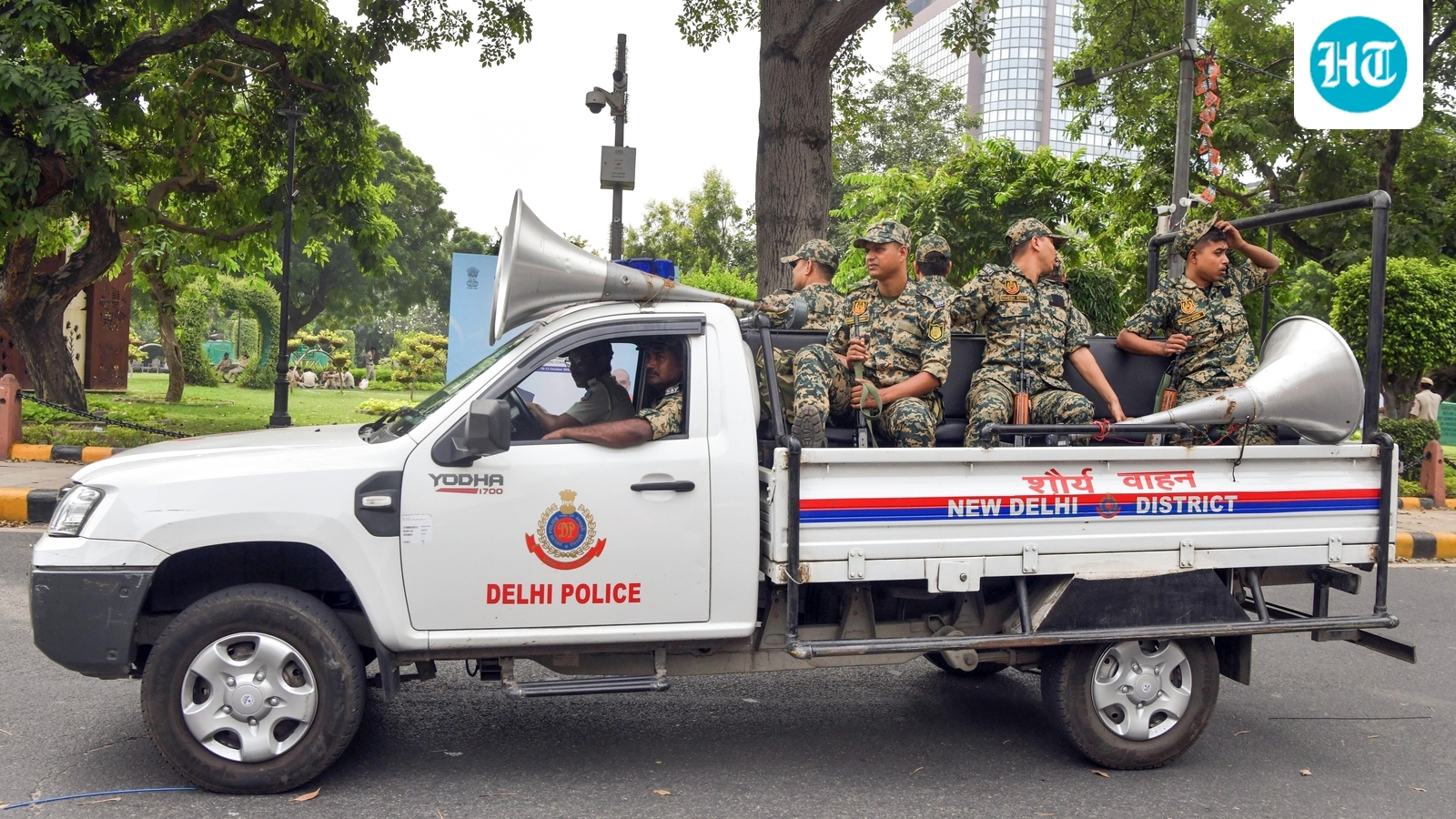
New Delhi: Delhi Police on Sunday continued to detain protesters, including CPI(M) leader John Brittas, around Connaught Place as groups returned to renew their demonstrations against chief election commissioner Gyanesh Kumar, even as the Supreme Court ordered that peaceful, unarmed protesters cannot be detained except through the procedure established by law.
About 100 protesters were packed into two buses and removed from the area. A special bench of justices Joymalya Bagchi and V Mohana issued the directions after an urgent hearing on petitions alleging mass detentions, restrictions on movement, suspension of internet services and non-compliance with the court’s October 9 order on transport curbs ahead of Saturday’s protest against Kumar.
The court also directed that metro and railway services in Delhi operate normally, internet connectivity remain undisturbed and free movement of people be restored. It ordered authorities to remove a notice imposing prohibitory restrictions around the Supreme Court and other court complexes to ensure unhindered access to justice.
Brittas told reporters the police’s conduct was a flagrant violation of basic rules. He stated that brute force had been used against people protesting peacefully and asserted that the agitation would continue to grow. He also questioned the urgency behind police boarding an aircraft to take individuals like Abhijit Dipke into custody, calling it a violation of basic civil aviation rules.
One of the detained individuals, speaking anonymously, stated that they were merely standing near the protest area peacefully when targeted. The person questioned why individuals exercising their right to protest were being detained and subjected to physical force.
Delhi Police have registered more than 20 first information reports over attempts to hold a protest in the Capital on Saturday despite official restrictions. Senior officers noted that an additional 20 FIRs have been filed regarding alleged attacks on police personnel during the demonstrations, citing efforts to disrupt law and order and obstruct public servants from carrying out their duties.
Ratna Singh, legal affairs head of CJP, criticized the state of affairs, noting that the necessity of bringing such issues before the Supreme Court highlights a troubling infringement on fundamental rights by state machinery. A response from the Delhi Police was awaited.