


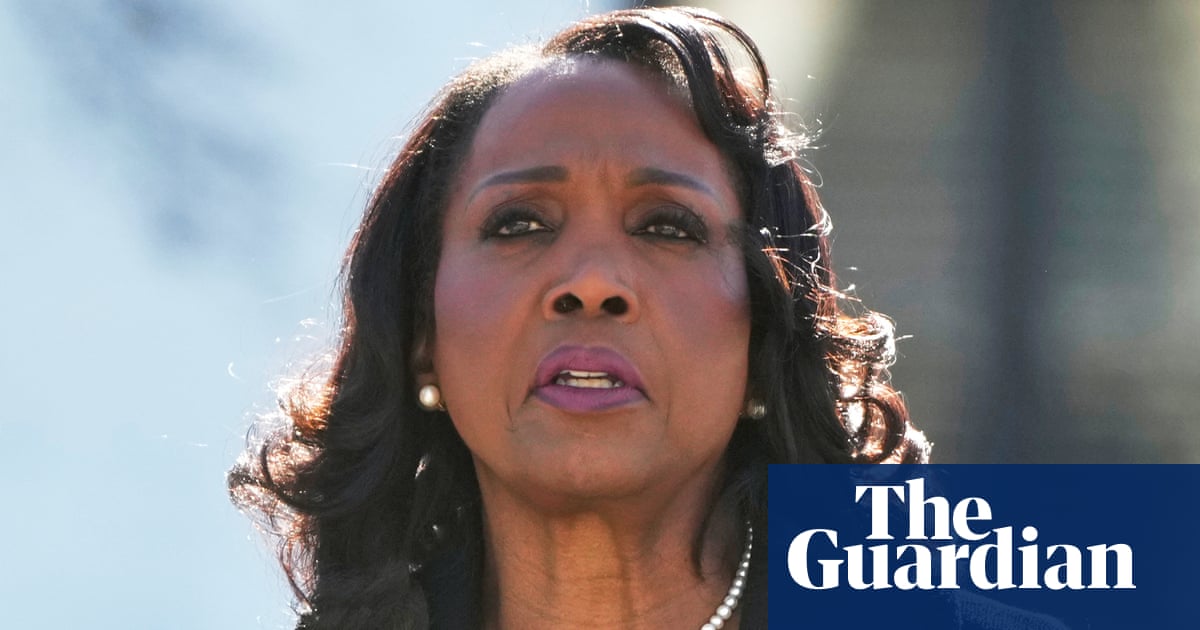
Donald Trump announced on Friday that he is establishing a committee to investigate Lisa Cook, the US Federal Reserve governor, over allegations that she committed mortgage fraud, renewing his efforts to oust her despite a June supreme court ruling that her earlier firing was unconstitutional.
Trump stated that the committee will consult with justice department officials to determine whether sufficient cause exists for her removal. The White House scheduled an in-person hearing for November 5 to review the allegations against Cook. While the proceeding will be closed to the public, a transcript will be published afterward. Cook will be permitted to submit a written statement and present her own evidence, and she will face questioning from both White House representatives and her own legal counsel.
In a statement published on the White House website, Trump asserted that his presidential responsibility requires him to ensure laws are faithfully executed, which includes removing subordinates who cannot be trusted to follow the law and tell the truth.
The conflict between Cook and the administration originated in August 2025 when she was abruptly dismissed after the president alleged she committed mortgage fraud by listing two properties in Georgia and Michigan as primary residences and failing to report rental income on her Atlanta property.
Cook's legal representation has consistently argued that the White House is selectively choosing facts and that any accusations of fraud stem from unrelated clerical mistakes. Following her termination, Cook filed a lawsuit against the administration, leading the supreme court to reinstate her in a 5-4 decision allowing her to remain in office while contesting the fraud claims.
The supreme court ruled in June that the initial firing was unconstitutional because the administration failed to follow proper procedures and did not give Cook a chance to dispute the allegations prior to her dismissal.
The dispute occurred as Trump intensified pressure on the central bank to reduce interest rates, alongside a brief justice department inquiry into former Fed Chair Jerome Powell that was dropped in April.
Congress originally established the Federal Reserve as an independent and nonpartisan entity, and economists generally agree that a politically insulated central bank is vital for economic stability. Kevin Warsh, who succeeded Powell as chair, has faced ongoing scrutiny regarding the bank's independence following past alignment with the president's calls for rate cuts, though elevated inflation eventually prompted the Fed to raise rates in a recent meeting just weeks before midterm elections.