


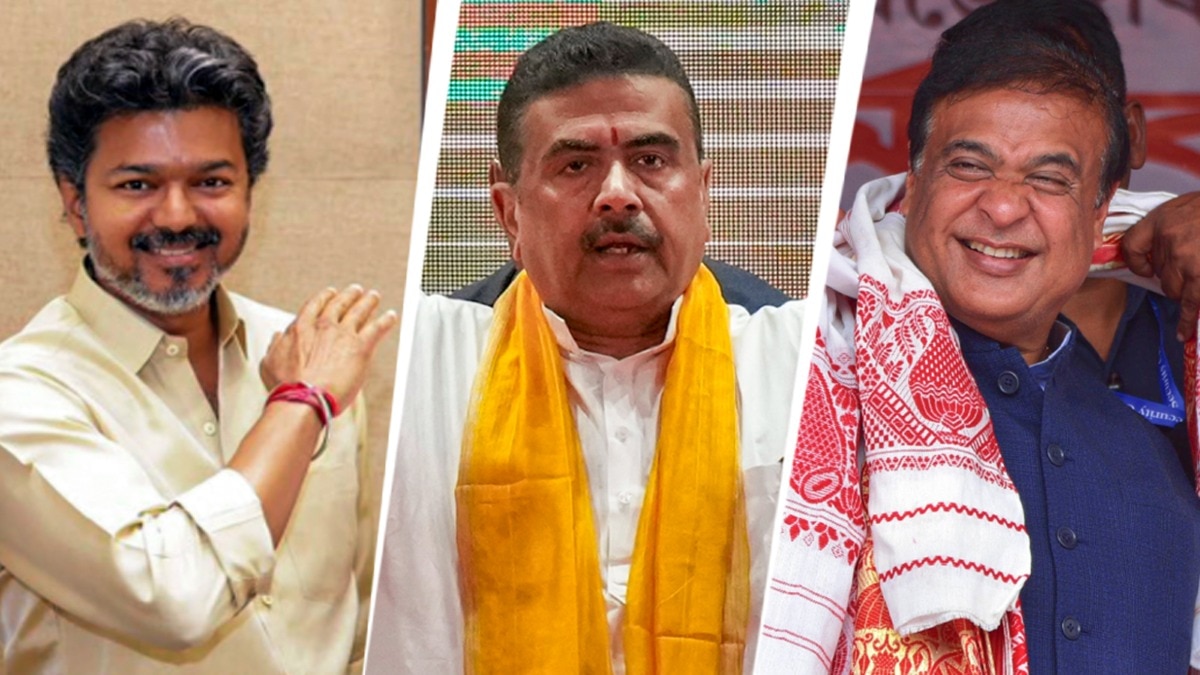
New Delhi: Recent bypoll outcomes across three states and one Union Territory have delivered a striking verdict, demonstrating that established political fortresses are indeed falling. In both Bengal and Assam, the BJP has successfully breached Congress bastions within Muslim-majority seats. Meanwhile, in Tamil Nadu, Vijay’s TVK has scored a notable encore following its Assembly debut, capturing seats it previously failed to win. These contests mark the first electoral tests for the new ruling parties in Tamil Nadu and Bengal, both of which ultimately emerged on top.
The results highlight a broader churn in traditional political equations. In Bengal, the Nandigram Assembly bypoll was largely seen as a foregone conclusion centered around Chief Minister Suvendu Adhikari's stronghold. BJP candidate Hasirani Rath surpassed expectations by winning Nandigram by nearly 1.23 lakh votes. However, the greater surprise emerged from Rejinagar in Murshidabad, an area where roughly 70 percent of the electorate is Muslim and where the BJP has historically struggled to make headway.
Rejinagar had seen shifting loyalties in previous months, with Humayun Kabir winning the seat for the Aam Janata Unnayan Party in May before vacating it to retain Nowda. In the subsequent bypoll, the BJP's Shankharavh Sarkar secured a decisive victory by defeating Kabir's son, Golam Nabi Azad. Chief Minister Adhikari attributed the triumph to a rejection of communal politics in favor of the government's development and welfare initiatives, particularly citing the Annapurna scheme's reach among local families. Conversely, the opposition faced internal divisions, with Kabir alleging state pressure and police interference during the election cycle.
A similar dynamic played out in Assam's Nagaon constituency, a Lok Sabha seat with a Muslim voter base exceeding 55 percent. The BJP headed toward a sweeping victory, while the Congress, which held the seat in 2019 and 2024, dropped to third place behind the BJP and the AIUDF. This outcome delivered a significant blow to the Congress and challenged assumptions about reliable minority voter support, while also exposing the consequences of a fractured opposition and the recent split between the Congress and Akhil Gogoi's Raijor Dal.