


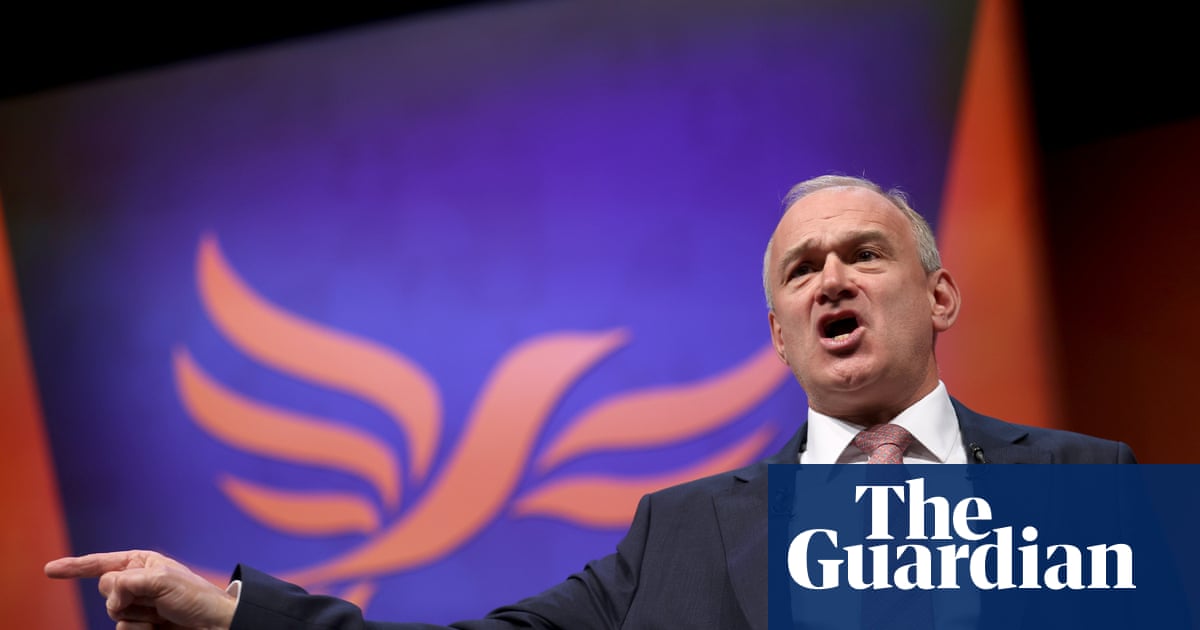
Liberal Democrat leader Ed Davey is facing a growing revolt against his leadership following the sudden resignation of a senior frontbench figure. Treasury spokesperson Charlie Maynard stepped down from his role in an attempt to unseat Davey, driven by months of mounting frustration that the party has struggled to cut through with voters and maintain momentum.
Daisy Cooper, the party’s deputy leader, swiftly came to Davey's defense, asserting that he retains the backing of the vast majority of members of parliament who want him to lead the party into the next general election. Cooper stated that MPs are furious at the distraction caused by the maneuver, emphasizing that the party remains united against the threat posed by right-wing political forces.
Maynard's departure follows closely behind the decision of Alison Bennett, the care and carers spokesperson, who also stepped down from her frontbench position four days prior. Davey has led the Liberal Democrats since 2019, initially serving as acting leader before officially taking the post in August 2020. Under his guidance, the party achieved its most successful general election result in over a century, securing 71 MPs and establishing itself as the third-largest bloc in the House of Commons.
Despite that electoral milestone, the party has slipped behind the Greens and Reform UK in recent national opinion polls, sparking internal anxiety over an inability to capture public attention in a shifting political environment. Dissent has simmered for months, notably surfacing at the party conference in Brighton where Devon county council leader Julian Brazil publicly questioned whether Davey possessed the necessary ambition to prevent the party from sliding into irrelevance.
In response to these political challenges, Davey has attempted to chart a clear course, introducing a multibillion-pound tax cut strategy aimed at winning back former Conservative voters through economic growth tied to the European Union single market. However, his policy positions have also drawn internal friction, particularly his resistance to proposed changes regarding the state pension triple lock, which exposed sharp divisions among senior figures and backbenchers alike.