


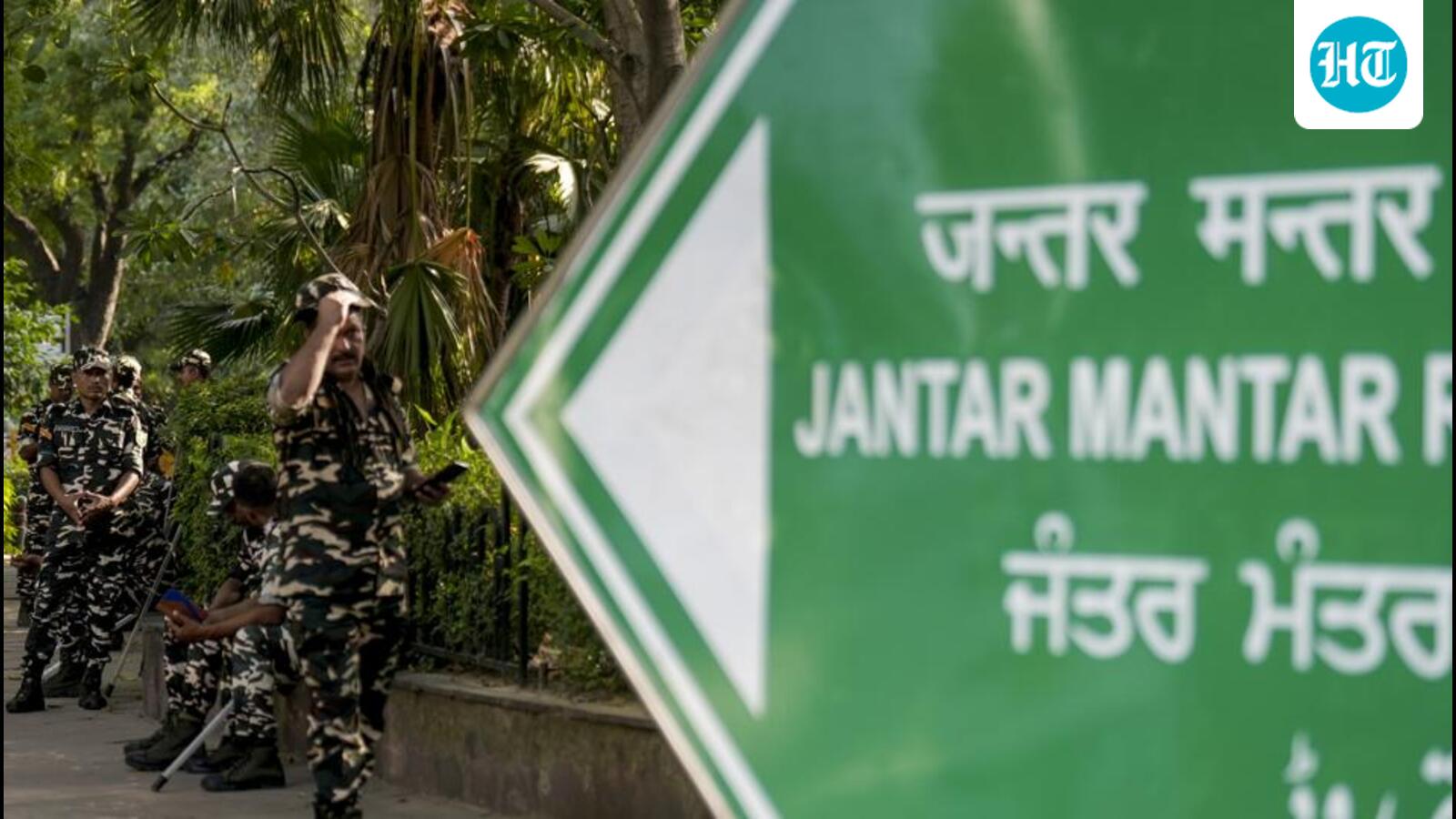
The Supreme Court on Friday called for a rethink of Delhi’s decades-old arrangement of holding demonstrations at Jantar Mantar, recording that the Delhi Police commissioner and other competent authorities would consider designating an alternative venue with better facilities for peaceful protesters.
A bench comprising Chief Justice of India Surya Kant and justices Joymalya Bagchi and V Mohana stated that the national capital required a larger and better-equipped space where citizens could exercise their democratic right to protest without compromising public safety, emergency services access, or the interests of local residents.
The court emphasized that any newly designated site should feature essential infrastructure, including portable cabins, toilets, drinking water, and medical facilities. It also noted that the venue must offer sufficient space to accommodate demonstrators while ensuring that emergency vehicles can reach them if needed.
This judicial suggestion arose during proceedings involving challenges to severe restrictions on metro and railway operations ahead of planned demonstrations in Delhi. The bench instructed the Centre and the Delhi Police to re-evaluate the complete shutdown of public transit, stressing that preventive security measures must stay proportionate rather than cutting off millions of residents from vital services.
During the proceedings, the judges pointed out that many logistical hurdles stemmed from the geographical constraints of Jantar Mantar, prompting the bench to ask Solicitor General Tushar Mehta why authorities could not find a more expansive space equipped with proper amenities. Mehta agreed to communicate these observations to the relevant officials.
Senior advocate Kapil Sibal, representing CPI(M) leader Mariam Alexander Baby, noted that Ramlila Maidan had previously functioned as an alternative demonstration site but was no longer made available when requests for Jantar Mantar were turned down. All parties ultimately acknowledged the necessity of finding a suitable alternative location.
For over three decades, Jantar Mantar has operated as Delhi's primary hub for political parties, farmers, unions, students, and civil society groups due to its central location near Parliament and government offices. The area became a key protest zone in 1993 following the relocation of demonstrations away from the Boat Club near India Gate.
In 2017, the National Green Tribunal attempted to shift protests to Ramlila Maidan due to environmental and crowd concerns, but the Supreme Court overturned the blanket ban in July 2018, affirming that peaceful protests are a protected right subject to reasonable regulation.
The latest judicial intervention was prompted by petitions regarding the denial of permission for an October 10 demonstration organized by the Cockroach Janata Party and other groups, alongside heavy transport lockdowns. The bench clarified that it was not evaluating the political merits of the protest itself, but was instead focused on preserving public transport access and ensuring that security measures do not amount to an absolute prohibition on public assembly.