


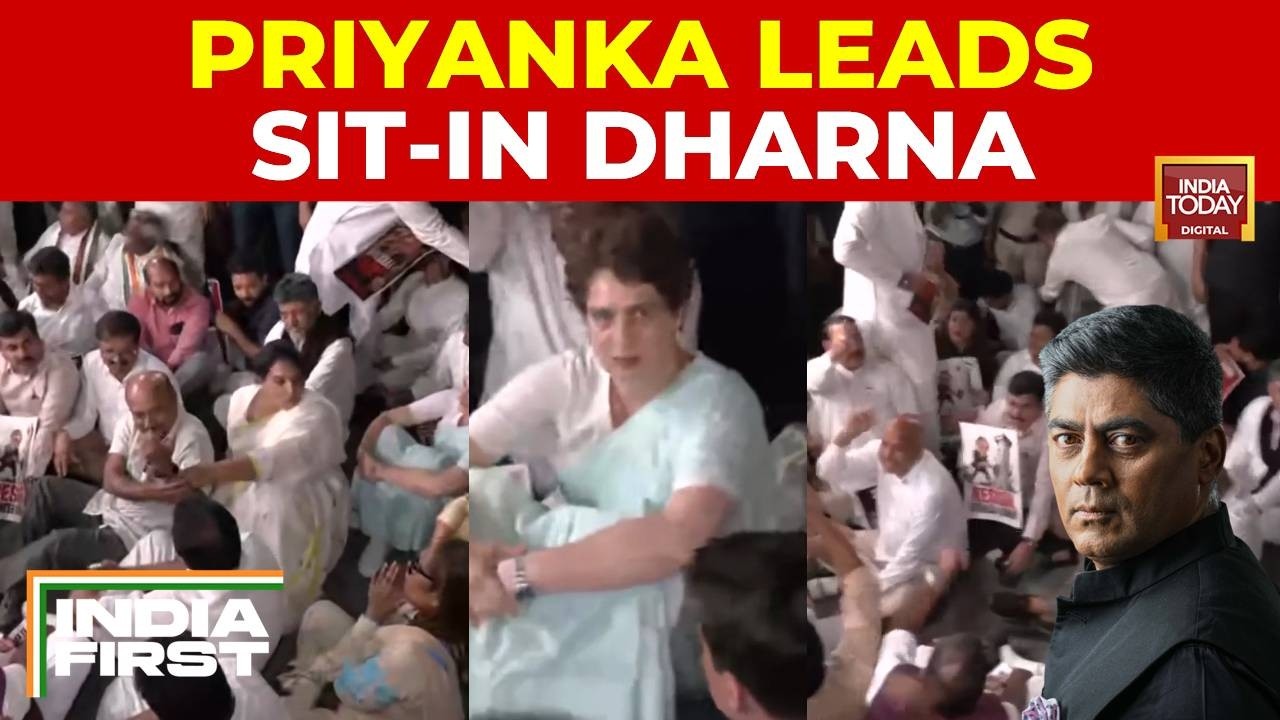
New Delhi: Opposition members of parliament, including figures from the Congress party and other INDIA bloc affiliates, gathered for a demonstration at Vijay Chowk while a delegation pursued a meeting with the President of India. The participating leaders voiced strong objections over the purported removal of voters from electoral rolls, calling for the removal of Chief Election Commissioner Gyanesh Kumar, the withdrawal of the SIR framework, and a return to paper ballots. Protesting figures described the demonstration as part of a broader nationwide effort to protect democratic principles and the constitution. Charging the ruling administration with compromising the integrity of elections, opposition representatives indicated that their coordinated campaign will persist through both public demonstrations and formal institutional channels until transparency is restored.
Simultaneously, a ten-member delegation comprising prominent opposition figures marched from Parliament toward Rashtrapati Bhavan to present a formal appeal to President Droupadi Murmu. Holding placards that called for the exit of the Chief Election Commissioner, the group included high-profile political figures. According to organizers, restrictions imposed by Delhi Police prevented the collection of additional signatures on site, requiring the memorandum to be submitted with a designated set of endorsements.
The political demonstrations coincided with a massive security lockdown across the national capital in anticipation of a separate planned protest by the Cockroach Janata Party. Authorities implemented sweeping operational curbs, including a temporary suspension of mobile internet services within a designated four-kilometer zone, the closure of numerous metro stations, the cancellation of select train services, and the deployment of over 20,000 security personnel and paramilitary forces. Security forces established multiple detention centers and sealed key border points into the city.
The heavy-handed security precautions drew mixed responses, with administration defenders citing the necessity of maintaining public order under statutory powers, while critics and former security officials questioned whether the sweeping disruptions adhered to standards of proportionality. Meanwhile, the Supreme Court examined the restrictions, declining to approve a blanket shutdown of the rapid transit network and emphasizing the need to minimize disruptions for regular commuters, even as organizers maintained their commitment to pressing forward with their demands.