


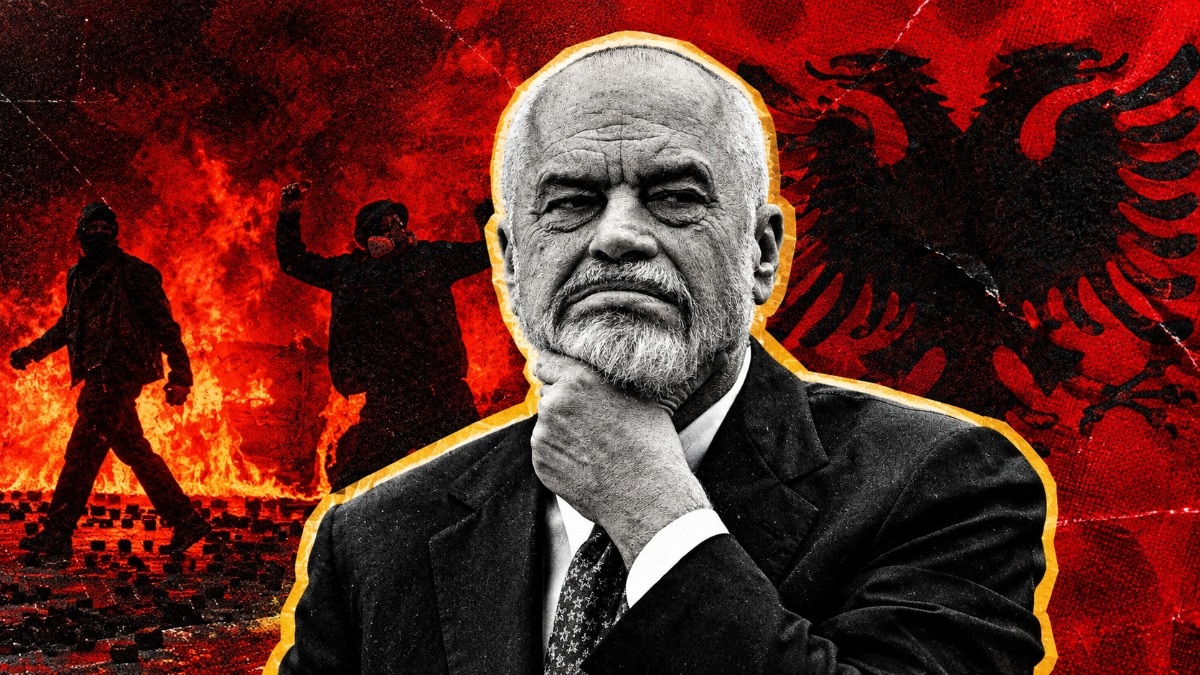
New Delhi: Albanian Prime Minister Edi Rama is facing massive pressure as student protests over education and living costs turn violent, with demonstrators demanding his resignation. Rama has rejected calls to quit, arguing that the unrest threatens Albania's European Union membership ambitions, even as clashes with police intensify.
Burning buildings, clashes with riot police and chants demanding Prime Minister Edi Rama's resignation have brought Albania's capital, Tirana, to a standstill. What began as student-led demonstrations over education costs and poor university conditions has grown into a wider anti-government movement, with corruption, unemployment and the cost of living fuelling public anger against the administration.
As the protests entered their sixth day, Rama refused to resign, arguing that the unrest threatened Albania's ambition to join the European Union rather than his government. The protests initially brought together students frustrated with the education system before later drawing in demonstrators who had spent months opposing government policies, alleged corruption, and a proposed luxury tourism development involving international investors.
Albanian students complained about the high cost of higher education, inadequate university conditions, and poor employment prospects after graduation. Their demands subsequently merged with broader public anger over the cost of living and a massive brain drain that has driven young people to seek futures abroad. Protesters gathered outside Albania's Education Ministry, chanting slogans and throwing objects at riot police, who responded with tear gas, water cannon, and rubber bullets. Demonstrators also set fire to offices at the High Court in Tirana, while unrest spread to other cities including Durres, Korce, and Vlore.
The heavy-handed police response drew scrutiny following reports of excessive force, prompting the suspension of certain officers. Meanwhile, Prime Minister Rama has sought to frame the demonstrations as a threat to Albania's European future rather than a direct challenge to his leadership, insisting that governments should be changed through elections rather than street disturbances. The European Commission has condemned the violence while reiterating support for the right to peaceful assembly, leaving the administration attempting to restore public order without further inflaming tensions.