


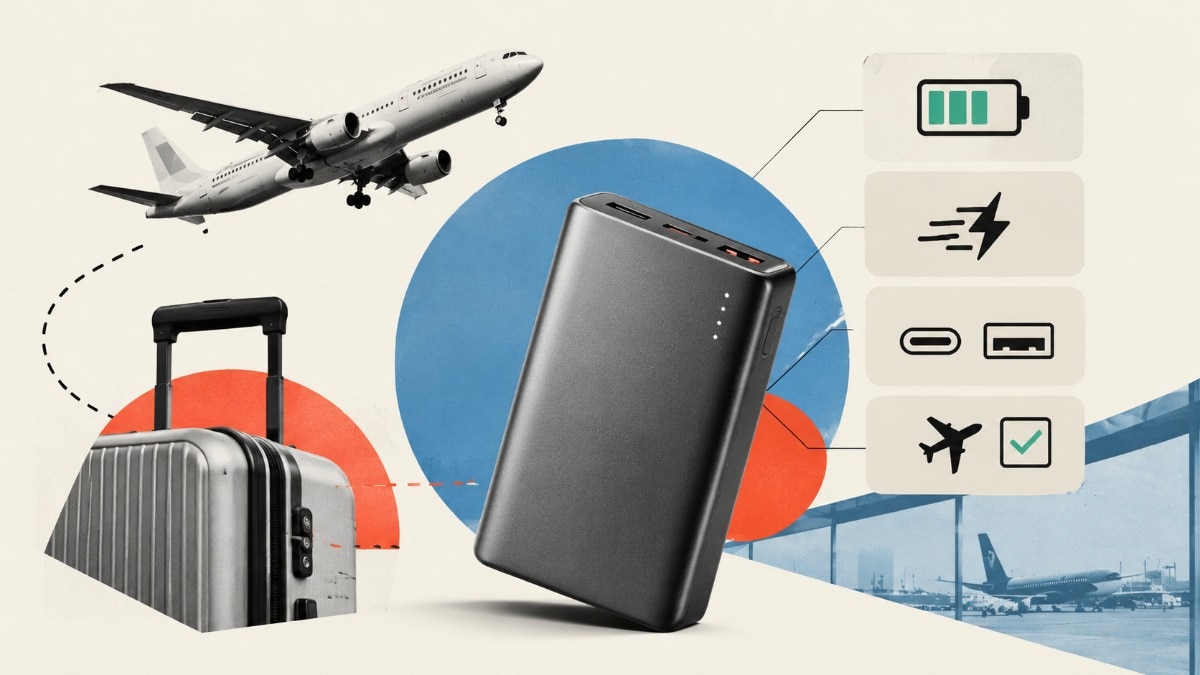
Power banks have become an essential tool in any tech survival kit, serving as a reliable backup when phones, earbuds, or laptops run low on battery. However, choosing the right unit involves more than simply grabbing the option with the highest capacity printed on the box, and traveling by air introduces specific safety regulations that require careful attention.
When shopping for a power bank, capacity is typically measured in milliampere-hours. A 5,000mAh or 10,000mAh model usually suffices for occasional phone top-ups, whereas frequent travelers or those powering multiple devices may prefer a 20,000mAh unit. Buyers should note that energy conversion losses mean the usable capacity is lower than the advertised figure. Comparing watt-hour ratings provides a clearer picture of energy storage, with a standard 20,000mAh power bank usually equating to around 74Wh.
Charging speeds and compatibility are also crucial. Output wattage and support for fast-charging standards like USB Power Delivery, Quick Charge, or PPS ensure rapid power delivery for compatible smartphones. Users wishing to charge laptops or tablets should look for a Power Delivery output of 45W or higher, as standard phone-focused models topping out at 20W or 30W will fall short. Additional considerations include port selection, recharge times for the power bank itself, inclusion of digital battery displays, and safety certifications such as the BIS mark to guard against counterfeit products.
When flying, aviation regulations mandate that all power banks must be packed in carry-on baggage rather than checked luggage. Lithium-ion batteries carry a risk of overheating and catching fire, and keeping them in the cabin allows flight crews to respond quickly to emergencies. Furthermore, directives often require passengers to keep power banks within easy reach, such as in a seat pocket or under the seat ahead, rather than storing them in overhead compartments.
Capacity limits also apply strictly to air travel. Power banks rated up to 100Wh are generally permitted subject to airline policies, while units between 100Wh and 160Wh typically require prior airline approval. Anything exceeding 160Wh is generally prohibited, and individual carriers may also enforce limits on the total number of power banks a single passenger can carry.