


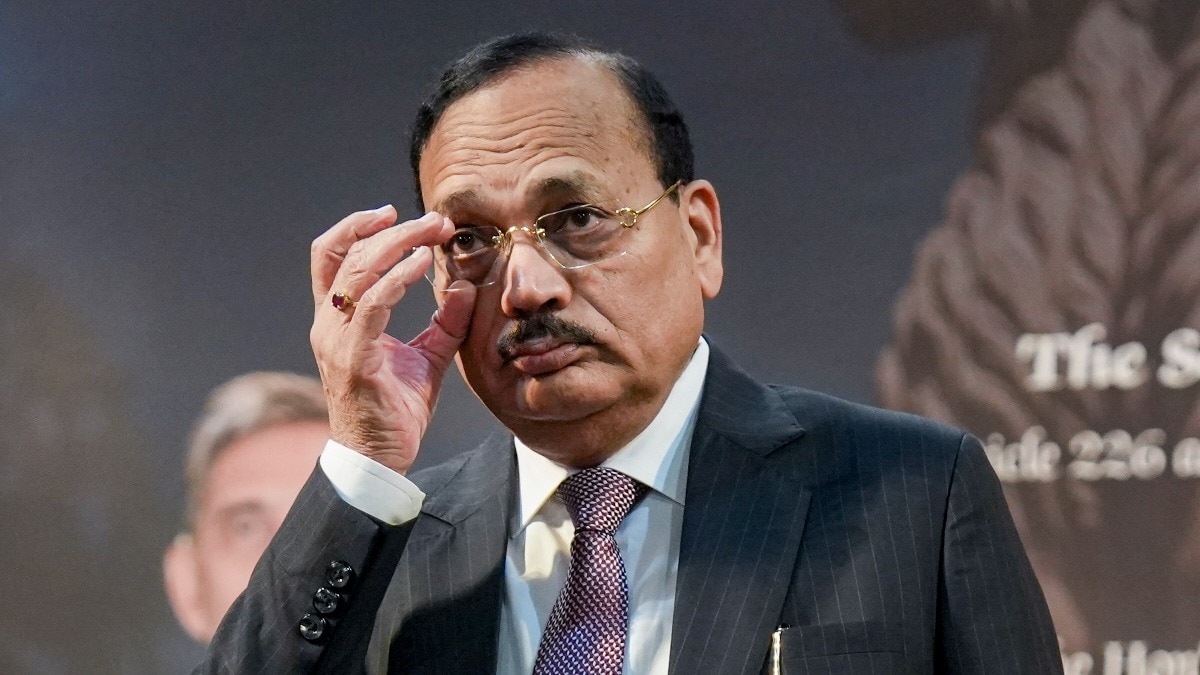
Chief Justice of India Surya Kant on Saturday criticised what he described as attempts by external forces to disrupt the National Law School of India University convocation, following weeks of student opposition regarding his proposed attendance. Speaking at the rescheduled ceremony in Bengaluru in his capacity as the university Chancellor, the Chief Justice commended the graduating students for opting for the sanctity of open dialogue rather than suppression.
Addressing the gathering, he noted that unexpected and unfortunate circumstances driven by external factors had initially created uncertainty over whether the event would take place. While he did not specify the identity of these forces, he told the graduates that their actions demonstrated how the will of an honest multitude could prevail over the schemes of a dishonest few.
The university had previously announced on August 27 that its 34th convocation, originally set for September 12, was cancelled due to unavoidable circumstances. That decision followed resistance from a group of students against the participation of both the Chief Justice and the Bar Council of India chairman, mirroring similar controversies at other legal institutions.
The event was later rescheduled for October 17 after the revised date gained approval from the institution Executive Council and General Council during meetings presided over by the Chancellor.
During his address, the Chief Justice encouraged the new graduates to develop intellectual independence, carefully consider opposing perspectives, and maintain the dignity of individuals holding different views. He emphasized that fairness requires listening before rendering judgment, separating an individual from their professional stance, and disagreeing respectfully.
He further noted that legal education extends far beyond memorizing statutes and legal precedents, demanding active engagement with diverse worldviews and marginalized voices. The law, he observed, remains dynamic and evolves through the continuous efforts of its practitioners.
Concluding his remarks, the Chief Justice advised the young lawyers to resist compromising their integrity for the sake of convenience or professional advancement, reminding them that steadfast honesty ultimately defines a legal career.