


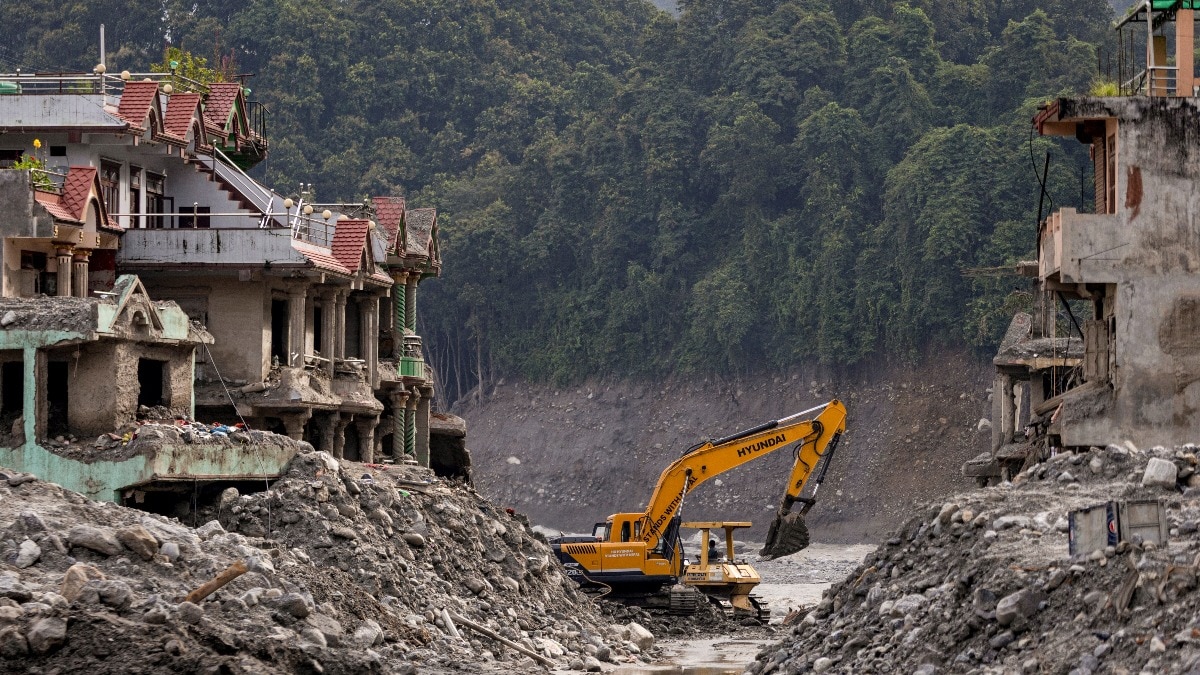
The UN climate loss and damage fund has set aside $20 million for Nepal after the deadly August floods, but the country faces an estimated $4.7 billion reconstruction bill.A crane being operated to clear debris after deadly flashfloods in Nepal. Nepal is set to receive $20 million from a United Nations climate fund to help recover from devastating floods in August that killed around 1,500 people and left more than 5,000 missing.This is the first time the fund has set aside money for any country affected by a climate disaster, marking a significant step for a global fund created to help vulnerable countries deal with the damage caused by climate change.The Fund for Responding to Loss and Damage (FRLD) agreed to set aside the money following an emergency meeting on Thursday, October 22, the Nepalese government said.
Residents walk through debris after devastating mudlsides and flood. The assistance is intended to “help address the severe damage caused by climate-related disaster,” the country's environment ministry said in a statement, according to news agency Reuters.
However, the money has not yet been transferred, and before it can be, Nepal must submit a detailed proposal for the fund's board to approve before the payment can be made.WHY IS NEPAL GETTING CLIMATE FUNDING?The August 26 disaster began with an avalanche of ice and rock near Nepal's border with China's Tibet region, triggering destructive flooding downstream. A member of the Armed Police Force (APF) Nepal takes part in a search and rescue operation.
The floods affected around 60,000 people from 15,000 families and damaged roads, bridges, schools and 13 hydropower plants.Nepal estimates infrastructure losses at approximately $2.7 billion, while the total cost of recovery and reconstruction could exceed $4.7 billion.The $20 million allocation covers less than 1% of the estimated reconstruction bill, highlighting the gap between the assistance available and the scale of the destruction.Nepal had sought international support following the disaster, and had sought compensation from the world's top polluters, including India. Members of the Nepali Army during restoration and construction of a bridge after the floods.
Nepal's Foreign Minister Shisir Khanal, however, clarified in September that the government had not formally asked India, China or the United States for compensation.Instead, he called for the international community to recognise the wider impact of climate change.A GROWING CLIMATE FUNDThe fund was established following years of demands from developing countries, which argue that they face severe climate impacts despite contributing relatively little to global emissions.Nepal's case is an important test of whether the fund can respond to disasters quickly, rather than leave vulnerable countries waiting for assistance through lengthy funding processes. Residents walk behind houses covered in mud and debris after deadly floods in Nepal.
The decision to set aside money through an emergency procedure could help dictate how future urgent requests are handled.The development comes ahead of COP31, the UN climate conference scheduled in Antalya, Turkiye, from November 9 to 20. Funding for countries facing climate-related losses is expected to remain an important issue in global climate discussions.For Nepal, the allocation is a breakthrough, but the much larger challenge of rebuilding communities and infrastructure remains.- Ends