


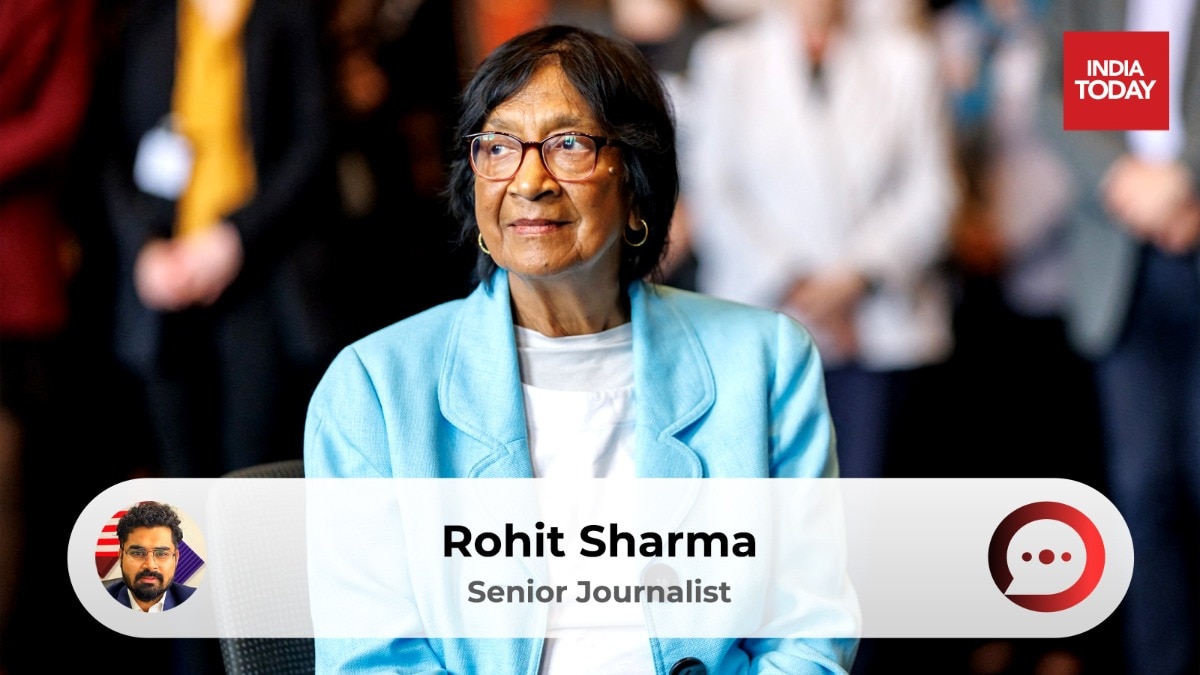
The 2026 Nobel Peace Prize awarded to Navi Pillay has brought renewed attention to her longstanding activism regarding Israel, public statements made prior to leading a United Nations investigation, and her defense of a fellow commissioner who referenced the Jewish lobby. Critics from Jewish organizations and Israeli official circles argue these matters touch directly on the credibility of international bodies tasked with reviewing human rights violations.
Pillay, who previously served as the UN High Commissioner for Human Rights, received the recognition for her contributions to international law and justice. However, her public record on Israel has drawn sustained scrutiny for years prior to the Nobel announcement.
In June 2020, Pillay endorsed an appeal urging governments to sanction Israel and limit military and security cooperation. The following year, she co-signed a letter addressed to United States President Joe Biden criticizing Israeli policies toward Palestinians and demanding international intervention. These represented active political stances rather than conclusions drawn from a formal investigative process.
Questions regarding her neutrality emerged more prominently when she was appointed in July 2021 to chair the UN Human Rights Council Commission of Inquiry on the Occupied Palestinian Territory and Israel. Fact-finding bodies rely heavily on public trust in their impartiality, and critics questioned whether an individual with a history of public advocacy against one party to a conflict could lead an unbiased inquiry.
The debate deepened in July 2022 when fellow commissioner Miloon Kothari used the phrase Jewish lobby and questioned Israel's standing within the United Nations. Although Kothari later issued an apology for his wording, Pillay chose to defend him, maintaining that his comments were taken out of context rather than distancing the commission from the language used.
Concerns regarding Pillay's stance also surfaced in Germany in September 2022, when Berlin Mayor Franziska Giffey withdrew support for an event honoring Pillay with the Otto Hahn Peace Medal, leading to the eventual cancellation of the ceremony by the German UN Association amid criticism of her support for the boycott, divestment, and sanctions movement.
While supporters point to her distinguished legal career, judicial service, and activism against South African apartheid, critics emphasize that these accomplishments do not shield her subsequent professional conduct from public evaluation.