


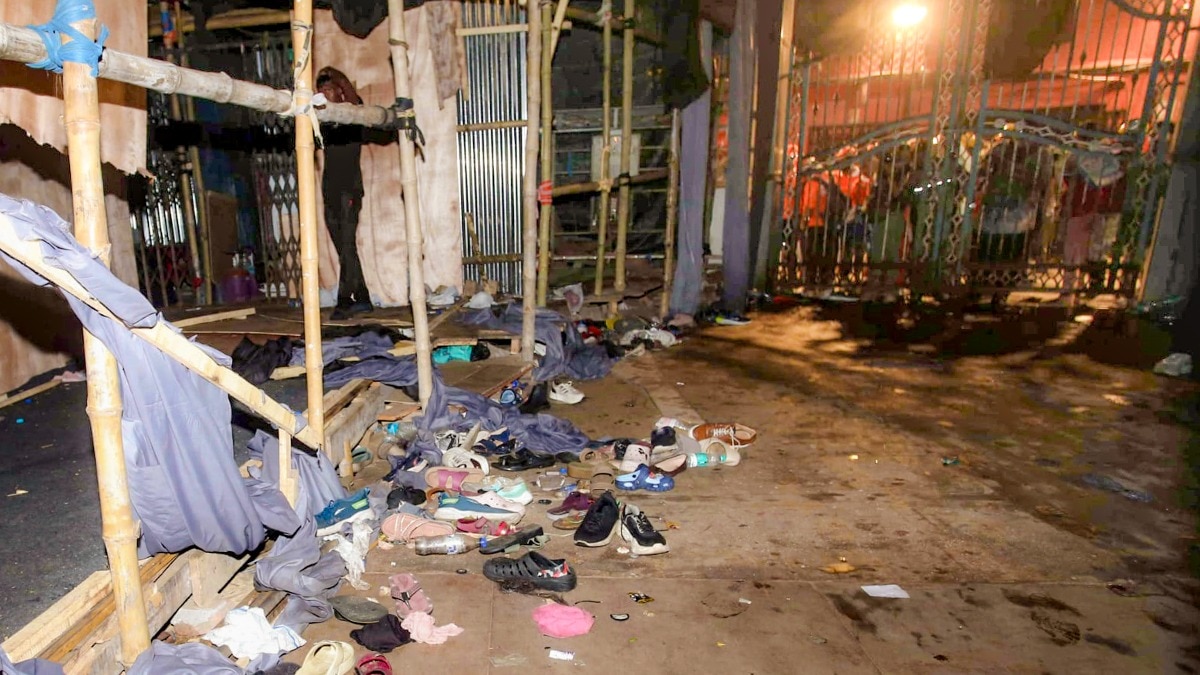
Kolkata celebrations turned into mourning late on Saturday, October 17, as disaster struck the Chorbagan Sarbojanin Durga Puja pandal in North Kolkata's Burrabazar area. On Maha Saptami, a sudden downpour, a massive crowd, inadequate police deployment, limited entry and exit points, and an announcement warning of the pandal's imminent collapse reportedly triggered a deadly stampede. By the time the chaos subsided, 19 people from West Bengal and Bihar were dead and 35 injured, some critically.
Crowd surges are not entirely unprecedented during Kolkata's Durga Puja festivities. A similar incident occurred in 2015 at Deshapriya Park, leaving roughly 11 people injured, while a 2021 crush at Sreebhumi Sporting Club injured three seriously. However, a tragedy on the scale seen at Chorbagan remains exceptionally rare for the metropolis.
The immediate aftermath followed a familiar script. The pandal was shut down, compensation along with government jobs were promised to the families of the victims, and Chief Minister Suvendu Adhikari announced formal probes and high-powered committees. Puja organizers faced arrests while political parties traded accusations. Even as these investigations get underway, serious questions persist regarding the preparations and decisions that might have prevented the catastrophe.
The first major area of inquiry centers on the deployment of law enforcement. While Kolkata Police and the municipal administration have historically earned commendations for managing large festival crowds, the scene at Chorbagan told a different story. Locals and witnesses alleged that police presence was severely lacking, with only a few officers stationed near VIP entrances while crowds swelled elsewhere. Crowd control duties largely fell to civic volunteers, private security personnel, and home guards who lacked the specialized training needed for massive crowd crushes.
A senior police officer noted that circumstantial evidence and eyewitness statements point to poor crowd management and insufficient personnel. While Chief Minister Adhikari stated that the role of temporary home guards would be scrutinized, the broader question remains why a major, high-traffic pandal lacked experienced police personnel dedicated to crowd regulation.
The second critical puzzle involves a public address announcement made while the situation was already deteriorating. As visitors squeezed through the venue amid heavy rain, a warning rang out stating that the pandal was in terrible condition, about to collapse, and urging everyone to leave immediately. Witnesses described the announcement as catastrophic, sending visitors rushing toward narrow exits and sparking the fatal crush.
Preliminary information from local authorities suggests the announcement and accompanying whistle-blowing originated from a private security agency. Investigators have reportedly secured video footage to identify who made the statement and what prompted the warning, while also determining whether the structure was genuinely at risk of collapse.
Finally, investigators are scrutinizing the complete absence of adequate emergency response vehicles and medical crews on-site. Major festival pandals typically feature pre-positioned fire engines, ambulances, and trained first-aid personnel to handle crises swiftly. At Chorbagan, however, no such preparations were evident. Local residents were forced to step in, tearing down parts of the pandal structure and rushing the wounded to Medical College Kolkata using whatever transport they could secure due to the lack of paramedics and ambulances at the scene.