


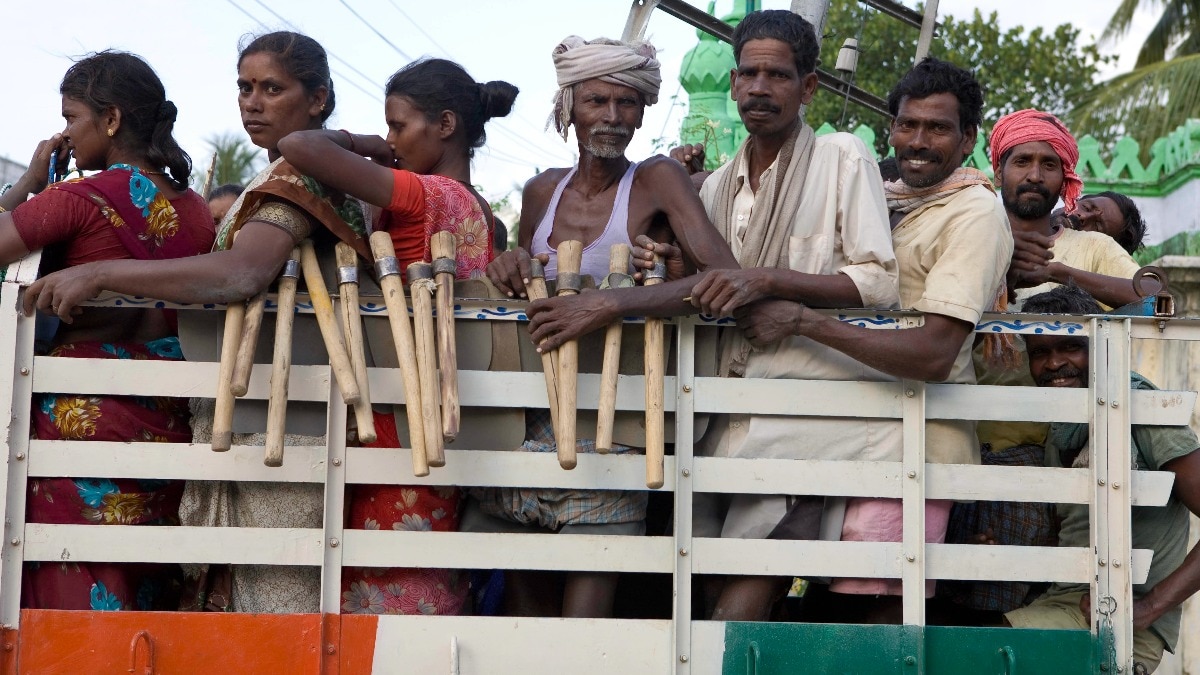
In August 2025, forty migrant workers from Odisha and Chhattisgarh, including women and a minor, were rescued from two shrimp farms near Ananthavaram village in Tanguturu mandal of Andhra Pradesh's Prakasam district. Recruited through intermediaries, they had reportedly been subjected to conditions resembling bonded labour. Three to five families were housed in small rooms, wages were withheld, and the workers were allegedly provided inadequate or spoiled food. Restrictions were imposed on their movement, and those who resisted reportedly faced physical abuse.
The exploitation came to light when one worker from Bastar district managed to escape, returned to Chhattisgarh and lodged a complaint with the District Collector. The Collector contacted the Prakasam district administration, leading to a rescue operation involving revenue, police and labour officials, along with representatives of voluntary organisations. The rescued workers were taken to a relief centre in Ongole, where relief certificates were issued and directions were given for the payment of outstanding wages and arrangements for their return home. The rescue followed an escape and subsequent complaint rather than proactive intervention by enforcement machinery.
Shrimp farming is a regulated activity, and the aquaculture sector receives substantial government support, including subsidies, raising questions about how such serious exploitation remained undetected. The Inter-State Migrant Workmen Regulation of Employment and Conditions of Service Act was enacted in 1979 against the background of serious exploitation of workers recruited through contractors, particularly the Dadan labour system prevalent in Odisha and other states.
The 1979 legislation offered a wide range of protections for establishments and contractors employing five or more inter-state migrant workers. Establishments were required to register, contractors to obtain licences, and workers to be provided with passbooks containing essential employment particulars. The Act mandated wages and service conditions comparable to local workers, displacement allowances, journey allowances, suitable residential accommodation, free medical facilities, and protective clothing, while placing responsibilities on principal employers.
Historical accounts and inspections, however, highlighted that administrative compliance documents like licences or account book entries did not guarantee that statutory benefits actually reached workers. Evidence of inadequate implementation persisted over the years. A December 2011 parliamentary report by the Standing Committee on Labour expressed serious dissatisfaction with the 1979 Act's implementation, noting that comprehensive data on inter-state migrant workers were unavailable and that the government lacked adequate information on licensed and unlicensed contractors.
A study commissioned during 2019 and 2020 by the Odisha Labour Department alongside National Law University Odisha reinforced the urgent need for a reliable migrant-worker database, effective registration, livelihood opportunities, and improved social protection access. The vulnerability of these workers was further exposed during the COVID-19 pandemic when approximately 1.14 crore inter-state migrant workers returned to their home states during the first wave in 2020.
In response to these systemic challenges, the Supreme Court directed the development and implementation of a national database for unorganised and migrant workers in a June 2021 judgment. Registration was deemed essential to enable workers to access intended welfare schemes, prompting the Union Ministry of Labour and Employment to launch the e-Shram portal in August 2021 to better monitor and protect the country's extensive migrant workforce.