


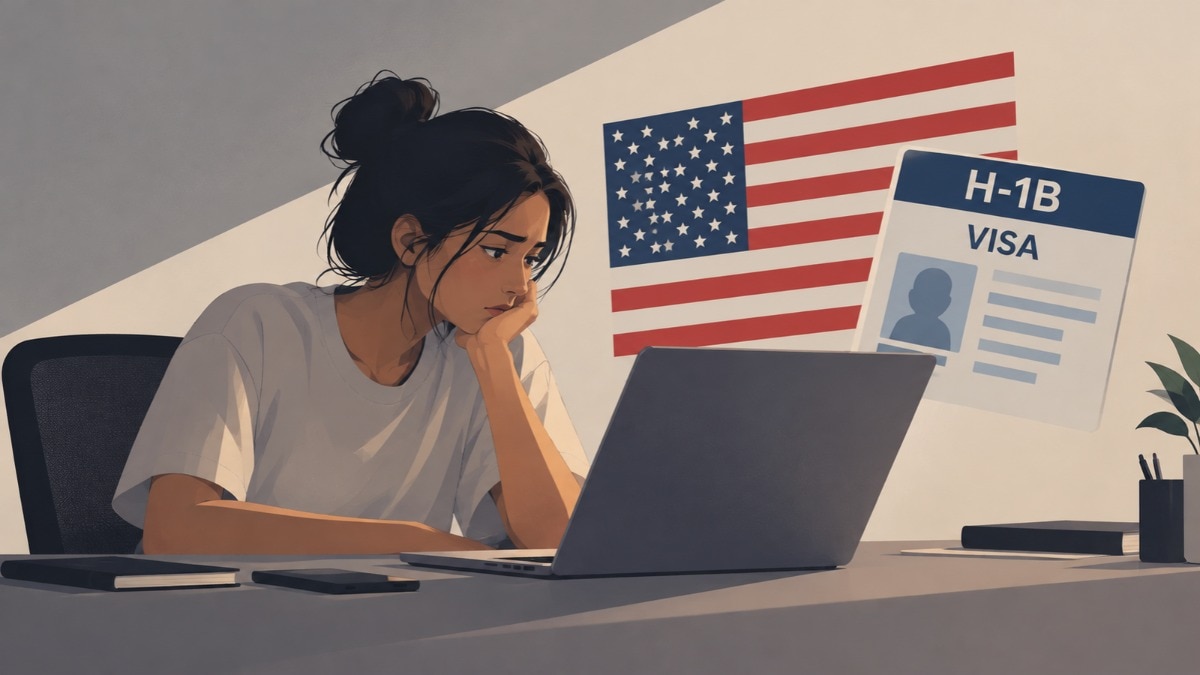
The decision by the Trump administration to suspend eight major technology companies, including Tata Consultancy Services, Infosys, and Microsoft, from the Permanent Labour Certification program has sent shockwaves through the tech community in India. While the freeze does not directly alter initial H-1B visa applications, it halts a critical step in the employer-sponsored Green Card process, leaving many Indian nationals facing uncertain long-term prospects in the United States.
Under standard regulations, H-1B visa holders are typically permitted to stay in the US for six years, with extensions granted if a PERM application is initiated promptly. With the recent suspension affecting firms like Wipro, HCLTech, Capgemini, Cognizant, and Adobe, these corporations can no longer enroll employees in the program, and pending applications remain unprocessed. The restriction heavily impacts current H-1B employees nearing the end of their six-year limit, as well as aspirants hoping for future relocation.
Data from US Citizenship and Immigration Services highlights the scale of reliance on the American market, showing that Indian applicants accounted for nearly 70 percent of all H-1B registrations in 2025. For young professionals and fresh graduates in India, the sudden policy shift has severely dampened expectations of securing onsite assignments or permanent settlement in North America. Employees currently working in the US are reportedly exercising heightened caution, with some advised by their employers against traveling internationally due to potential re-entry uncertainties.
Despite the setback to traditional migration routes, opinions within the tech sector are shifting. Some professionals note that they never viewed the United States as their primary destination, citing complex visa backlogs and restrictive procedures as reasons to favor other global destinations. Experienced engineers point out that alternative tech hubs across Europe, Singapore, and the Middle East offer competitive compensation and strong demand for talent, leading a growing number of developers to look well beyond the traditional American dream.