


Archaeological discoveries at a newly identified Roman fort in Pembrokeshire, Wales, indicate that a medieval folklore account regarding fourth-century Roman Emperor Magnus Maximus may be based on historical reality rather than pure myth. The site was discovered by Dr Mark Merrony, a Roman specialist at the University of Oxford, who leads an excavation bringing to life a narrative from the Mabinogion, a renowned collection of medieval Welsh tales.
The site is situated roughly two miles south-west of Frenni Fawr, the easternmost peak of the Preseli Hills. According to the medieval tale titled The Dream of Macsen Wledig, which uses the Welsh form of the emperor's name, Magnus Maximus pitched his camp at Frenni Fawr during his military campaigns. Prior to this find, no physical evidence of a Roman military presence had been documented in the immediate vicinity of the summit.
Merrony initially identified the outline of the site using satellite imagery in 2024 before visiting and discovering a Roman tile. Subsequent excavations, funded by Oxford University and crowdfunding, confirmed the site's significance and yielded late fourth-century coins. Researchers note that the presence of these items and a heavily fortified auxiliary installation helps substantiate the narrative preserved in the Mabinogion for nearly seventeen centuries.
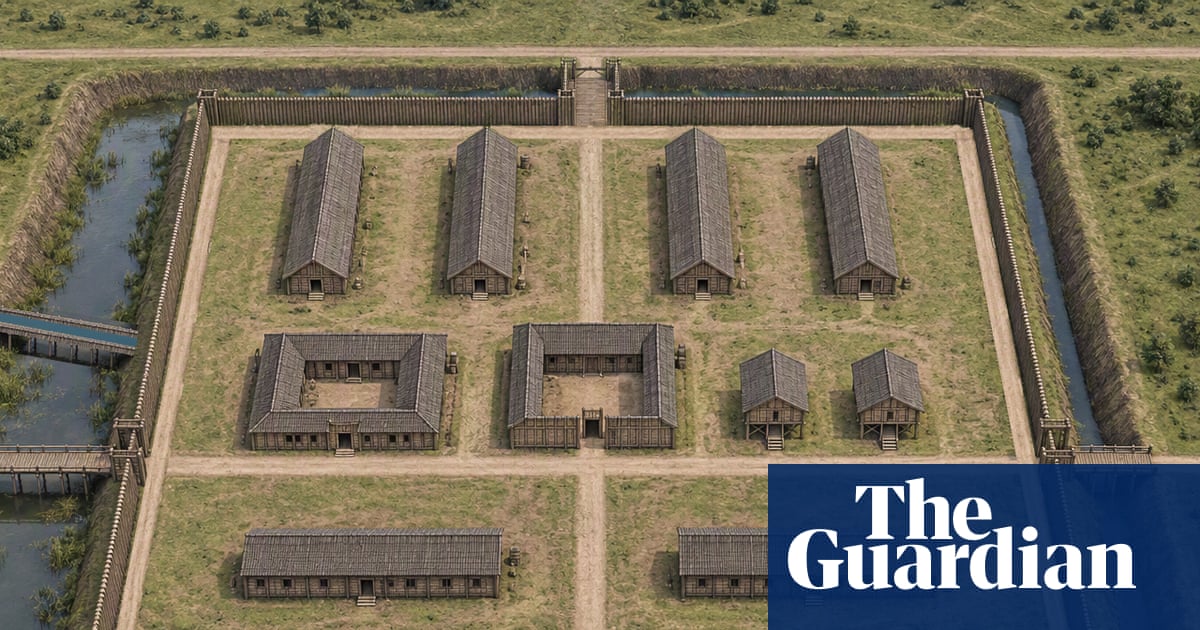
Measuring approximately 180 by 150 metres, the fort is positioned on a slope overlooking the surrounding countryside and is estimated to have accommodated around 500 soldiers. The fortification features a traditional playing-card shape with rounded corners and an internal perpendicular road layout. Geophysical surveys and digging have revealed extensive compacted clay floors, pottery fragments, an iron stylus, wagon rut marks, and large amounts of tile.
The structural layout includes a rectangular building centrally positioned within the enclosure alongside a larger rectangular building to the south. Specialists indicate this arrangement matches the typical configuration of a headquarters building oriented to the east alongside a commander's residence. The presence of the military installation also challenges prior assumptions regarding the peaceful relations between Roman forces and local Celtic tribes in the region.