


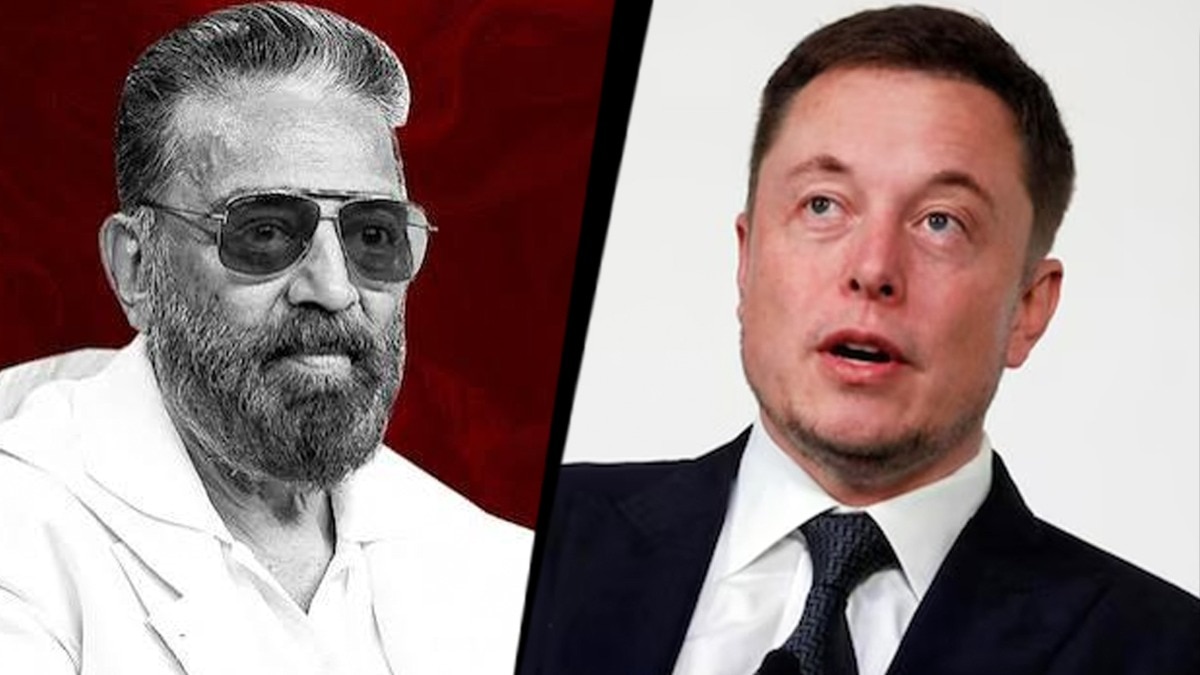
Actor and Rajya Sabha MP Kamal Haasan has responded sharply to allegations made by Elon Musk that business interests were blocking the launch of Starlink in India. Haasan asserted that no billionaire, whether of Indian or American origin, should be permitted to dictate national policy.
Haasan emphasized that India operates as a democracy rather than a colony. He noted that while the country welcomes global enterprises, the Indian people ultimately retain the right to determine their own future.
Musk had previously claimed that specific oligarchs were obstructing his satellite internet venture in order to preserve a monopolistic advantage, and later questioned whether Reliance Industries chairman Mukesh Ambani held ultimate control in the country. Meanwhile, Congress leader Rahul Gandhi responded to the discourse with a cryptic remark welcoming Musk to India and suggesting he discover other figures, to which Musk replied that the situation was troubling. The Ministry of Communications formally rejected Musk's accusations, affirming that the approval framework has remained fair and unbiased.
The ministry clarified that while Starlink, Jio Satcom, and the Bharti-backed Eutelsat OneWeb hold valid licenses, all three entities must successfully complete mandatory security assessments and secure spectrum-related clearances prior to launching commercial operations.
Addressing the broader technological landscape, Haasan voiced support for healthy competition involving both domestic and international providers capable of delivering practical and affordable connectivity to remote areas. However, he cautioned that exorbitant subscription fees and equipment expenses risk placing satellite internet out of reach for average households. He stressed that connectivity should serve to bridge existing digital divides rather than generate new ones.
Characterizing telecommunications networks and spectrum as vital strategic infrastructure, Haasan declared that India's national security safeguards remain entirely non-negotiable. He also turned his criticism toward Western nations, accusing them of preaching free-market principles internationally while shielding domestic industries at home. He pointed to United States tariffs on Chinese electric vehicles, alongside restrictions placed on Huawei by both the US and India due to security worries.
Haasan argued that nations cannot selectively demand a level playing field only when it aligns with their specific agendas. He acknowledged domestic challenges as well, referencing a Comptroller and Auditor General audit showing that only a modest percentage of service-ready village panchayats were fully operational under the BharatNet initiative despite substantial expenditures. At the same time, he recognized the success of India's telecom regulations in lowering data costs and connecting millions.
Concluding his remarks, Haasan reiterated that India's trajectory will be shaped solely by its citizens, free from the influence of Western vested interests, double standards, or any domestic and foreign billionaires.