


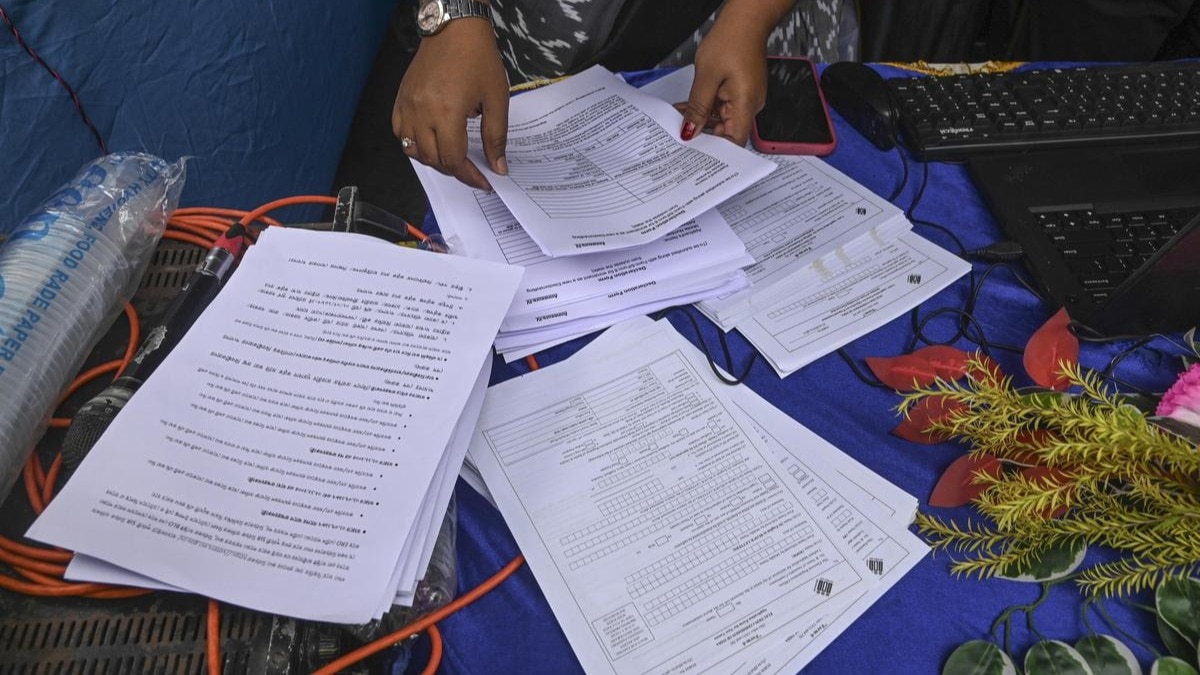
The Election Commission has restricted the number of Form 7 applications that an individual elector can submit to object to name inclusions or request deletions from electoral rolls, responding to instances of people filing objections in large quantities.
Under the updated guidelines, a single elector can submit a maximum of 10 Form 7 applications throughout the entire duration of the claims and objections period. When electoral rolls are undergoing continuous updates, the ceiling is set at five applications per month.
State Chief Electoral Officers have received instructions from the Commission to notify electoral staff regarding these new thresholds and to guarantee proper enforcement. The measure seeks to deter the mass submission of objections by private individuals, minimize disruptions for legitimate voters, and decrease the administrative burden on election personnel.
Form 7 is utilized to challenge a proposed name inclusion or request the removal of an existing entry on the voter list. Governed by Rule 13(2) of the Registration of Electors Rules, 1960, these challenges may only be initiated by individuals whose own names already appear on the electoral roll for that specific constituency.
Previously, although online submissions per session were capped at six, no formal restriction governed the quantity of physical forms submitted in bulk. This absence of clear limits left the issue up to the discretion of Electoral Registration Officers and created operational difficulties for field staff, prompting the Commission to establish standard thresholds for both digital and paper filings.
Regarding pre-existing provisions for recognized political parties, Booth Level Agents are permitted to submit bulk Form 7 applications during the Special Intensive Revision under established daily quotas, such as up to 50 forms daily before the draft roll publication and 10 daily thereafter. Meanwhile, the Manual on Electoral Rolls, 2023, dictates that bulk submissions by ordinary electors, including postal submissions, should be rejected, and mandates personal cross-verification by officials if a single person objects in more than five instances.
The Commission has instructed Electoral Registration Officers to verify that Form 7 filings contain all mandatory information and bear the objector's original signature rather than a seal. Officials must also confirm the applicant's identity against the voter roll.
Under Rule 17 of the Registration of Electors Rules, 1960, officers must dismiss any objection failing to meet procedural requirements or deadlines. If an objection proceeds, Rule 19 requires the officer to issue notice, conduct a personal hearing, and record individual statements for every application, while also ensuring the affected voter receives an opportunity to respond before any final decision.
Additionally, the Commission instructed authorities to pursue legal consequences if an officer determines an objection is fabricated or false. Section 31 of the Representation of the People Act, 1950, permits punitive action against any applicant who knowingly provides false written declarations on Form 7.