


Bengaluru: Indian politics has long suffered from an overabundance of predictions alongside a growing lack of confidence in those who make them. Election surveys have increasingly shifted away from serious societal analysis to become televised events, where credible researchers compete against lesser-known operators offering extravagant forecasts without adequate public transparency. This environment has dangerously blurred the boundaries between scientific polling, political consultancy, and speculative television commentary.
To counter this trend, a new initiative known as SCORE was launched in Bengaluru on October 16. The platform aims to pivot away from conventional election-season forecasting by continuously measuring public opinion on a constituency-by-constituency basis throughout the political cycle. Founder Naresh Arora stated that the organization is designed to measure public opinion directly for the public rather than for media outlets or politicians, ensuring ordinary voters stay informed on critical issues.
India has a rich tradition of scientific election analysis pioneered by figures like Eric D Costa and Prannoy Roy, alongside extensive academic work from institutions such as the Centre for the Study of Developing Societies and its Lokniti program. Commercial entities like CVoter and Axis My India subsequently expanded the visibility of polling, though commercial pressures to reduce complex findings into definitive seat projections have often overshadowed nuanced research.
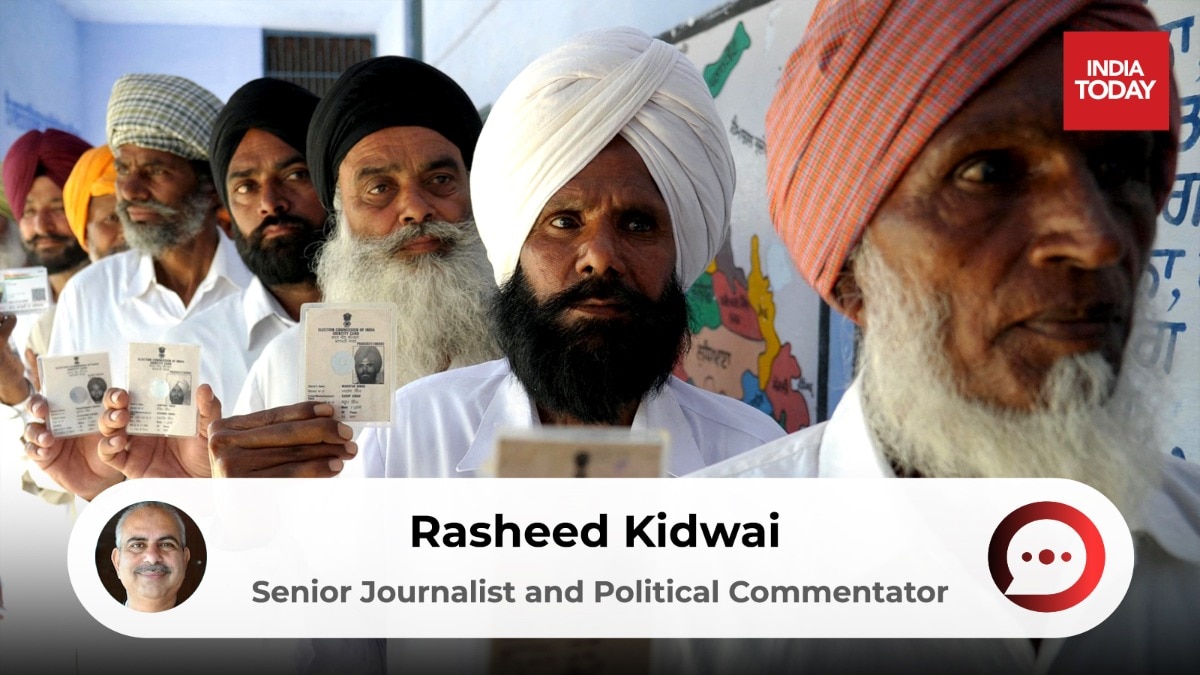
SCORE attempts to synthesize regular tracking, granular regional data, and direct public accessibility into a single platform. Its maiden undertaking encompasses all 117 Assembly constituencies in Punjab ahead of the 2027 elections. Researchers reportedly interviewed over 28,000 voters across the state between September 13 and October 13, 2026. The group intends to publish updated Punjab trackers on the 15th of every month, with an Uttar Pradesh tracking series slated to begin on November 20. Findings are distributed through a website and WhatsApp interface intended to simplify data analysis for everyday citizens.
Beyond simply projecting winners, the platform aims to provide democratic value by assessing constituent views on local representatives, public service deficits, and the implementation of government schemes. While regular polling does not automatically ensure scientific accuracy, structured tracking can reveal underlying political shifts that isolated surveys miss.
SCORE's inaugural Punjab survey highlights a political landscape where the ruling Aam Aadmi Party maintains strength despite mixed public reviews on certain governance areas. If an election had taken place on October 15, estimates indicate AAP would secure between 69 and 82 seats, crossing the 59-seat majority threshold while dropping from its 2022 tally of 92 seats. Projected vote shares place AAP at approximately 38 percent, down from 42 percent previously, followed by Congress at 24 percent with an estimated 17 to 34 seats, the BJP at 14 percent with 4 to 12 seats, and the Shiromani Akali Dal at 12.5 percent with 2 to 6 seats.
An unexpected development involves the emergence of the Amritpal Singh-led Akali Dal, capturing an estimated 8.5 percent vote share and 2 to 6 projected seats, drawing particular backing from younger men under 35 and pointing toward shifting political alignments. Regional breakdowns indicate AAP's support is strongest in Doaba at 43.9 percent and Majha at 40.8 percent, while dipping to 35.2 percent in Malwa, which encompasses 69 of the state's 117 constituencies and stands out as the primary battleground.