


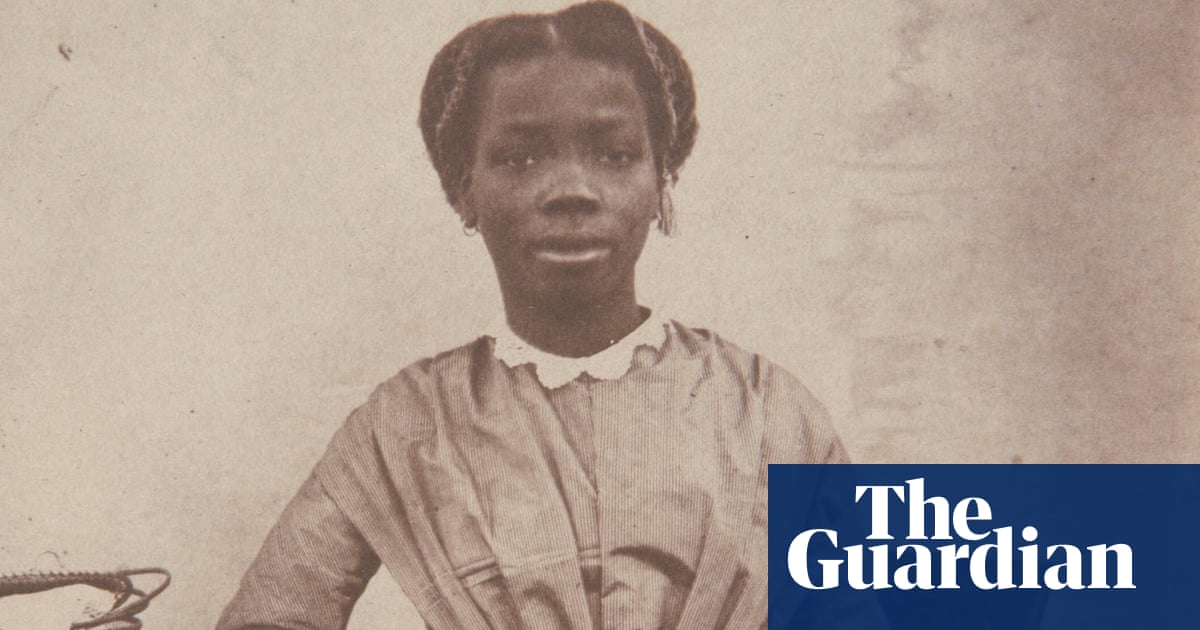
When she was seven years old, Bayo Randle’s great-great-grandmother Sarah Forbes Bonetta was presented to Queen Victoria at Windsor Castle described as a diplomatic gift from an African monarch. Queen Victoria subsequently funded Bonetta’s education, consented to her marriage to one of West Africa’s wealthiest merchants, and became the godmother to her eldest daughter. While the British monarch maintained a genuine personal interest in Bonetta’s welfare and met with her on various occasions, their relationship operated within a much broader imperial framework.
Now, with the publication of a new book titled Becoming Sarah Forbes Bonetta: A Yorùbá Woman in Queen Victoria’s Court, Randle has reflected on his family’s complex lineage. Randle, a British-Nigerian barrister based in London, noted that while a human being with agency cannot truly be gifted between parties, his own existence is a direct result of that historical trajectory.
Authored by Canadian academic Professor Henry Lovejoy, the book details how Bonetta was brought to England by Frederick Forbes of the Royal Navy’s West Africa Squadron, a unit established to enforce the abolition of the transatlantic slave trade. Born Àìná in 1843 in Òkè-Òdàn, southwest Nigeria, she lost her family in 1848 when her town was raided by forces belonging to King Ghezo of Dahomey. Believed to have been captured by the agodjié—the all-female military regiment—she was held at the king's court before Forbes arrived in 1850 during an unsuccessful diplomatic mission to secure an anti-slavery treaty.
Although Bonetta went on to become one of the most widely reported and artistically represented African women of her time, Lovejoy’s research emphasizes that she was never entirely free. Before bringing her to England and bestowing upon her his own name alongside that of his ship, the Bonetta, Forbes petitioned for her to be designated property of the crown. This legal maneuver meant she was effectively indentured to Queen Victoria until the age of 19 under post-abolition frameworks. She was later married to James Pinson Labulo Davies, a wealthy merchant and philanthropist.
Lovejoy’s broader research documents how hundreds of thousands of Africans liberated from enslavers were subjected to extended indentures under various governments, including Britain, to offset the administrative costs of their freedom. He notes that Bonetta occupied the elite tier of this bonded labor system, educated with the expectation of serving as a missionary. Her public image was frequently leveraged as imperial iconography to frame British colonialism as a civilizing mission, even as contemporary abolitionists viewed her prominent attendance at royal events as a symbol of racial equality.
For Randle, historical artifacts such as a plaster bust sculpted in 1851 encapsulate the duality of his ancestor's story. While it offered a rare look at her childhood features, the bust was originally created for phrenological purposes within a racist framework that categorized her as a biological specimen. Randle first learned of his ancestry from his father and notes that the family still preserves an engraved goblet and plate gifted by Queen Victoria.
Lovejoy’s publication also dispels several long-standing myths, correcting misconceptions that Bonetta was a Yoruba princess, that she was Queen Victoria's direct goddaughter, or that she resided primarily in England. Randle actively maintains his family's ancestral connections to Òkè-Òdàn and fully supports the rigorous academic examination of her life. Bonetta ultimately became a skilled linguist, musician, travel writer, educator, and prominent figure in 19th-century Lagos before her death from tuberculosis in Madeira in 1880 at the age of 37.
Reflecting on the legacy, Randle acknowledges that while the historical realities can evoke discomfort regarding what his ancestor symbolized, her story should not be viewed solely through a tragic lens. Instead, he highlights her capability, courage, and dignity in navigating profound trauma, displacement, and cultural adaptation, cementing her status as an early pioneer of Black Britain.