


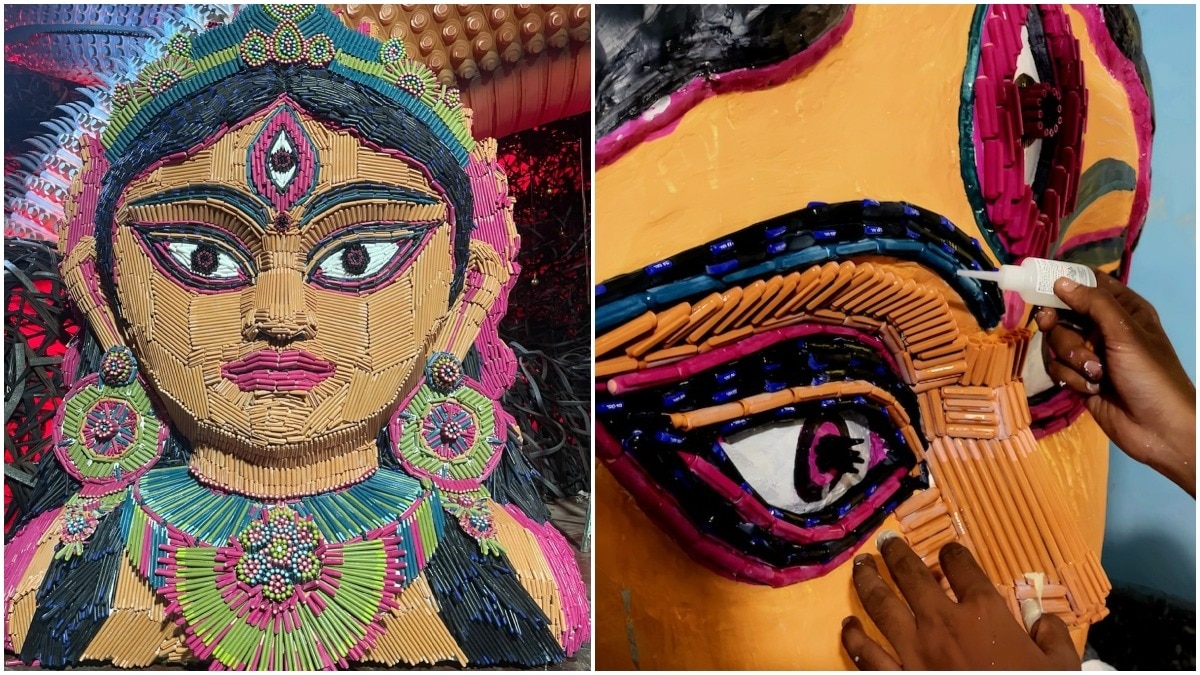
Around 13,000 recycled plastic pens found an unexpected second life in Kolkata, coming together to form a 5.5-foot-tall sculpture of Goddess Durga for this year's Durga Puja celebrations.
Created by Kolkata-based artist Chandra Nath Saha, the installation was displayed at Tridhara Sammilani, where the unconventional artwork offered a different take on one of Bengal's most recognisable cultural and religious symbols.
The sculpture was made using approximately 13,000 Pentonic pens and an equal number of pen refills made from recycled plastic. Pentonic, a writing instrument brand owned by Linc Limited, presented the installation, which reimagined an everyday object as an intricate representation of Goddess Durga.
Standing around 5.5 feet tall, 4.5 feet wide and 3 feet deep, the artwork brought together thousands of individual components to create a single image of the goddess. The installation was placed alongside Tridhara Sammilani's main Durga idol, but was intended as a separate artwork. While the traditional idol underwent the customary immersion rituals during Visarjan, the pen sculpture remained outside the immersion process.
After the festival, the sculpture was to be dismantled, and its plastic components were to be sent for recycling and processed into new products. This gave the installation a purpose beyond its display during the celebrations, demonstrating how recycled materials could be incorporated into creative projects and returned to the production cycle.
For Saha, working with pens presented a different set of artistic challenges. The familiar shape and function of each object had to give way to a larger form as thousands of them were assembled into the sculpture.
Reflecting on the project, Saha noted that the interesting part of the work was taking something as familiar and functional as a pen and asking what else it could become. He explained that the individual identity of the pens changed as they came together, allowing a larger image to emerge, and he wanted viewers to appreciate the finished sculpture as an artwork before discovering the unusual material behind it.
The installation brought together two seemingly different ideas: the traditional imagery associated with Durga Puja and the reuse of everyday plastic products. By transforming writing instruments into a representation of the goddess, the artwork invited visitors to look at familiar objects in a different way.
At a festival deeply rooted in artistic expression and tradition, the sculpture offered another example of how contemporary materials and ideas could find a place alongside established cultural practices. Once the celebrations ended, the pens that formed the goddess were set to begin another journey, this time towards being recycled into something new.